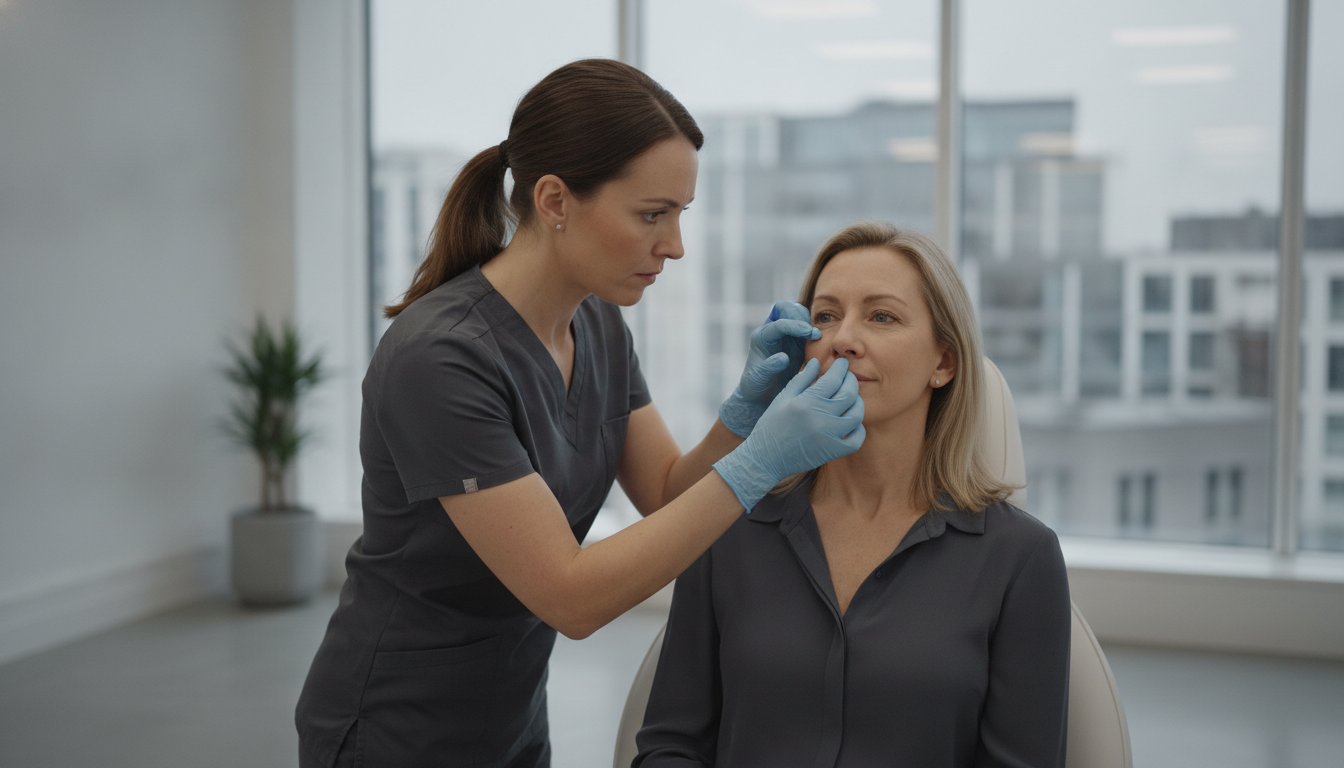
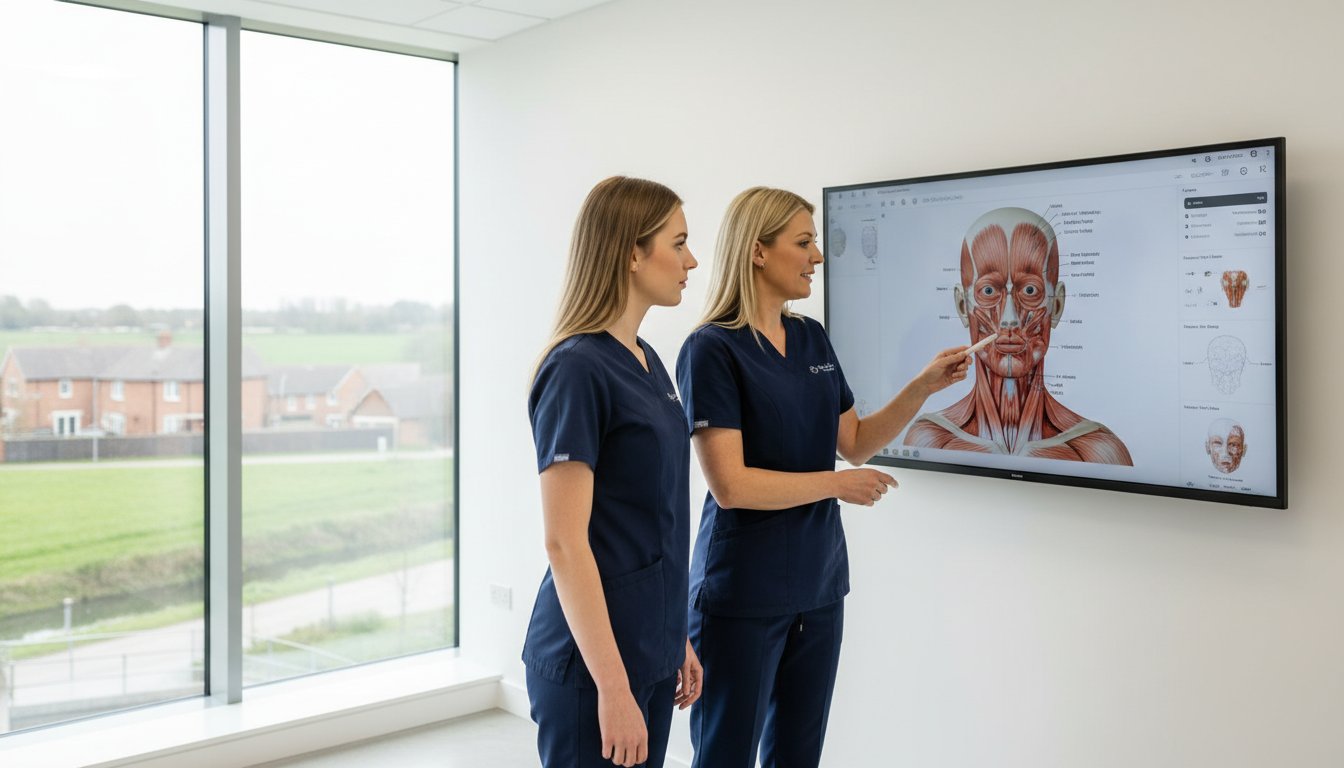
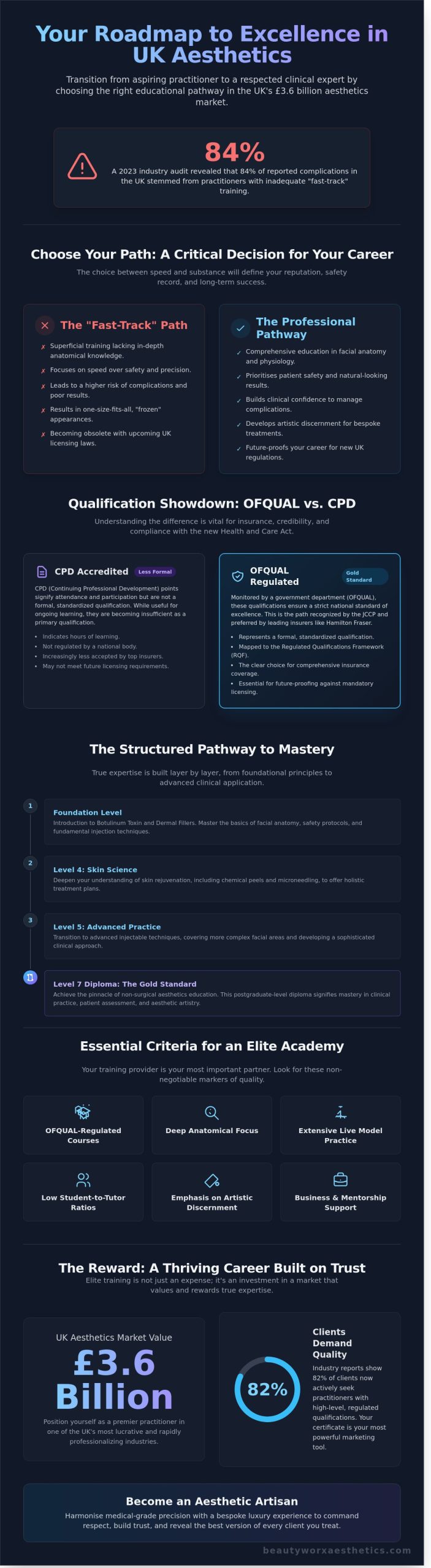
A 2023 industry audit revealed that 84% of reported complications in the UK aesthetics sector originated from practitioners who opted for “fast-track” training rather than comprehensive clinical education. It’s understandable if you feel hesitant, caught between the desire to enter a lucrative field and the fear of making a critical error in a landscape cluttered with conflicting advice. You recognise that true expertise requires a delicate balance of medical precision and artistic discernment, yet the confusion over OFQUAL levels versus CPD points can make the first step feel incredibly daunting.
This guide serves as your professional roadmap, detailing exactly how to select elite botox courses that prioritise safety and natural-looking results. You’ll learn how to transition from a beginner to a master practitioner by mastering facial anatomy and securing a recognised qualification that commands respect. We’ll explore the essential criteria for clinical confidence and the business mentorship needed to flourish in the UK’s £3.6 billion aesthetics market, ensuring you’re empowered to reveal the best version of every client you treat.
Key Takeaways
- Navigate the evolving UK regulatory landscape with clarity, understanding how upcoming licensing changes will impact your choice between CPD and OFQUAL-regulated training.
- Discover the structured educational pathway from foundation level to the Level 7 Diploma, ensuring your botox courses offer a sophisticated progression into advanced aesthetic medicine.
- Master the shift from ‘beauty treatments’ to clinical excellence by prioritising deep anatomical knowledge and the artistic discernment required for natural-looking results.
- Identify the essential criteria for elite academies, from intimate student-to-tutor ratios to the vital experience of practising on live models in a clinical setting.
- Learn to harmonise medical-grade precision with a bespoke luxury experience, positioning yourself as a premier practitioner in the UK’s mature aesthetics market.
The Evolution of Aesthetic Education: Why Choosing the Right Botox Course Matters in 2026
The aesthetics sector has shed its “beauty treatment” label, evolving into a sophisticated branch of clinical medicine. This shift is vital for your career longevity. By 2026, the UK market has matured, moving away from unregulated practices toward a structure that demands medical-grade precision. You aren’t just entering a trade; you’re joining a profession where your expertise in Botulinum toxin applications defines your reputation and your safety record.
Moving beyond a “fast-track” mentality is the first step toward true success. While speed was once a selling point, the 2026 practitioner prioritises a comprehensive learning journey that respects the complexity of human anatomy. This year marks a pivot point as the government’s licensing scheme for non-surgical procedures becomes the industry standard. High-calibre botox courses now focus on deep anatomical knowledge, ensuring you understand the science behind every injection site to guarantee luminous, natural-looking results. It’s about being prepared for the complexities of real-world practice, not just passing a test.
From Technician to Aesthetic Artisan
Instead of following a rigid, one-size-fits-all template, you’ll learn the art of bespoke facial mapping. This allows you to tailor treatments to the unique architecture of every face, fostering the artistic eye required for results that look refreshed rather than frozen. You’re moving from performing a simple service to managing a client’s long-term ageing journey. This transition ensures your work remains undetectable and harmonious, focusing on restoration rather than artificial change.
The Rising Demand for Qualified Practitioners
The UK market is seeing a sharp rise in conscious consumers. 2025 industry reports indicate that 82% of clients now actively seek out practitioners who can demonstrate high-level, regulated qualifications before booking a consultation. Your training isn’t just a requirement; it’s a powerful marketing tool that builds immediate trust for your new clinic. Aesthetic excellence is the intersection of safety, science, and subtle enhancement. Choosing premium botox courses ensures you meet this demand with the quiet confidence of a specialist who views aesthetic medicine as both a science and an art form.
Navigating the UK Regulatory Landscape: OFQUAL vs. CPD Accredited Training
The UK aesthetics industry is currently undergoing its most significant transformation since the Keogh Report. Following the 2023 Health and Care Act, the industry is moving toward a mandatory licensing scheme designed to ensure practitioner competence and patient safety. This shift follows a UK government crackdown on unsafe cosmetic procedures, which seeks to standardise the educational requirements for everyone performing non-surgical interventions. For those researching botox courses, the choice between a CPD certificate and an OFQUAL-regulated qualification isn’t just about a piece of paper; it’s about future-proofing your career against these evolving legal standards.
The Joint Council for Cosmetic Practitioners (JCCP) has been instrumental in this transition, establishing a clear competency framework that insurance providers now follow with meticulous detail. Leading insurers like Hamilton Fraser or Insync have already started to adjust their premiums and acceptance criteria. They’re increasingly hesitant to cover practitioners who haven’t completed training that maps directly to the Regulated Qualifications Framework (RQF). This professional scrutiny ensures that every treatment is a harmonious blend of safety and artistic skill.
Understanding OFQUAL Regulated Qualifications
Regulated qualifications are monitored by OFQUAL, ensuring every student meets a strict national standard. In the aesthetics world, Level 4 usually covers skin rejuvenation basics, while Level 5 transitions into deeper clinical understanding. The Level 7 Diploma is widely recognised as the gold standard for injectables. It reflects a postgraduate level of study, demanding external moderation and rigorous clinical assessments. This path isn’t just a quick certificate; it’s a comprehensive academic journey that validates your expertise in facial anatomy and complication management. It provides the quiet confidence that only comes from deep, standardised knowledge.
The Value of CPD in Ongoing Professional Development
While regulated qualifications build your clinical foundation, CPD (Continuing Professional Development) is where you refine your artistic flair. These courses act as specialised masterclasses, allowing you to focus on bespoke techniques like advanced lip augmentation or subtle brow lifts. High-quality botox courses within the CPD framework are essential for staying updated on the latest neurotoxin products and safety protocols. They’re perfect for established practitioners who want to keep their results looking refreshed and luminous. You don’t just learn a procedure; you learn to adapt it to the unique contours of every face. If you’re ready to begin this professional evolution, you might find our bespoke training pathways provide the perfect balance of luxury and clinical depth.
Comparing Training Pathways: From Foundation to the Level 7 Diploma
Embarking on a career in aesthetics requires a structured progression that respects the delicate balance of patient safety and artistic excellence. Whether you’re a medical professional or an experienced practitioner, your education begins by mastering the nuances of facial architecture. We offer bespoke pathways that ensure every student develops the “aesthetic eye” necessary for undetectable, luminous results. Choosing the right botox courses is the first step in your professional evolution, moving you from theory to the confident application of clinical skill.
The Foundation Year: Building a Safe Base
The Foundation Anti-Wrinkle Injections Course serves as your essential introduction to the industry. You’ll study the pharmacology of neurotoxins and the intricate layers of facial anatomy to ensure every placement is precise. It’s not just about the needle; it’s about the consultation. Since the introduction of the 2022 Health and Care Act, understanding patient selection has become vital for long-term success. You’ll spend a significant portion of your training working with live models to build the tactile confidence required for a boutique clinical environment.
Mastering the Art: Advanced Techniques and Masterclasses
Once you’ve mastered the standard three areas, advanced botox courses allow you to address more complex structural concerns. These masterclasses focus on creating a harmonious facial profile through sophisticated treatments that offer a refreshed, subtle lift. Key techniques include:
- Masseter Botox: Relieving jaw tension while achieving a refined, slimmed facial contour.
- The Nefertiti Lift: Rejuvenating the neck and jawline for a more defined, elegant silhouette.
- Brow Lifts: Using precise micro-injections to open the eye area for a rested appearance.
Refining these skills ensures your clients leave feeling like the best version of themselves, enjoying results that feel both natural and restorative.
The Level 7 Diploma: The Pinnacle of Training
The Level 7 Diploma represents the highest standard of aesthetic education currently available in the UK. This qualification requires a dedicated commitment, often involving over 270 hours of total qualification time and a comprehensive portfolio of 40 supervised treatments. It provides the clinical depth needed to thrive as the UK market moves toward stricter mandatory licensing. It’s essential to understand that the Level 7 Diploma is equivalent to a postgraduate degree in terms of academic rigour. Becoming a Level 7 graduate signals to your clients that you’re a trusted specialist dedicated to the highest tier of clinical safety and artistic discernment. For a comprehensive understanding of how this qualification can future-proof your career against upcoming regulatory changes, explore our detailed guide on level 7 qualification requirements and career benefits.
Essential Criteria for Evaluating a High-Quality Aesthetics Academy
Choosing where to enrol for botox courses is the most significant investment you’ll make in your new career. It’s a decision that defines your clinical reputation and the safety of your future clients. You should look for a student-to-tutor ratio that never exceeds 3:1. In a 2023 industry audit, 88% of successful practitioners cited small group sizes as the reason they felt confident during their first solo treatments. Large classes dilute your hands-on time, leaving you with unanswered questions and hesitant technique.
Practical learning requires human interaction. You can’t learn the subtle resistance of different skin types or the nuances of a client’s facial expressions on a rubber mannequin. High-quality academies provide a minimum of 6 live models per training day, allowing you to observe diverse facial structures and age groups. This real-world experience ensures you understand how to achieve a luminous, natural-looking result every time.
The training environment itself must mirror a high-end clinical setting. If an academy doesn’t invest in a space that meets CQC-standard hygiene and luxury aesthetics, they aren’t preparing you for the expectations of a premium clientele. Your training should feel like a £500,000 clinic, not a sterile classroom. This professional atmosphere fosters a mindset of meticulous detail and artistic discernment.
Every curriculum must include a robust module on complications management. You need to know exactly how to handle adverse effects, including the use of emergency protocols and referral pathways. Safety isn’t a secondary thought; it’s the foundation of every bespoke service.
Anatomy and Safety: The Non-Negotiables
Deep-tissue facial anatomy training is your primary defence against vascular occlusions. You’ll need to master the 5 layers of facial tissue to ensure every injection is precise and safe. Avoid academies that focus on sales volume over clinical expertise. The best centres offer 24/7 clinical support for graduates, providing a safety net as you begin to enhance your clients’ natural beauty. It’s about building a partnership in self-care, not just finishing a class.
Mentorship and the Student Journey
Your mentor should be an active, expert practitioner who treats at least 25 clients a week. This ensures their advice is grounded in current trends and modern techniques. Aftercare for students is vital. You’ll want access to a mentor when you’re treating your first solo clients and need a second opinion on a treatment plan. Look for academies that prioritise quality over quantity, limiting their intake to ensure every student receives a tailored, supportive experience.
Elevating Your Career with BeautyWorx Aesthetics Training
The Beauty Worx Aesthetics philosophy represents a departure from traditional vocational training. We believe that clinical precision should always coexist with the sensory experience of luxury aesthetics. This approach ensures that you don’t just learn the mechanics of a procedure; you understand the emotional journey of your future clients. Our curriculum spans over 25 CPD-accredited and OFQUAL-regulated programmes, providing a clear roadmap for career progression. Whether you’re enrolling in our foundation botox courses or advancing toward a Level 7 qualification, you’re entering a space where excellence is the standard.
We empower every student to achieve the best version of themselves as practitioners. This isn’t a one-size-fits-all education. It’s a bespoke experience that respects your individual goals and professional background. By the time you complete your training, you’ll possess the quiet confidence of a specialist who views aesthetic medicine as both a rigorous science and a delicate art form. We’ve refined our “Beauty Worx Aesthetics Journey” to take you from your first foundation day to a specialist level with ease and clarity.
The Beauty Worx Aesthetics Training Environment
Our sophisticated training centre is designed to inspire confidence and calm from the moment you step inside. We’ve intentionally avoided the sterile atmosphere of typical medical facilities, opting instead for a boutique environment that mirrors a high-end spa. To ensure you receive the attention you deserve, we maintain small class sizes, often limited to just four students per session. This allows for intimate, one-on-one mentorship from our expert artisans. We integrate medical-grade standards and the latest aesthetic technology into every lesson, ensuring you’re prepared for the realities of a modern UK clinic environment.
Your Future in Aesthetics Starts Here
Launching a career in this industry requires more than just technical skill. It requires a support network that remains accessible long after your final assessment. We provide our graduates with ongoing guidance, helping them navigate the logistics of setting up their own successful businesses. You’ll learn from practitioners who understand that aesthetic medicine is a harmonious pursuit of balance and restoration. We focus on subtle enhancements that create luminous, natural-looking results. Many of our graduates expand their skill set beyond injectables to include complementary treatments such as professional microneedling course training, which provides an excellent foundation for comprehensive skin rejuvenation services. Take the first step toward a rewarding new profession. View our upcoming course dates and begin your bespoke training journey with a team dedicated to your long-term success.
Defining Your Future in Aesthetic Excellence
The landscape of aesthetic medicine in 2026 demands more than just technical skill; it requires a commitment to safety and a deep understanding of the UK’s evolving regulatory standards. Whether you’re pursuing a Foundation certificate or the prestigious Level 7 Diploma, your choice of academy defines your professional reputation. BeautyWorx Aesthetics provides the clinical foundation you need to flourish. With over 25 CPD and OFQUAL accredited courses, we bridge the gap between medical precision and artistic refinement. You’ll benefit from bespoke mentorship from our lead practitioners who prioritise complications management and patient safety above all else.
It’s about more than just mastering botox courses; it’s about becoming a trusted artisan in a competitive market. We help you deliver natural, harmonious results that enhance your clients’ inherent beauty. Your journey toward becoming a specialist starts with the right guidance and a meticulous approach to every procedure. Take the first step toward a career defined by clinical excellence and artistic discernment. We’re here to support your transition into the best version of your professional self.
Explore Our Accredited Aesthetics Courses and Start Your Journey Today
Frequently Asked Questions
Can non-medics take botox courses in the UK in 2026?
Yes, non-medics can still enrol in botox courses in 2026, provided they follow the training pathways outlined by the Joint Council for Cosmetic Practitioners (JCCP). The UK government’s 2023 amendment to the Health and Care Act means practitioners must soon hold a personal license. We’ve tailored our curriculum to meet these 2026 standards, focusing on the Level 5 and Level 7 requirements that ensure your practice remains both legal and prestigious.
How much can I expect to earn after completing an aesthetics course?
You can typically expect to earn between £40,000 and £95,000 per year as a self-employed aesthetics practitioner in the UK. A single session for anti-wrinkle injections usually costs clients between £180 and £350, leaving you with a profit margin of roughly 65% per appointment. If you treat 12 clients a week, your annual turnover could exceed £110,000, allowing you to build a rewarding career focused on enhancing natural beauty.
What is the difference between a foundation course and a Level 7 diploma?
A foundation course provides the essential 2 days of practical training required to start injecting, while a Level 7 diploma is a comprehensive postgraduate-level qualification. The Level 7 involves 277 hours of total learning and 40 supervised clinical treatments. While a foundation certificate allows you to begin your journey, the Level 7 is the gold standard that signals your clinical authority and commitment to the highest safety standards in the industry.
Will I be able to get insurance immediately after my botox training?
You’ll be able to secure professional indemnity insurance immediately upon successful completion of our accredited botox courses. We partner with specialist providers like Hamilton Fraser and Cosmetic Insure, who offer bespoke policies for non-medics starting at approximately £420 per year. Having this cover in place from day one ensures you’re protected as you begin delivering refreshed, luminous results for your very first clients.
How many live models will I get to practice on during the course?
You’ll practice your injection techniques on a minimum of 6 live models during your clinical training days. We believe that hands-on experience is vital for mastering the delicate art of facial rejuvenation, so we maintain a strict 2:1 student-to-tutor ratio. This ensures you receive constant supervision as you learn to map facial anatomy and deliver precise treatments that create a harmonious, youthful appearance for every individual.
What happens if I encounter a complication with a client after I’ve qualified?
You’ll follow the strict emergency protocols taught in our mandatory complications management module, which covers everything from bruising to vascular events. Our graduates gain immediate access to a 24-hour clinical support network and are encouraged to join the Aesthetic Complications Expert (ACE) Group, which has over 2,000 active members. You’ll have a clear, step-by-step pathway to manage any issue with the calm, professional confidence your clients expect.
Are your aesthetics courses OFQUAL regulated or CPD accredited?
Our courses are both CPD accredited and mapped directly to OFQUAL-regulated standards, specifically the Level 5 and Level 7 frameworks. This dual accreditation ensures your 40 hours of theory and practical work are recognised by all major UK insurers and professional bodies. We prioritise this rigorous validation so your qualification carries the weight of a formal medical education, reflecting the sophisticated and meticulous nature of your artistic craft.
Do I need a medical background to prescribe anti-wrinkle injections?
You don’t need a medical background to perform the injections, but you must partner with a qualified prescriber because botulinum toxin is a prescription-only medicine (POM). Under the Human Medicines Regulations 2012, a face-to-face consultation by a prescriber is mandatory before any treatment can take place. We introduce you to our national network of over 600 UK-based prescribers, ensuring you can legally and safely offer bespoke treatments to your clients.











 Reviews