
By April 2026, the UK’s first mandatory licensing scheme for non-surgical cosmetic procedures will transform the industry into a strictly regulated clinical landscape where a Level 7 qualification acts as the primary driver of your earning potential. Expertise is the new currency. You likely feel the shift already, sensing that the era of informal training is being replaced by a more refined, secure structure that rewards clinical excellence. It’s natural to feel a sense of uncertainty about how these legislative changes will impact your take-home pay or whether your current path leads to a financial ceiling. This guide clarifies the aesthetic practitioner salary uk landscape for the coming years, ensuring you understand exactly how these new standards influence your bank balance and professional longevity.
We believe that when you combine medical precision with an artisan’s touch, your financial rewards should reflect that high level of care. You’ll discover the specific financial milestones of both clinical employment and independent practice, providing a transparent roadmap to the industry’s most prestigious salary bands. We’ll explore how investing in bespoke training today secures your place as a trusted specialist in a more lucrative, regulated future.
Key Takeaways
- Explore the projected benchmarks for an aesthetic practitioner salary uk in 2026, providing a clear roadmap for your financial evolution from foundation to advanced practice.
- Evaluate the strategic choice between the professional security of clinical employment and the aspirational journey of launching your own boutique aesthetic brand.
- Learn why Level 7 accreditation has become the essential hallmark for practitioners aiming to secure elite-tier earnings and professional prestige in a regulated market.
- Identify the specific clinical pathways and upskilling opportunities that offer the highest return on investment for your long-term career growth and artistic development.
Defining the Aesthetic Practitioner Salary Landscape in 2026
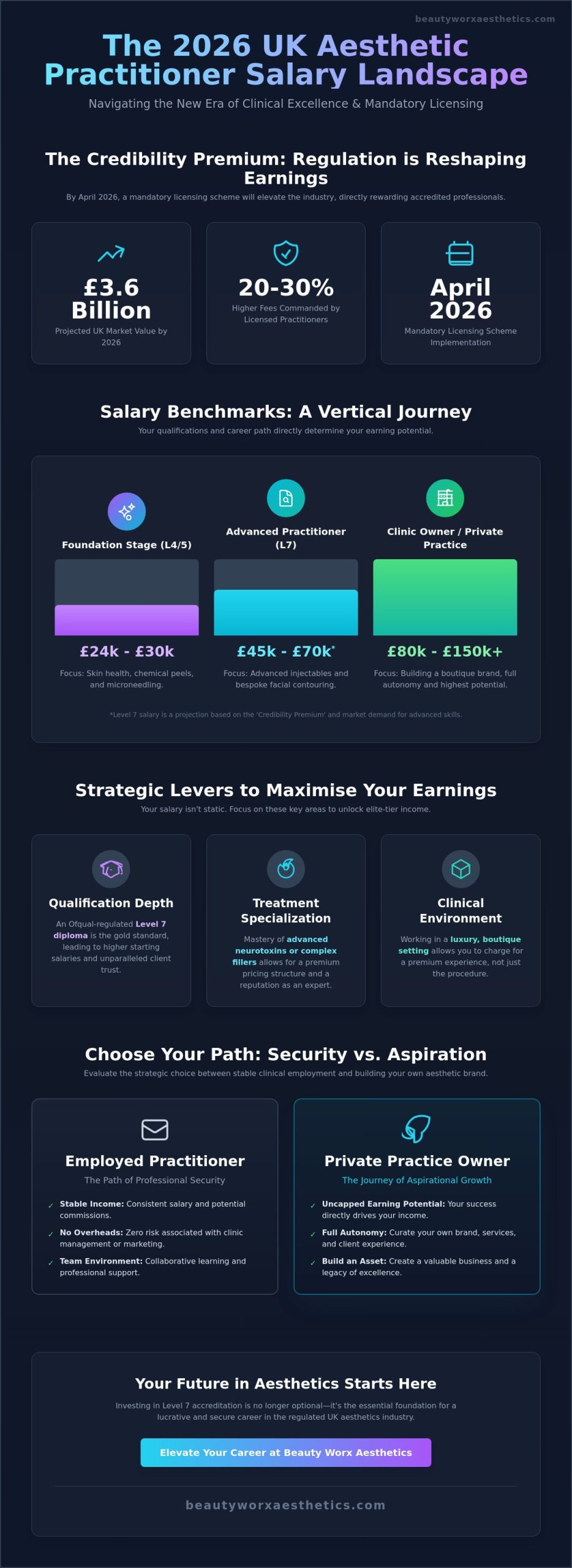
The UK’s non-surgical cosmetic market has reached a sophisticated milestone, with projections estimating a total valuation of £3.6 billion by 2026. This growth isn’t merely about volume. It reflects a profound shift in consumer behavior where clients prioritize medical safety and artistic discernment over quick, budget-friendly fixes. To understand the aesthetic practitioner salary uk, one must first recognize the professionalization of the sector. It’s no longer a subset of the high-street beauty industry. It’s a clinical discipline that demands a unique blend of medical expertise and aesthetic vision.
Defining the role of a practitioner in 2026 requires looking at the modern licensing framework. A practitioner is now viewed as a clinical specialist responsible for delivering natural-looking, harmonious results through evidence-based treatments. Understanding What is Aesthetic Medicine? provides the necessary context for this evolution, as the field now bridges the gap between traditional healthcare and luxury wellness. This transition from “beauty therapy” to “clinical aesthetics” has fundamentally recalibrated pay scales across the country. Professionals now command fees that reflect their medical accountability and the bespoke nature of their artistry.
The Role of Regulation in 2026 Earnings
By 2026, the UK government’s mandatory licensing schemes have stabilized the industry, creating a transparent environment for both clinicians and clients. This regulation has birthed the “Credibility Premium.” Data indicates that regulated practitioners command fees 20% to 30% higher than those operating on the fringes of compliance. This isn’t just about following rules. It’s about the trust that a licensed status instills in a client. As the industry moves away from a “wild west” era, the path to a higher aesthetic practitioner salary uk is paved with formal accreditation and a commitment to patient safety.
Core Factors Influencing Your Take-Home Pay
Your earning potential is rarely static. It’s an evolving figure shaped by your dedication to the craft. Several key drivers dictate your financial ceiling in the current market:
- Qualification Depth: An Ofqual-regulated Level 7 diploma is now the gold standard, often resulting in higher starting salaries than those relying solely on short CPD courses.
- Treatment Specialization: Mastery of advanced neurotoxins or complex dermal filler procedures typically allows for a premium pricing structure compared to entry-level skin rejuvenation.
- Clinical Environment: Working within a luxury, boutique setting allows for a higher price ceiling. These environments prioritize the client’s emotional journey, allowing practitioners to charge for the experience as much as the procedure.
The shift toward specialization is particularly notable. Practitioners who focus on a niche, such as regenerative medicine or subtle facial contouring, often see more consistent growth. This focus allows you to become a trusted guide for your clients, fostering long-term partnerships in their self-care journey.
UK Aesthetics Salary Benchmarks: From Foundation to Advanced Practice
In 2026, the aesthetic practitioner salary uk landscape is defined by clinical precision and the ability to curate bespoke results. While entry-level practitioners might start with a base of £24,000, those who master the art of the consultation and advanced technical skill find that their earning potential scales rapidly. This progression is increasingly tied to the evolving UK Aesthetics Regulation, which ensures that higher qualifications translate directly into higher consumer trust and, consequently, higher revenue for the individual clinician.
The Foundation Stage (Level 4 & 5)
Junior practitioners typically begin their journey focusing on skin health, delivering treatments like chemical peels and medical-grade skin needling. At this level, annual earnings often sit between £24,000 and £30,000. It’s a period focused on building a luminous portfolio that showcases real-world results. High-street clinics value the ability to manage a consistent flow of skin rejuvenation clients, as these treatments provide the steady, recurring income that forms the backbone of any successful practice. Establishing this foundation is essential before moving into more invasive procedures.
The Growth Stage (Injectables & Mastery)
A significant shift occurs once a practitioner completes foundation anti-wrinkle injections training. Adding neurotoxins and dermal fillers to your repertoire doesn’t just expand your skill set; it increases the average spend per client from roughly £120 for a facial to over £380 for a multi-area treatment. Practitioners at this stage, with 2 to 4 years of experience, often see their salary rise to the £45,000 to £60,000 range. Success here depends on managing the client journey, ensuring that a first-time filler patient becomes a loyal, long-term advocate of your artistry.
The Advanced Stage (Level 7 & Beyond)
The industry’s top tier is occupied by Level 7 practitioners who command six-figure incomes, often exceeding £100,000 in premium city-centre boutiques. These experts don’t just apply fillers; they perform complex facial sculpting and offer high-ticket items. You can explore how these advanced techniques work in our polynucleotide treatment guide. By mastering jawline contouring and cellular rejuvenation, you position yourself as a specialist. This expertise allows for a 40% premium on London rates compared to national averages, reflecting the high demand for undetectable, sophisticated enhancements.
Achieving a consistent aesthetic practitioner salary uk requires a strategic balance of services. While injectables offer high margins, skin treatments ensure monthly cash flow through repeat bookings. This blend protects your income against seasonal fluctuations. If you’re ready to elevate your career, consider how bespoke training pathways can refine your clinical eye and financial potential.
- Skin Health: 60% of volume, providing stable monthly revenue and client loyalty.
- Injectables: 40% of volume, providing the high-profit peaks and transformative results.
Employed vs. Private Practice: Navigating the Most Profitable Path
Deciding between the sanctuary of a clinical role and the autonomy of a boutique brand is a defining moment for any specialist. For many, a secure aesthetic practitioner salary uk provides a foundation of peace. Employment within an established group offers a predictable income, often supplemented by 28 days of paid holiday and pension contributions. You’re free to focus on the artistry of the face while the clinic handles the complexities of patient acquisition and front-of-house management. This stability is particularly valuable for those perfecting their technique early in their career.
The artisan entrepreneur faces a different set of financial realities. While the potential for high earnings is vast, the overheads of a private studio are significant. You’ll need to budget for medical malpractice insurance, which typically ranges from £600 to £1,500 per year in the UK depending on your scope of practice. Professional waste disposal services and the procurement of premium, medical-grade consumables also impact your bottom line. Success in this path requires a delicate blend of clinical excellence and sharp business acumen.
Hybrid models have become a popular strategy for 2026. Working three days a week in a corporate setting provides a steady safety net while you spend the remaining time nurturing your private client base. This balanced approach allows you to refine your signature style and build a luminous personal brand without the immediate pressure of total financial independence. It’s a pragmatic way to transition into full-time private practice over a 12 to 24-month period.
The Financial Anatomy of a Private Clinic
Precision is essential when calculating your cost per treatment. You must account for every needle, swab, and millilitre of product to maintain a healthy margin. A bespoke consultation model often yields higher profitability than a standard menu. It allows you to create a tailored journey for the client, justifying premium pricing through expert discernment rather than transactional service. Your commitment to safety is also a financial asset. Investing in complications management ensures you protect both your patients and your professional reputation, preventing the costly legal and reputational damage that arises from unforeseen incidents.
Advancing in the Corporate Clinical World
For those who prefer the structure of a high-end group, career progression is clear and rewarding. Many UK clinics offer commission schemes where practitioners earn between 5% and 15% on treatment sales or skincare recommendations. Moving into a Lead Practitioner or Clinic Manager role can see your base pay increase by approximately 20% as you take on more responsibility. According to this UK aesthetics industry overview, the sector rewards those who pursue continuous professional development. In-house mentorship often provides a more intimate learning experience than external academies, allowing you to master the brand’s specific philosophy while climbing the professional ladder.
Strategic Levers to Increase Your Earning Potential
Maximising your aesthetic practitioner salary uk requires a shift from being a generalist to becoming a strategic specialist. The most successful professionals don’t just perform treatments; they curate experiences that justify premium pricing. Upskilling provides the most immediate return on investment, particularly when focusing on advanced clinical techniques. While a foundation in basic injectables is necessary, the highest margins are found in complex facial contouring and regenerative medicine. These procedures often command fees that are 40% higher than standard anti-wrinkle injections, significantly boosting your hourly revenue.
Attaining Level 7 status is no longer just a badge of honour. It’s becoming the industry benchmark for those seeking elite pay scales. As the UK government moves closer to formal licensing requirements following the Health and Care Act 2022, practitioners with postgraduate-level qualifications are positioning themselves at the top of the market. This academic rigour allows you to charge for expertise rather than just product volume. You’re selling safety, anatomical mastery, and artistic discernment.
Building a personal brand as a trusted specialist is a powerful way to lower your overheads. When clients seek you out by name, your reliance on expensive paid advertising drops. A strong reputation for natural-looking results creates a self-sustaining referral loop. Instead of offering one-off sessions, focus on holistic treatment plans. Transitioning a client from a single syringe of filler to a twelve-month “ageing gracefully” roadmap ensures predictable cash flow and deepens the professional bond. It’s about moving from a transactional mindset to a partnership in self-care.
The Importance of Ofqual Regulated Qualifications
Regulated diplomas act as a vital safety net for your career. With the Department of Health and Social Care currently refining licensing schemes, Ofqual-certified practitioners are better protected against future legislative shifts. This certification often leads to lower insurance premiums, as providers recognise the reduced risk profile of a formally trained clinician. For the client, seeing these credentials builds immediate psychological safety. This trust translates directly into higher conversion rates and the ability to maintain premium pricing even in competitive urban markets.
Mastering High-Value Treatments
Your service menu should be a curated selection of high-impact procedures. Integrating sophisticated lip augmentation filler techniques allows you to offer the subtle, artful enhancements that discerning clients crave. To diversify your revenue without significantly increasing overheads, consider adding vitamin B12 injection training to your repertoire. These wellness-focused additions provide a steady stream of repeat appointments. Treatment stacking is a method of layering complementary procedures during a single visit to enhance the overall aesthetic outcome and increase the client’s lifetime value. This approach ensures every hour spent in the clinic is as profitable as possible.
Ready to elevate your clinical expertise and command a higher market rate? Explore our professional training pathways at BeautyWorx Aesthetics today.
Elevating Your Career with Beauty Worx Aesthetics Academy
Your journey toward a rewarding aesthetic practitioner salary uk depends entirely on the foundation you build today. At Beauty Worx Aesthetics Academy, we view education as a high-yield investment in your professional identity. Our Level 4, 5, and 7 pathways aren’t just academic milestones; they’re strategic steps designed for maximum career ROI. By aligning our curriculum with the latest industry standards and clinical regulations, we ensure you’re positioned for the most lucrative roles in the 2026 market. We don’t just teach procedures; we cultivate careers.
The Beauty Worx philosophy rests on a unique blend of clinical rigour and the ‘art of the artisan’. We believe that aesthetic medicine is as much about refined vision as it is about technical precision. You’ll master the science of neurotoxins and dermal fillers while developing the subtle eye required to produce harmonious, natural-looking results. This dual focus is exactly why our graduates are preferred by premium UK clinics that value safety and artistry in equal measure.
- Live Model Experience: We provide extensive practical sessions with live models to ensure you’re ready to earn from your first day in clinic.
- Clinical Excellence: Our training focuses on safety, complication management, and the precision required for high-end results.
- Artistic Discernment: Learn to create bespoke treatment plans that enhance the unique beauty of every individual.
- Ongoing Mentorship: Access expert guidance as you navigate the transition from student to a high-earning specialist.
Bespoke Training for the Modern Professional
Our training environment mirrors the sophisticated atmosphere of a high-end boutique clinic. You won’t find sterile, impersonal classrooms here. Instead, you’ll benefit from expert-led tuition in a space that prioritizes your professional growth and emotional confidence. The ‘Beauty Worx Experience’ is about more than just a certificate; it’s about joining a community of elite practitioners. Our graduates are highly sought after because they arrive with a polished bedside manner and the technical mastery required to command a top-tier aesthetic practitioner salary uk.
Your Next Step Toward a Luminous Career
Choosing the right starting point is essential for your long-term success. Whether you’re a medical professional transitioning into the private sector or an established therapist looking to reach the Level 7 pinnacle, we provide a tailored entry point. Your aesthetic career is a profound investment in your future self-confidence and financial freedom. It’s an opportunity to build a life defined by professional autonomy and the joy of helping clients feel refreshed and luminous.
We invite you to book a professional consultation with our team to discuss your specific career goals. We’ll help you map out a pathway that matches your ambitions and current experience level. Your journey toward becoming a trusted, expert artisan starts with a single, decisive step. Let’s work together to unlock your potential in this vibrant, growing industry.
Mastering Your Professional Trajectory in 2026
Navigating the 2026 landscape requires a strategic blend of clinical expertise and business acumen. As the industry moves toward tighter regulation, the most significant factor influencing an aesthetic practitioner salary uk remains the depth of your formal training. Practitioners who invest in advanced credentials now will be best positioned to command premium fees as the market prioritizes safety and artistic discernment. Transitioning from foundational roles to advanced practice can see annual earnings increase significantly, especially for those who master the balance of medical grade precision and luxury service delivery.
Your journey toward becoming a trusted, expert artisan starts with a commitment to excellence. At BeautyWorx Aesthetics Academy, we provide the gold standard in education through our OFQUAL Regulated Qualifications and CPD Accredited Excellence. You’ll benefit from our Expert-Led Mentorship Program, ensuring you’re prepared to deliver the harmonious, natural looking results that modern clients demand. It’s time to transform your passion into a refined career that reflects the best version of your professional self.
Explore our OFQUAL Regulated Level 7 Diploma and elevate your earning potential today.
The future of UK aesthetics is bright for those ready to lead with confidence and skill.
Frequently Asked Questions
What is the average starting salary for an aesthetic practitioner in the UK?
The average aesthetic practitioner salary uk typically begins between £25,000 and £35,000 for those joining established clinics in 2026. This entry-level figure often includes a base wage supplemented by a performance-based commission structure. As you refine your artistic touch and build a consistent patient base, your total compensation usually grows to exceed £40,000 within your first two years of practice.
Does having a medical background increase my earning potential in aesthetics?
Holding a medical registration as a nurse, doctor, or dentist significantly boosts your earning potential because it grants you the authority to prescribe and perform high-risk injectable treatments. Medical professionals often earn 25% more than non-medical practitioners due to their ability to manage complex clinical cases and complications. This clinical expertise provides a foundation of safety that high-end clients find reassuring during their aesthetic journey.
How much more can I earn with a Level 7 Diploma compared to a Foundation course?
Achieving a Level 7 Diploma can increase your annual income by approximately £12,000 compared to holding only a basic foundation certificate. This master’s level qualification is the gold standard for practitioners who seek to deliver harmonious, natural-looking results through advanced anatomical knowledge. Many luxury clinics now require this specific level of training to ensure their team maintains the highest standards of professional discernment.
Is it more profitable to be self-employed or work for a clinic in 2026?
Self-employed practitioners often see higher gross takings exceeding £75,000, yet working for a clinic provides a more stable and predictable income in the current regulatory climate. Clinics handle the complex 2026 licensing requirements and expensive equipment maintenance, allowing you to focus entirely on the artistry of your craft. Many experts find that a clinic role offers a better balance of professional support and financial security.
What are the biggest overheads for a self-employed aesthetic practitioner?
The most significant overheads include professional indemnity insurance and the procurement of premium, medical-grade products, which typically account for 30% of your total revenue. You must also account for clinic room rental fees, which average between £100 and £200 per day in major UK cities. These investments are vital to maintaining a safe, luminous environment where clients feel pampered and protected throughout their treatment.
How often should I upskill to maintain a competitive salary in the UK?
You should invest in advanced training or masterclasses at least once every 12 months to stay ahead of industry trends and maintain a premium aesthetic practitioner salary uk. The field moves quickly, with new collagen induction therapies and refined injection techniques emerging every season. Regular upskilling ensures you can offer the most sophisticated, bespoke services that justify higher treatment prices and encourage client loyalty.
Can non-medics reach the high-end salary bands in the UK aesthetics industry?
Non-medical practitioners can certainly reach salary bands of £50,000 or higher by specializing in advanced skin rejuvenation and high-tech device treatments. While they don’t prescribe medications, their expertise in chemical peels, laser therapies, and radiofrequency is highly valued in the luxury sector. Success for non-medics depends on building a reputation for excellence in skin health and delivering subtle, refreshed results that clients adore.
How has the 2026 licensing regulation affected practitioner income?
The 2026 licensing regulations have led to a 15% increase in average practitioner income by standardizing the market and enhancing public trust in aesthetic services. While the cost of compliance has risen, the removal of unqualified operators has allowed professional practitioners to command higher fees for their verified skills. This regulatory shift ensures that your dedication to safety and clinical excellence is recognized as a premium asset.













 Reviews