
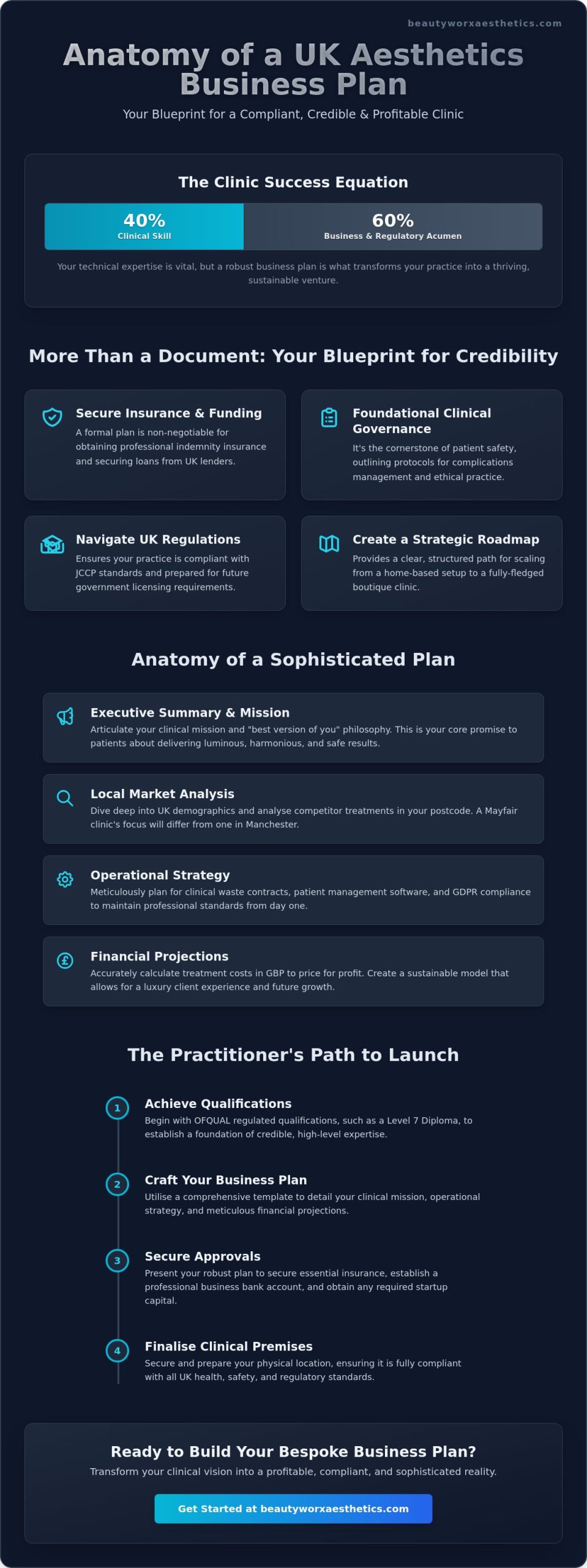
Your clinical skill with a needle is only 40% of what determines whether your new venture thrives or quietly folds within its first eighteen months. You likely entered this field to help clients feel luminous and refreshed; you didn’t sign up to spend hours deciphering whether your local authority requires a special treatment license or if CQC registration is mandatory. It’s natural to feel overwhelmed when the business side of practice feels so far removed from the artistry of a bespoke consultation. That’s why utilizing a comprehensive aesthetic business plan template uk is the most critical step you’ll take before ever opening a vial of neurotoxin.
I’ll show you how to master the essential components needed to secure a professional business bank account, obtain insurance approval, and build a clear roadmap for scaling from a home-based setup to a boutique clinic. We’ll break down the precise financial projections and regulatory requirements that turn a creative vision into a profitable, compliant reality.
Key Takeaways
- Understand how a robust business plan serves as the foundational pillar for clinical governance, helping you secure essential insurance and professional credibility.
- Explore the core components of a sophisticated aesthetic business plan template uk, including how to articulate a bespoke clinical mission that resonates with your local demographic.
- Gain clarity on the UK’s shifting regulatory landscape, ensuring your practice remains compliant with JCCP standards and future government licensing requirements.
- Learn to project sustainable revenue by accurately calculating treatment costs in GBP, allowing you to price for profit while maintaining a luxury client experience.
- Follow a structured path from achieving OFQUAL regulated qualifications to finalising your clinical premises for a sophisticated and safe practice launch.
What is an Aesthetics Business Plan and Why is it Essential in the UK?
In the sophisticated world of UK medical aesthetics, a business plan acts as much more than a simple financial forecast. It’s a living document that serves as the cornerstone of your clinical governance, ensuring every treatment reflects a commitment to excellence. While many practitioners search for an aesthetic business plan template uk to satisfy a bank manager, the true value lies in its ability to translate clinical precision into a sustainable commercial reality. This document is your foundational blueprint, evolving alongside your practice to maintain safety and standards.
Securing professional indemnity insurance and startup capital requires more than just a certificate of attendance from a training course. Specialist insurers like Hamilton Fraser and major UK lenders require a formal plan because they need to see a detailed assessment of risk and professionalism. They look for the core components of a business plan, such as robust market analysis and clear operational protocols, to ensure your practice is built on solid ground. This documentation proves you’ve considered the nuances of the UK’s evolving regulatory landscape, making you a lower risk for providers.
It’s vital to distinguish between a “visually aesthetic” template focused on font choices and a “clinical aesthetics” strategy focused on patient outcomes. A beautiful PDF won’t protect your license or your patients; a rigorous strategy will. Your business plan is the essential bridge between your clinical training and your long-term commercial viability.
The Purpose Beyond Funding
Your business plan is the blueprint for a bespoke brand identity that helps you stand out in a competitive market. It provides a structured framework for complications management, which remains the hallmark of a safe, professional practitioner. By outlining your journey toward achieving Level 7 Diploma status, you signal to both clients and regulators that your expertise is grounded in the highest educational standards. This roadmap ensures your growth is measured, ethical, and consistently focused on enhancing natural beauty through evidence-based practice.
Who Needs a Professional Plan?
Every practitioner entering the industry requires a tailored strategy to navigate the UK’s unique regulatory environment. This includes:
- Independent nurse prescribers and medical professionals transitioning from the NHS to private practice.
- Non-medical practitioners following the regulated pathway to ensure compliance with upcoming licensing changes.
- Established clinic owners looking to expand their treatment menu with advanced services like collagen induction or neurotoxins.
Whether you’re a solo practitioner or a growing clinic, using a professional aesthetic business plan template uk ensures you don’t miss critical details like waste management contracts or GDPR compliance for patient records. It transforms your vision of a luxury boutique into a functioning, profitable reality.
Core Components of a Sophisticated Aesthetics Business Plan
The executive summary serves as the heartbeat of your aesthetic business plan template uk. It shouldn’t just list financial goals; it needs to articulate your clinical mission with clarity and grace. This is where you define the “best version of you” philosophy, promising results that are luminous and harmonious rather than artificial. Your summary acts as a promise to your future patients that their safety and aesthetic journey are your primary concerns.
Market analysis requires a deep dive into local UK demographics. You’ll need to identify competitor “treatments of choice” in your specific postcode. For instance, a clinic in Mayfair might focus on longevity and bio-remodelling, while a boutique in a vibrant city like Manchester might see higher demand for facial contouring. Understanding these nuances allows you to position your brand effectively within the local landscape.
Operational strategy must be meticulous to maintain a professional standard. You’ll need to secure clinical waste contracts that comply with UK health and safety regulations and implement robust patient management software. These systems streamline the journey from the first click to the final follow-up. When structuring these operational details, following the UK government business plan guidance ensures you don’t overlook essential legal requirements for new enterprises.
Your service menu should strike a delicate balance between immediate results and long-term care. High-margin dermal fillers provide essential cash flow for a new practice. However, long-term skin rejuvenation treatments, such as chemical peels or collagen induction therapy, build the recurring “ageing gracefully” partnerships that sustain a business over decades. A well-rounded menu reflects a holistic approach to beauty.
Defining Your Unique Selling Proposition (USP)
Your USP is the reason a client chooses your chair over a high-street competitor. In a market often saturated with high-volume trends, focusing on natural-looking results creates a powerful point of difference. Highlighting advanced certifications, such as expertise in lip augmentation filler, establishes you as a specialist artisan. This expertise, paired with luxury branding, transforms a simple treatment into an aspirational boutique experience that feels both exclusive and safe.
The Marketing & Patient Journey
Success in the UK aesthetics market relies on a sophisticated digital presence. You must balance social media ethics with clinical professionalism, adhering to ASA guidelines while showcasing your artistry. The consultation process isn’t just a formality; it’s a vital conversion and safety tool where trust is built. By prioritizing the client’s emotional journey, you foster retention strategies that lead to long-term partnerships. If you’re ready to refine your vision, consider how a bespoke consultation can set the standard for your new venture.
Navigating the UK Regulatory and Insurance Landscape
Building a foundation of safety and trust is the cornerstone of any successful practice. Your aesthetic business plan template uk must account for the shifting legislative environment, particularly as the UK government moves toward a mandatory licensing scheme. The Health and Care Act 2022 granted the Secretary of State powers to implement this, aiming to ensure practitioners meet rigorous standards. Aligning with the Joint Council for Cosmetic Practitioners (JCCP) early on signals your commitment to clinical excellence and patient safety. This alignment transforms your clinic from a simple business into a trusted sanctuary for aesthetic restoration.
Understanding the UK regulations for non-surgical cosmetic procedures is essential for long-term viability. While many injectable treatments currently fall outside Care Quality Commission (CQC) scope, medical-led procedures involving certain surgical elements or specific health-related outcomes require CQC registration. Failing to identify these requirements early can lead to significant legal hurdles. Your plan should clearly define whether your service menu necessitates this level of oversight, ensuring every luminous result is backed by absolute compliance.
Professional indemnity insurance acts as your clinical safety net, protecting both your reputation and your patients’ wellbeing. Most specialist insurers now mandate that practitioners complete a formal complications management course before providing coverage. This certification isn’t just a box-ticking exercise; it’s a vital component of your professional identity. It ensures you can manage rare events like vascular occlusions with calm, expert precision, maintaining the subtle and harmonious outcomes your clients expect.
Clinical Governance in Your Plan
Your business plan should detail robust Standard Operating Procedures (SOPs) for every treatment offered. These protocols ensure a harmonious balance between luxury service and clinical safety. Every treatment room must be equipped with a vascular occlusion (VO) kit, containing hyaluronidase and emergency medications. Additionally, your strategy must include a GDPR-compliant system for managing patient records. Securely storing “before and after” photos is a legal necessity that also helps track the patient’s journey toward their most radiant self.
Local Authority Requirements
Local council regulations vary significantly across the UK. Many jurisdictions require a “Special Treatment Licence” for procedures like microneedling or chemical peels. You’ll need to prepare for health and safety audits that inspect your clinical premises for hygiene and waste disposal standards. For non-medics, following insurance-approved training pathways is the only way to secure the high-level coverage required to operate a bespoke, professional clinic. Integrating these details into your aesthetic business plan template uk demonstrates a level of meticulous planning that attracts investors and builds lasting client trust.
Financial Projections: Pricing for Profit and Sustainability
A robust aesthetic business plan template uk must look beyond the surface of daily takings to ensure long-term viability. Financial success in the UK’s £3 billion aesthetics market requires a granular understanding of your “cost per treatment.” This calculation involves more than the price of a vial or syringe. You must account for clinical waste disposal fees, professional indemnity insurance apportionments, and the value of your clinical time. Meticulous tracking ensures that every procedure contributes to your clinic’s growth rather than just covering its own overheads.
Projecting revenue for the first 12 to 24 months requires a realistic view of the current UK economic climate. While the luxury personal care sector remains resilient, practitioners should balance “hero treatments” like botulinum toxin with high-frequency wellness services. Integrating vitamin B12 injection training into your repertoire allows for shorter, repeatable appointments that stabilise cash flow between larger procedures. To protect your time, implement a sophisticated booking deposit system. With “no-shows” costing the UK service industry billions annually, a £50 non-refundable consultation fee ensures you attract committed clients who value your expertise.
Pricing Strategies for Aesthetic Clinics
Resist the urge to compete on price alone. Market-entry discounts often attract “deal-seekers” rather than loyal clients, which can erode your brand’s perceived value. Instead, focus on the “Bespoke Package” approach. By combining modalities, such as a polynucleotide treatment for cellular rejuvenation with subtle dermal fillers, you provide a comprehensive result that justifies premium pricing. This strategy shifts the conversation from the cost of a single syringe to the value of a total facial transformation. Always monitor profit margins on consumables, as price fluctuations from UK pharmacies can impact your bottom line if not reviewed quarterly.
Startup Costs and Funding
Launching a boutique clinic in the UK typically requires an initial investment ranging from £15,000 to £50,000. This capital covers specialist training, high-end equipment, and the establishment of pharmacy accounts. It’s vital to maintain at least six months of working capital to sustain the business while you build your patient base. For those seeking external support, the UK Government’s Start Up Loan scheme offers fixed-interest financing specifically designed for new entrepreneurs. Sourcing ethical, aesthetics-specific financing ensures your repayment terms align with the rhythmic growth of a clinical practice.
Ready to elevate your clinical expertise and build a profitable practice? Explore our professional training pathways at BeautyWorx Aesthetics today.
From Template to Practice: Implementing Your Business Strategy
Your aesthetic business plan template uk serves as a vital roadmap, but the transition to a live clinic requires a meticulous sequence of actions. Success in the UK market depends on moving from theory to clinical excellence with precision. You’ll start by securing OFQUAL regulated foundation and advanced training. This isn’t just a box-ticking exercise; it’s the bedrock of your professional reputation. Data from industry surveys suggests that 85% of patients prioritize a practitioner’s qualifications over price when choosing a clinic.
Once your training is established, you’ll finalise your clinical premises and local authority licensing. Whether you’re operating in London or a regional hub, compliance with local council “Special Treatment” licenses is essential for valid insurance coverage. You’ll then establish pharmacy accounts with reputable UK distributors and secure prescriber partnerships if you aren’t an independent prescriber. Finally, you’ll launch your brand. Your focus should remain on patient safety and the delivery of natural, harmonious results that enhance a client’s inherent beauty.
The Role of Continuous Mentorship
A sophisticated aesthetic business plan template uk must include a dedicated “Education & Growth” section to ensure long-term viability. The industry moves fast, and your skills shouldn’t remain static. Moving from foundation training to a Level 7 Diploma status marks your transition into the upper echelons of clinical expertise. It’s a commitment to the highest standards of patient care. You’ll also benefit from attending quarterly masterclasses. These sessions keep you updated on the latest UK trends, such as the rising demand for regenerative treatments and polynucleotides, ensuring your bespoke service menu stays relevant and aspirational.
Scaling Your Aesthetics Business
Scaling is an art form that requires careful timing. You might consider hiring your first associate or clinic manager once your administrative tasks exceed 15 hours per week, allowing you to focus on the artistry of injecting. Expansion might also mean investing in advanced skincare technologies, such as medical-grade lasers or radiofrequency devices, to offer a more holistic treatment journey. As your reputation for subtle, refreshed results grows, your business plan will evolve from a startup guide into a blueprint for a multi-location luxury brand.
Crafting Your Future in Aesthetic Medicine
Building a successful practice in the UK requires a delicate balance of artistic vision and rigorous business logic. By utilizing a comprehensive aesthetic business plan template uk, you establish a roadmap that prioritizes patient safety and adheres to the latest JCCP standards. Success isn’t merely about the treatments you perform; it’s about the precision of your financial forecasting and your commitment to the 2023 UK regulatory updates. Your transition from a new practitioner to a trusted specialist depends on this meticulous preparation.
The path to becoming a refined practitioner is paved with continuous learning and expert guidance. You’re ready to transform your aspirations into a flourishing clinical reality. Launch your career with our accredited Aesthetics Training Courses to gain access to OFQUAL Regulated Qualifications and expert-led clinical mentorship. We provide the comprehensive complications management training necessary to ensure every result is as safe as it is luminous. You have the talent to create harmonious, natural-looking results; now it’s time to build the professional framework that supports your growth. We’re here to guide you through every step of this rewarding professional journey.
Frequently Asked Questions
Do I really need a business plan for a small aesthetics clinic?
Yes, a comprehensive business plan is essential for any practitioner who wishes to transition from a clinical role to a successful boutique owner. It serves as your strategic roadmap; it ensures your vision for natural looking results remains financially viable while you scale. Without this document, securing a dedicated clinical space or professional indemnity insurance becomes significantly more difficult for 90% of new startups.
What is the most important section of an aesthetics business plan for UK insurers?
The risk management and clinical protocol section is the most critical component for UK insurance providers. Companies like Hamilton Fraser require detailed evidence of your emergency reversal protocols and complication management strategies before issuing a policy. Demonstrating a meticulous approach to client safety proves you’re a responsible practitioner. This focus on safety helps secure the competitive premiums necessary for a sustainable luxury practice.
How do I project income for aesthetic treatments like anti-wrinkle injections?
You project income by multiplying your conservative monthly client numbers by the average treatment price in your specific UK region. If your local market rate for three areas of toxin is £250 and you see 10 clients weekly, your monthly revenue target is £10,000. Using a professional aesthetic business plan template uk helps you factor in seasonal fluctuations and product wastage to ensure your financial forecasts remain realistic.
Can non-medics get insurance for an aesthetics business in the UK?
Non-medics can still obtain insurance in the UK, although the requirements became much stricter following the Health and Care Act 2022. Many specialist insurers now require a minimum of a Level 4 or Level 5 qualification in aesthetic practice as a prerequisite for coverage. You’ll need to demonstrate a clear path toward the upcoming national licensing scheme to ensure your business remains compliant and insurable in the long term.
Should I register with the CQC for my aesthetics business?
You must register with the Care Quality Commission if you perform regulated activities such as surgical procedures or treatments for specific medical conditions. While most purely cosmetic injections don’t currently require CQC oversight, any service involving local anaesthesia or thread lifts might fall under the Health and Social Care Act 2008 remit. It’s essential to check the 2025 guidelines to ensure your treatment menu doesn’t mandate formal registration.
How much does it cost to start an aesthetics business in the UK in 2026?
Starting a professional aesthetics clinic in 2026 typically requires an initial investment between £15,000 and £45,000. This figure covers essential expenses like advanced practitioner training, which often costs over £3,000; and high-end clinic fit-outs that meet medical standards. You’ll also need to budget for initial stock orders and specialist insurance premiums. These costs ensure you create a sanctuary that reflects the premium quality of your bespoke services.
What qualifications do I need to include in my business plan?
Your business plan should highlight your primary medical registration alongside your Level 7 Diploma in Injectables or equivalent aesthetic certificates. Including your NMC, GMC, or GDC number establishes immediate clinical authority with stakeholders and banks. Don’t forget to list your complication management training certificates. These credentials act as a promise to your clients that their journey toward radiance is in the hands of a true expert.
How often should I update my aesthetics business plan?
You should update your aesthetic business plan template uk at least every 12 months to stay aligned with the fast moving beauty industry. Regular reviews allow you to adjust your pricing for inflation and integrate innovative treatments like polynucleotides into your service menu. This rhythmic evaluation ensures your practice remains a sophisticated leader in the market. It helps you maintain that delicate balance between clinical excellence and luxury growth.














 Reviews