
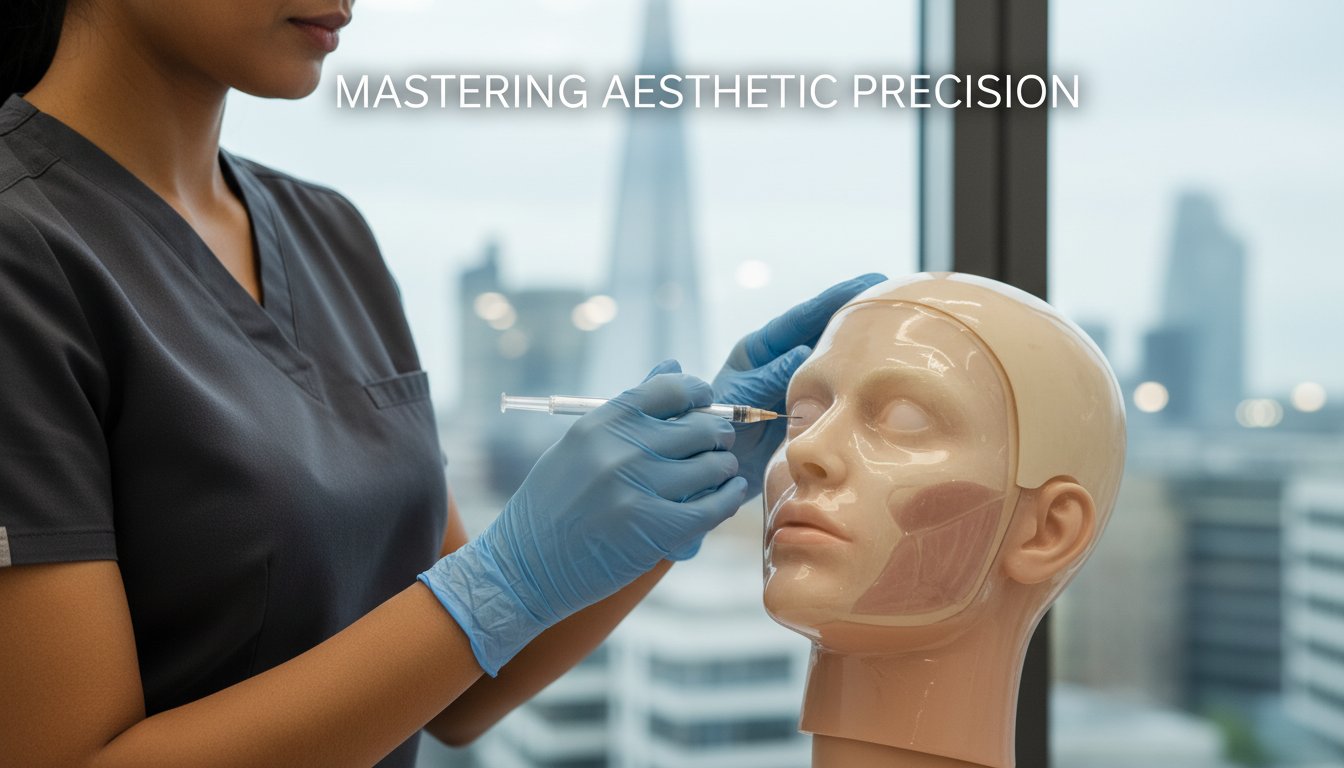
What if you could erase the “tired look” with such precision that the results were entirely undetectable? You understand that the periorbital region is one of the most delicate areas of the face, where the margin for error is razor-thin and the demand for a luminous, rested appearance has never been higher. Enrolling in a comprehensive tear trough filler training course is no longer just an optional skill; it’s the definitive path for practitioners who want to deliver safe, harmonious outcomes that build unwavering patient trust.
We agree that achieving a vibrant, youthful aesthetic without the risk of puffiness requires an artisan’s touch and meticulous clinical precision. At Beauty Worx Aesthetics, we believe that advanced education should balance high-end luxury with rigorous medical standards. In this guide, you’ll discover how to master the latest cannula techniques, navigate complex under-eye anatomy, and prepare for the July 2026 UK licensing requirements. We will explore the tools, products, and prestigious certifications that will transform your practice into a center for periorbital excellence.
Key Takeaways
- Understand the intricate anatomy of the periorbital region, including the tear trough ligament and vascular pathways, to ensure the highest standards of clinical safety.
- Master the use of blunt-tip cannulas to significantly reduce the risk of bruising and achieve the seamless, luminous results expected from a premier tear trough filler training course.
- Learn how to navigate the 2026 UK licensing landscape by prioritizing OFQUAL-regulated training and prestigious certifications that build lasting patient trust.
- Discover why live model practice under expert supervision is the essential bridge between theoretical knowledge and the confidence to treat the “tired look” effectively.
- Adopt a bespoke, artisan-led approach to dermal fillers that focuses on subtle restoration and enhancing the natural beauty of every individual patient.
The Rise of Periorbital Excellence: Why Tear Trough Training is Essential
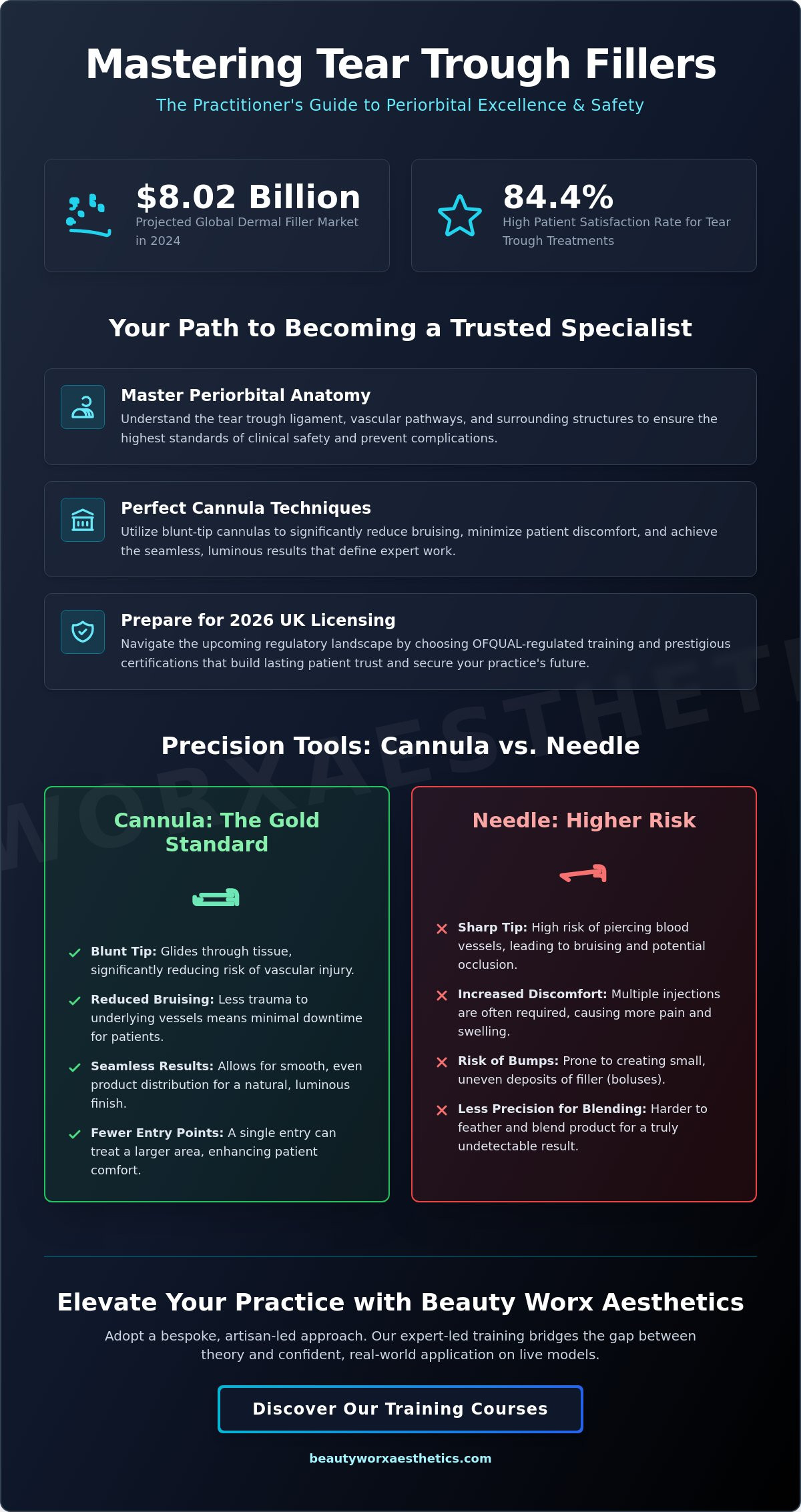
By 2026, the aesthetic conversation has moved decisively away from the frozen, overfilled faces of previous decades. Patients now prioritize a refreshed, luminous appearance that suggests wellness rather than work. This cultural shift has placed periorbital rejuvenation at the center of a sophisticated facial aesthetics strategy. With the global dermal filler market projected to reach $8.02 billion this year, practitioners who master the under-eye area tap into a lucrative and growing demand for subtle, harmonious enhancements. Investing in a tear trough filler training course is the most direct path to elevating your clinical repertoire and financial health. Transitioning from foundation filler techniques to the delicate artistry of the tear trough requires a shift in mindset; you’re no longer just filling a line, you’re managing complex light and shadow.
Addressing the “Tired Eye” Phenomenon
Hollowing in the tear trough area often creates a shadow that patients describe as looking permanently exhausted. This emotional burden impacts self-confidence, leading many to spend hundreds on topical creams that ultimately fail to address the underlying structural loss. While surgical options like Blepharoplasty offer a permanent solution for redundant skin or significant fat pads, many patients prefer the non-invasive, immediate restoration provided by dermal fillers. A systematic review found a high patient satisfaction rate of 84.4 percent for these treatments, highlighting their efficacy. However, success depends on setting realistic expectations; fillers restore volume and luminosity, but they don’t replace the need for healthy lifestyle habits or surgical intervention in severe cases of skin laxity. It’s about providing a refreshed version of the patient, ensuring they leave the clinic looking well-rested and vibrant.
The Practitioner’s Competitive Edge
Mastering this high-risk area differentiates a clinic from high-street injectors who may only feel comfortable with basic lip or cheek augmentations. Completing an advanced tear trough filler training course allows you to offer a bespoke service that respects the unique facial structure of every individual. This specialized knowledge is the bridge between being a standard injector and becoming a trusted, expert artisan. By focusing on undetectable enhancements, you build a reputation for safety and artistic discernment. Transitioning from foundation fillers to these advanced techniques isn’t just a skill upgrade; it’s a strategic move to secure a prestigious position in an increasingly regulated market. Patients don’t just want a treatment; they want the confidence that comes from being in the hands of a specialist who views their face as a canvas for restoration. This mastery builds patient trust, turning a one-off appointment into a lifelong journey of self-care.
The Science of the Under-Eye: Anatomy and Safety Protocols
The tear trough ligament is a true osteocutaneous ligament that firmly attaches the skin to the periosteum of the maxilla, creating a structural depression that deepens as the surrounding tissues lose volume. Understanding this delicate architecture is the cornerstone of any advanced tear trough filler training course. Mastery requires more than just technical skill; it demands a deep appreciation for the three-dimensional interplay of skin, muscle, and fat. As we age, the thinning of the overlying skin and the gradual resorption of the maxillary bone further exacerbate the appearance of hollowing. This complex anatomical shift is why a one-size-fits-all approach often fails to deliver the luminous, natural results that define excellence in modern aesthetics.
Clinical safety in this region is paramount due to the proximity of high-risk vascular pathways. The infraorbital nerve and the angular artery reside within millimeters of common injection sites, making precise placement a non-negotiable requirement. According to research on Dermal Fillers for the Treatment of Tear Trough Deformity, successful outcomes are intrinsically linked to an injector’s ability to navigate these danger zones with confidence. Any practitioner looking to elevate their craft must integrate these safety protocols into a broader complications management course framework. This holistic view ensures that you aren’t just performing a procedure, but safeguarding the patient’s long-term wellbeing. Safety isn’t an afterthought. It’s the foundation of your reputation.
Anatomy of the Periorbital Region
Distinguishing between a “True” tear trough deformity, caused by ligamentous tethering, and a “Pseudo” deformity, caused by cheek volume loss or fat herniation, is vital for achieving a harmonious result. Treating a pseudo-deformity as a true tear trough often leads to overfilling and a puffy, unnatural look. By identifying these nuances, you provide a bespoke treatment plan that respects the patient’s unique anatomy and the natural aging process of the bone and soft tissue. If you’re ready to refine your diagnostic eye, our Advanced Dermal Filler Course offers the deep-dive expertise you need.
Risk Mitigation and Patient Safety
Vascular mapping allows you to visualize the path of the angular artery, significantly reducing the risk of accidental occlusion. In the rare event of a vascular emergency, having an immediate hyaluronidase protocol is essential for reversing the filler and restoring blood flow. Effective pre-treatment screening is equally important; patients with significant malar edema or festoons may not be suitable candidates for filler and should be referred for surgical consultation instead. This meticulous approach to patient selection is what defines a truly expert artisan in the tear trough filler training course landscape.
Precision Tools and Product Selection: Cannula vs. Needle
Choosing the right instrument is a defining moment for any specialist aiming to achieve a luminous, rested look for their patients. In a modern tear trough filler training course, the debate between the needle and the cannula is no longer just about preference; it’s about selecting the tool that best honors the delicate periorbital anatomy. While needles were once the standard, the 2026 clinical landscape favors the blunt-tip cannula for its ability to glide through tissue planes with minimal disruption. This shift reflects a broader commitment to the patient’s emotional journey, ensuring that the path to self-confidence isn’t marred by significant bruising or unnecessary downtime.
Precision remains the goal, and there are still moments where a needle serves as the artisan’s choice. For fine-tuning the medial aspect or placing small, deep boluses directly onto the bone, a needle offers a level of pinpoint accuracy that is hard to replicate. However, when reviewing FDA information on dermal fillers, the emphasis on understanding site-specific risks is clear. Practitioners must master the science of depth to avoid the Tyndall effect, a bluish discoloration caused by light scattering when hyaluronic acid is placed too superficially. Achieving an undetectable result requires placing the product deep beneath the orbicularis oculi muscle, a technique that demands both anatomical knowledge and tactile sensitivity.
The Artisan Case for the Cannula
The transition to cannula mastery is often the highlight of an advanced tear trough filler training course. By using a single entry point, you can treat the entire infraorbital hollow, significantly reducing the risk of vascular compromise and ecchymosis. The blunt tip provides valuable tactile feedback; you can literally feel the resistance of different tissue layers, allowing for more confident and harmonious product placement. This method doesn’t just improve safety; it enhances the patient experience, making the procedure feel more like a bespoke spa treatment than a clinical intervention.
Selecting the Perfect Dermal Filler
Product rheology is the secret to a natural, non-puffy result. The under-eye skin is the thinnest on the body, approximately 0.5mm thick, which means the filler must have low hydrophilicity to prevent excessive water absorption. You want a product that integrates seamlessly without creating a “heavy” look. While a lip augmentation filler often requires higher cohesivity to define the vermilion border, periorbital fillers need a delicate balance of G-prime and spreadability. Choosing a low-swelling hyaluronic acid ensures that the refreshed appearance you create on the day of treatment remains stable and subtle for months to come.
Selecting the Right Tear Trough Filler Training Course
Selecting your educational partner is perhaps the most significant investment you’ll make in your journey toward periorbital mastery. As the UK aesthetics industry shifts toward mandatory licensing in July 2026; the distinction between a standard workshop and a regulated tear trough filler training course has never been more critical. You deserve a curriculum that doesn’t just teach you how to inject, but empowers you with the clinical depth to manage a high-risk area with absolute poise. This is where the choice between OFQUAL regulation and simple CPD accreditation defines your professional trajectory. While many providers offer short-term certificates, a prestigious qualification ensures your practice is built on a foundation of safety and recognized excellence.
OFQUAL vs. CPD: Understanding the Difference
In the evolving 2026 landscape, OFQUAL-regulated qualifications have emerged as the gold standard for practitioners who view aesthetics as a long-term career. While CPD points are helpful for ongoing learning, they often lack the rigorous assessment and external moderation that government-regulated bodies provide. Choosing a regulated pathway, such as a Level 7 Diploma in Clinical Aesthetic Injectable Treatments, protects your professional reputation and ensures you’re prepared for future legislative changes. Insurance companies increasingly favor these formal qualifications, often offering more comprehensive coverage to practitioners who can demonstrate this level of academic and practical rigor. It’s about more than just a certificate; it’s about future-proofing your business against a tightening regulatory environment.
What to Expect from High-End Practical Training
True confidence in the periorbital region can’t be found in a textbook or through a screen. High-end training must prioritize live model practice under the watchful eye of an expert mentor. You should look for small group sizes that allow for personalized guidance, ensuring you can master the “feel” of the cannula as it navigates the delicate sub-orbicularis plane. A superior tear trough filler training course will expose you to multiple models with varying degrees of hollowing, bone resorption, and skin laxity. This diversity is essential for developing the “artisan’s eye” required to create bespoke results. Post-course support is equally vital; access to a community of specialists provides a safety net as you begin to integrate these advanced techniques into your own clinic. You aren’t just learning a skill; you’re joining a prestigious lineage of practitioners dedicated to the highest standards of care.
The best educators are those who remain active in clinical practice, bringing real-world insights and the latest safety protocols to the training room. Verifying that your mentors have extensive experience in managing complications is non-negotiable. Before you enroll, ensure the syllabus includes a dedicated focus on hyaluronidase protocols and vascular emergency management. This transparency builds the trust necessary for you to thrive as a specialist. If you’re ready to elevate your practice with a qualification that commands respect, explore our Level 7 Diploma in Clinical Aesthetic Injectable Treatments today.
Elevating Your Practice with Beauty Worx Aesthetics
At Beauty Worx Aesthetics, we view periorbital rejuvenation as the pinnacle of aesthetic artistry. Our tear trough filler training course isn’t merely a technical tutorial; it’s an invitation to join a lineage of practitioners who prioritize the subtle, the harmonious, and the safe. We believe that clinical excellence should feel like a luxury experience, where the meticulous study of anatomy meets the discerning eye of an artisan. By choosing to train with us, you’re not just acquiring a skill. You’re embarking on a journey to become a specialist who delivers undetectable results that reveal the best version of every patient. Our philosophy balances the sterile precision of medical science with the warm, welcoming atmosphere of a high-end boutique.
Our bespoke approach to education ensures that you move at a pace that builds genuine confidence. While a masterclass provides the immediate tools for under-eye restoration, we encourage our students to view this as a stepping stone toward the Level 7 Diploma in Clinical Aesthetic Injectable Treatments. This progression solidifies your reputation as an elite practitioner, setting you apart in a competitive market that increasingly values formal, regulated qualifications. You’ll join a network of like-minded professionals who are dedicated to enhancing natural beauty and aging gracefully through continuous partnership and support.
The Beauty Worx Learning Experience
Our state-of-the-art training facilities are designed to mirror the calm, sophisticated environment of a luxury spa while maintaining the highest clinical standards. You’ll receive direct mentorship from lead practitioners who are recognized experts in the periorbital field. This intimate setting allows for a rhythmic flow of learning, where technical terms are explained with clarity and sensory details are highlighted to refine your artistic discernment. We prepare you for real-world clinical success by focusing on the emotional journey of the patient, ensuring you can guide them through their options without pressure and with total transparency.
Your Next Steps in Aesthetic Excellence
Integrating tear trough treatments into your existing service menu is a transformative step for your clinic’s growth. To provide a truly comprehensive rejuvenation strategy, many of our graduates pair filler work with a polynucleotide treatment. This cellular skin rejuvenation acts as a perfect companion to dermal fillers, improving skin quality and elasticity to ensure the results are both luminous and long-lasting. If you’re ready to advance your career, we invite you to contact our admissions team for a bespoke career consultation. We’ll help you map out a training journey that aligns with your professional aspirations and your commitment to patient-centered care.
Step into the Future of Periorbital Excellence
The journey toward becoming a periorbital specialist is one of both scientific precision and artistic discernment. By mastering the delicate balance of product rheology and advanced cannula techniques, you ensure your patients receive the refreshed, luminous results they desire. Choosing an elite tear trough filler training course isn’t just a business decision; it’s a commitment to your professional integrity and the emotional wellbeing of those you treat. As an OFQUAL Regulated Training Provider, we offer the structure and security you need to thrive in the 2026 regulatory environment.
Through expert mentorship from clinical leaders and live model hands-on experience, you’ll gain the quiet confidence of a true artisan. You’re now equipped with the knowledge to differentiate your practice and provide bespoke, undetectable enhancements. Discover our advanced Tear Trough Masterclass and elevate your aesthetics career today. We look forward to supporting you as you reveal the best version of your patients and yourself.
Frequently Asked Questions
Is a tear trough filler training course suitable for non-medics?
A tear trough filler training course is accessible to both medical professionals and experienced aesthetic practitioners who meet specific entry requirements. While the landscape is shifting due to the July 2026 licensing updates, those with a Level 3 in Beauty Therapy or equivalent can typically enroll. It’s vital to choose a regulated pathway that ensures you’re prepared for stricter oversight, allowing you to build a practice that is both safe and prestigious.
What are the prerequisites for enrolling in an advanced dermal filler course?
Prerequisites generally include a certificate in foundation dermal fillers and a minimum of six months of active injecting experience. Reputable academies, including Beauty Worx Aesthetics, require this baseline to ensure you’ve mastered basic needle control before moving to the high-risk periorbital area. This ensures your transition into advanced artistry is grounded in a firm understanding of facial anatomy and basic clinical safety protocols.
Will I be able to get insurance after completing this masterclass?
You will be able to secure insurance coverage once you provide a certificate from an accredited training provider. Insurers specifically require proof of a specialized tear trough filler training course because the under-eye is considered a high-risk zone. Holding an OFQUAL-regulated qualification often makes the underwriting process smoother, providing you with the comprehensive protection necessary to treat your patients with complete peace of mind.
Is it better to use a needle or a cannula for tear trough filler?
Most specialists recommend the blunt-tip cannula as the primary tool for periorbital rejuvenation because it significantly minimizes the risk of vascular occlusion. While a needle might be used for fine-tuning the medial aspect, the cannula’s ability to glide through tissue planes reduces bruising rates to approximately 7.2 percent. Mastering both tools allows you to offer a bespoke approach that prioritizes patient comfort and undetectable, harmonious results.
How long does a typical tear trough filler training course take?
A typical advanced tear trough filler training course is designed as a single, intensive day of education. The morning focuses on the intricate science of under-eye anatomy and vascular mapping, while the afternoon is dedicated to hands-on practice with live models. This condensed but thorough format ensures you receive the mentorship needed to integrate these advanced techniques into your clinic menu immediately and with total clinical confidence.
What is the Tyndall effect and how do I avoid it in my practice?
The Tyndall effect is a bluish hue that appears when hyaluronic acid is injected too superficially, causing light to scatter through the thin skin. You can avoid this by ensuring the filler is placed in the deep sub-orbicularis plane, directly above the periosteum. Learning the precise “feel” of this depth during your training is the key to achieving the luminous, refreshed look your patients expect without any artificial discoloration.
Do I need to have completed a foundation dermal filler course first?
You must complete a foundation dermal filler course before advancing to periorbital treatments. Mastery of basic areas, such as the nasolabial folds or marionette lines, provides the essential needle and cannula skills required for more complex procedures. This logical progression ensures that you approach the delicate tear trough area with the experience needed to maintain the highest standards of safety and artistic discernment.
How much can a practitioner typically charge for tear trough treatments in the UK?
Practitioners in the UK generally charge between £350 and £600 for a bespoke tear trough treatment. This fee reflects the specialized nature of the procedure and the significant investment you’ve made in advanced education. By offering this high-value service, you can significantly increase your clinic’s revenue while providing a solution that addresses one of the most common patient concerns: the “tired” look.














 Reviews