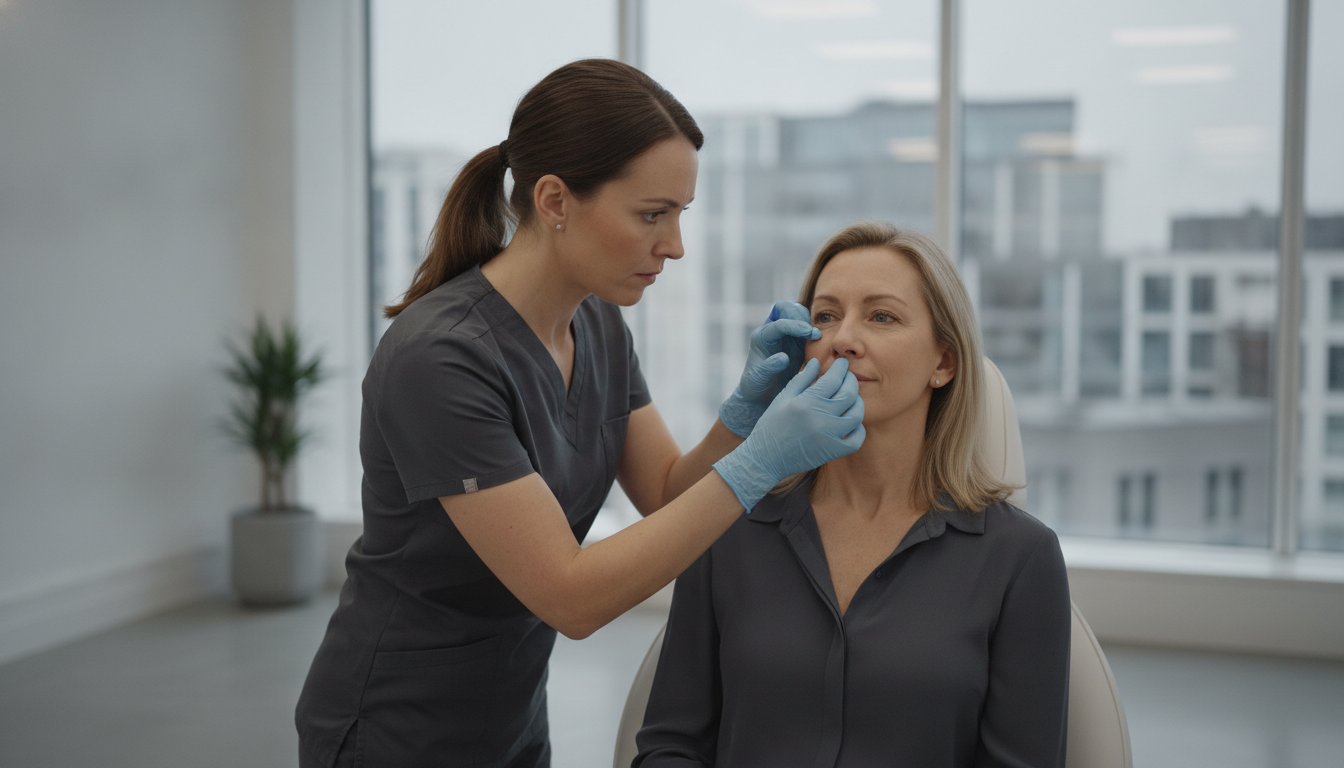

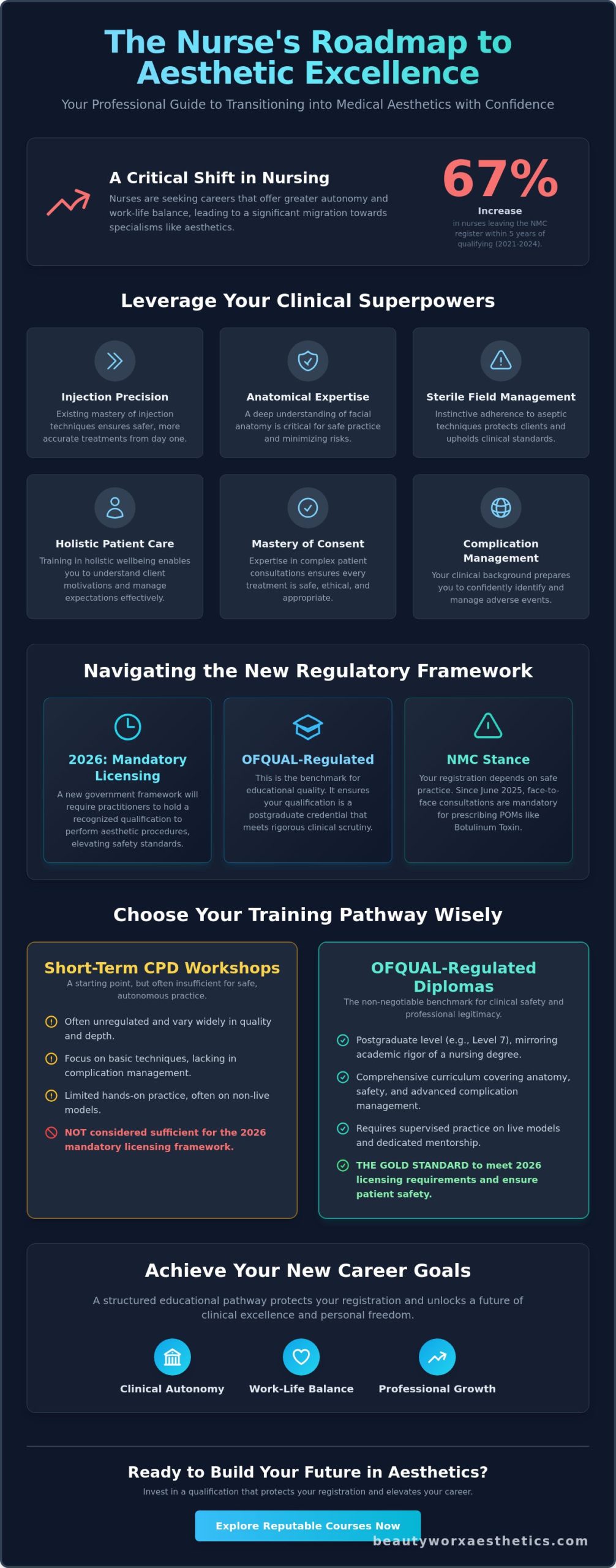
Between 2021 and 2024, the number of nurses leaving the NMC register within five years of qualifying rose by a staggering 67 percent. This shift marks a quiet evolution in the profession, where dedicated clinicians are seeking a more balanced, autonomous way to practice their craft. You likely recognize this feeling; it’s the desire to reclaim your schedule while still providing high-standard care that truly changes lives. Finding the most reputable aesthetics courses for nurses uk is the vital first step toward this transition, yet the journey requires more than just a weekend workshop to ensure your professional safety.
It’s natural to feel a sense of hesitation when facing the complexities of new regulations and the weight of autonomous practice. You’ve worked hard for your registration, and you deserve a career path that protects it while allowing your artistic discernment to flourish. This comprehensive guide serves as your professional roadmap for entering the medical aesthetics specialty with confidence. We will clarify the 2026 mandatory licensing framework, explain the critical difference between basic CPD and postgraduate qualifications like the Level 7 Diploma, and outline exactly how to build a practice that balances clinical excellence with a refined, luxury experience.
Key Takeaways
- Leverage your existing clinical expertise, from sterile field management to injection precision, to transition seamlessly into a proactive, client-focused environment.
- Understand why OFQUAL-regulated qualifications have become the non-negotiable benchmark for clinical safety and professional legitimacy under the 2026 licensing framework.
- Learn to distinguish between short-term CPD workshops and comprehensive postgraduate diplomas when researching the most reputable aesthetics courses for nurses uk.
- Recognize the vital importance of hands-on mentorship and supervised practice on live models to build the confidence required for autonomous complication management.
- Discover how a structured educational pathway can help you achieve a sustainable work-life balance without compromising your professional registration or clinical standards.
The Transition from Clinical Nursing to Aesthetic Specialism
The journey from the bedside to the injector’s chair is far more than a simple career change; it’s a sophisticated evolution of your existing clinical identity. As a nursing professional, you already possess a refined manual dexterity and a deep understanding of anatomy that sets you apart. These are the foundations of excellence. By choosing the right aesthetics courses for nurses uk, you’re not starting from zero. You’re simply applying your expertise in injection technique, patient assessment, and sterile field management to a new, more autonomous environment. The shift is profound. While the NHS often demands rapid, reactive responses to acute illness, your new practice will focus on the art of enhancement and the preservation of natural vitality.
Many practitioners find that medical aesthetics works beautifully as a portfolio career. It offers a way to maintain your clinical roots while building a private practice that honors your time and professional worth. However, this new path doesn’t mean leaving your professional identity behind. The NMC Code remains your North Star. Every consultation and every treatment must be grounded in the same ethical standards of care and safety that defined your time on the wards. The transition into Aesthetic medicine represents a significant pivot from a reactive model toward a proactive, wellness-focused approach where the client’s emotional journey is as important as the clinical result.
The Emotional Journey to Clinical Autonomy
Stepping away from the multidisciplinary team can feel daunting. You’re moving from a system of shared responsibility to a space where you’re the lead clinician making independent decisions. It’s common to experience a sense of imposter syndrome during this shift. You can overcome this through rigorous, evidence-based training that mirrors the academic depth of your initial nursing degree. Balancing the pampered, luxury experience of a high-end clinic with the uncompromising safety of a medical environment is a skill in itself. It’s about creating a sanctuary where clients feel safe because they know an expert is in control.
Why Nurses are the Ideal Aesthetic Practitioners
Nurses are the natural gold standard for elective cosmetic procedures. Your training in holistic patient wellbeing means you don’t just see a wrinkle; you see a person with unique motivations and fears. This empathy is vital for managing patient expectations and achieving the subtle, natural-looking results that modern clients crave. You’ve mastered the art of consent and the complexity of patient consultations in high-pressure settings. These transferable skills ensure that every treatment plan you create is as safe as it is beautiful. Your presence in the industry elevates the entire field, bringing a level of clinical discernment that is simply irreplaceable.
Understanding the Regulatory Landscape: JCCP, NMC, and OFQUAL
The regulatory environment in 2026 is a sophisticated framework designed to elevate patient safety and professional accountability above all else. At the heart of this structure lies the Joint Council for Cosmetic Practitioners, a body that has become the definitive voice for ethical standards and practitioner registration. For any professional researching aesthetics courses for nurses uk, understanding the weight of OFQUAL regulation is paramount. OFQUAL acts as the essential benchmark for educational quality. It ensures that your qualification isn’t just a certificate of attendance, but a recognized postgraduate credential that stands up to rigorous clinical scrutiny. This level of oversight is what transforms a simple career pivot into a respected clinical specialism.
The Nursing and Midwifery Council (NMC) maintains a clear, uncompromising stance: your professional registration depends on your ability to practice safely and within a defined scope of competence. This is particularly critical regarding prescription-only medicines (POMs) like Botulinum Toxin. Since the update on June 1, 2025, the NMC has mandated that all nurse prescribers must conduct a face-to-face consultation before any cosmetic prescription is issued. This rule effectively eliminates the practice of remote prescribing, which the council identifies as a significant risk to both patient safety and your professional integrity. Adhering to these standards is how you build a practice that is as resilient as it is reputable.
The Prescribing Dilemma for Aesthetic Nurses
If you aren’t yet an independent prescriber, your path involves partnering with a qualified professional who must personally assess every client before you administer treatment. It’s a common misconception that practitioners can hold “stock” of aesthetic medicines. Legally, these must be prescribed for a named patient after a physical examination. Bypassing this step doesn’t just invite legal trouble; it undermines the clinical foundation of your practice. Many nurses find that pursuing a Level 7 Diploma in Clinical Aesthetic Injectable Treatments provides the academic weight needed to eventually transition toward independent prescribing with confidence.
Indemnity and Professional Insurance
A common pitfall for those entering this field is assuming that standard RCN indemnity will suffice. It won’t. The RCN explicitly excludes cosmetic or aesthetic procedures from its standard cover, meaning you must secure specialist medical malpractice insurance. Providers tailored for UK medical professionals understand the nuances of aesthetic risk and offer the protection you need. When you transition between practice types, ensure you have “run-off” cover. This protects you against claims made in the future for treatments you performed in the past. It’s a meticulous detail that ensures your professional legacy remains secure.
Choosing Your Pathway: CPD Accredited vs. OFQUAL Regulated Qualifications
Selecting the right educational framework is perhaps the most critical decision in your professional journey toward clinical excellence. While a vast array of aesthetics courses for nurses uk offer quick entry into the industry, there’s a vital distinction between a short-term CPD workshop and a regulated qualification. CPD certificates are excellent for focused, continuous learning, yet they often lack the academic depth required for high-level clinical governance. In contrast, OFQUAL-regulated qualifications provide a standardized, nationally recognized benchmark of competence. This distinction is becoming increasingly important as the UK market moves toward stricter mandatory licensing in 2026. Being an OFQUAL-qualified practitioner isn’t just about prestige; it’s about future-proofing your career against shifting regulations.
The “Level” system provides a clear hierarchy for your professional development, allowing you to build your skills with a logical, structured progression:
- Level 4: Focuses on foundational skin rejuvenation, including treatments like the Level 4 Certificate in Skin Needling.
- Level 5: Delves deeper into aesthetic practice, bridging the gap between skin health and more complex interventions.
- Level 7: Represents the pinnacle of non-surgical training, equivalent to a Master’s level specialism in clinical injectables.
For the experienced nurse, a “fast-track” route may be available through Recognition of Prior Learning (RPL). This allows you to leverage your existing medical background while still meeting the rigorous assessment standards of a regulated diploma. This path ensures you maintain high clinical standards without redundant training, respecting the years of expertise you already bring to the table.
The Gold Standard: Level 7 Diploma in Clinical Aesthetics
The Level 7 Diploma in Clinical Aesthetic Injectable Treatments is widely regarded as the ultimate credential for medical professionals. This curriculum goes far beyond simple injection points, encompassing advanced anatomy, physiology, and the ethical nuances of elective medicine. For nurses, this qualification provides the academic weight necessary to practice with true autonomy. It prepares you for the complexities of the 2026 licensing framework, ensuring your practice remains a sanctuary of safety and sophistication.
Foundation and Advanced Masterclasses
While the Level 7 is the long-term goal, foundation courses in anti-wrinkle injections and dermal fillers are essential for building initial confidence. These entry-level steps allow you to master the basics of facial mapping and product rheology. Once you’ve secured these fundamentals, moving into advanced masterclasses—such as tear trough filler or jawline contouring—allows you to refine your artistic discernment. Continuous professional development remains vital even after achieving a diploma; it’s the only way to stay at the forefront of innovative techniques and subtle, natural-looking restoration.
The Practical Journey: Live Models, Mentorship, and Safety
The transition from theory to practice is where true clinical excellence is forged. When evaluating aesthetics courses for nurses uk, the depth of supervised clinical hours is the most telling metric of quality. Mannequins simply cannot replicate the subtle resistance of human tissue or the unique vascular patterns of a living client. You need the tactile feedback that only comes from injecting live models under the watchful eye of a specialist. This hands-on experience allows you to feel the needle’s depth and understand the nuances of product rheology in real-time. It’s the difference between knowing the anatomy and feeling it.
Building a portfolio of evidence through supervised practice is a cornerstone of professional legitimacy. As you document your clinical reasoning and treatment outcomes, you’re not just completing a requirement; you’re refining your artisan eye. An expert artisan doesn’t just see a list of treatment areas. They assess the face as a dynamic, interconnected whole. This holistic approach ensures that every enhancement respects the client’s inherent features, leading to results that look vital and authentic rather than artificial. Your portfolio becomes a testament to your commitment to safety and your growing mastery of the craft.
Mastering Complications and Clinical Safety
A safe practitioner is defined by how they handle the unexpected. Every nurse must complete a robust complications management course to ensure they can identify and treat vascular occlusions, infections, or delayed hypersensitivity with poise. Professionalism means being prepared for every eventuality. Having a ready-to-use emergency kit and a reliable clinical support network isn’t just best practice; it’s a professional necessity that protects both your clients and your registration. If you’re ready to elevate your clinical safety standards, consider enrolling in our Complications Management Course today.
The Power of Clinical Mentorship
Your training doesn’t end when your certificate is issued. The most successful aesthetic nurses are those who seek ongoing mentorship from experienced clinicians. A mentor provides a steady hand and a second opinion when you face your first complex case in your own clinic. This partnership facilitates a smooth evolution from a student to a confident clinic owner. It offers a safe space to discuss clinical challenges and business growth, ensuring you never feel isolated in your autonomous practice. True mentorship is an investment in your long-term success and peace of mind.
Building Your Future with Beauty Worx Aesthetics
Beauty Worx Academy represents the intersection of clinical excellence and high-end aesthetic artistry. We believe that your transition into this specialty should be as sophisticated as the results you intend to create for your clients. By offering a curated selection of aesthetics courses for nurses uk, we ensure that every practitioner who enters our doors is equipped with the knowledge to lead the industry with poise. Our commitment to OFQUAL regulated qualifications and JCCP standards isn’t just a checkbox; it’s a promise of professional safety and clinical longevity. We view our students as partners in a long-term journey toward self-confidence and career autonomy, providing a space where your technical skills are nurtured into a true craft.
The atmosphere at our academy is designed to mirror the refined, calm environment of a luxury clinic. It avoids the sterile coldness of traditional training facilities, opting instead for a warm and welcoming style that respects your professional status. You’ll find that our curriculum moves at a steady, fluid pace, allowing for deep contemplation and trust-building. This meticulous attention to detail ensures that you don’t just learn the procedures; you learn the philosophy behind subtle, natural-looking restoration. Whether you’re seeking to supplement your current role or build a full-time private practice, we provide the steady guidance needed to navigate this evolution.
Our Regulated Qualification Pathways
Choosing your educational partner is a significant statement of intent. Our flagship programme, the Level 7 Diploma in Clinical Aesthetic Injectable Treatments, is designed for those who refuse to settle for anything less than the gold standard of postgraduate education. For those beginning their journey, we provide clear entry pathways through our Level 4 and Level 5 certificates in aesthetic practice, ensuring a solid foundation in skin health before progressing to complex injectables. Beyond dermal fillers and toxins, we offer specialist training in wellness-focused procedures like vitamin B12 injections, allowing you to diversify your portfolio with treatments that enhance your clients’ overall vitality and clarity.
The Beauty Worx Difference: Beyond the Classroom
Our academy is led by expert practitioners who treat every procedure as a delicate balance of science and art. We don’t just teach you where to place a product; we teach you to curate a bespoke facial aesthetics journey for every individual. This approach prioritizes the preservation of inherent features and the achievement of authentic, tailored results. In our professional environment, you’ll find a community that values your clinical discernment and supports your growth from your first foundation course to advanced masterclasses. We’re here to help you navigate the complexities of the 2026 landscape with quiet confidence. It’s time to transform your clinical expertise into a rewarding partnership in self-care.
Explore our full range of aesthetics courses for nurses and begin your professional evolution today.
Your Evolution Toward Clinical Excellence
The transition into medical aesthetics is a profound evolution of your clinical identity. You’ve discovered that navigating the modern regulatory landscape requires more than just technical precision; it demands a commitment to OFQUAL-regulated standards and a deep understanding of patient safety. By choosing the most reputable aesthetics courses for nurses uk, you’re not simply acquiring a new skill set. You’re building a robust foundation of clinical governance that protects your professional registration while allowing your artistic discernment to flourish in a luxury setting.
At Beauty Worx Academy, we’re dedicated to supporting your journey through a blend of OFQUAL-regulated qualifications, expert clinical mentorship, and advanced complications management training. We view our relationship with you as an ongoing partnership in excellence, ensuring you have the confidence to practice autonomously and safely. It’s time to reclaim your professional balance and embrace a career path that honors both your medical expertise and your desire for a more refined way of working. View our OFQUAL Regulated Aesthetics Courses for Nurses and take the first step toward your new professional horizon. Your future in aesthetic artistry begins with a single, decisive choice.
Frequently Asked Questions
Do I need to be a prescribing nurse to train in aesthetics?
No, you don’t need to be an independent prescriber to begin your journey in this specialty. If you are a non-prescriber, you simply work alongside a qualified prescriber who must conduct a face-to-face consultation for every client receiving prescription-only medicines. Many practitioners find that starting with aesthetics courses for nurses uk provides the clinical foundation needed to eventually pursue the V300 prescribing qualification with confidence.
How long does it take to complete a Level 7 Aesthetics Diploma?
A Level 7 Diploma typically takes between 12 and 24 months to complete. This timeline allows for a deep academic study of facial anatomy and ethics, alongside the practical requirement of building a supervised clinical portfolio. The pace is often flexible, ensuring you can balance your postgraduate studies with your existing professional commitments without feeling rushed or overwhelmed by the transition.
Can I practice aesthetics alongside my NHS nursing role?
You certainly can maintain your NHS role while building an aesthetic practice. This portfolio career approach is increasingly popular, as it offers financial security while you cultivate your private client base. It’s essential to check your specific NHS contract for any clauses regarding private work and to ensure your aesthetic practice remains entirely separate from your hospital duties to maintain professional clarity.
What insurance do I need as an aesthetic nurse practitioner?
You require specialist medical malpractice and professional indemnity insurance specifically tailored for aesthetic procedures. Standard RCN indemnity does not cover cosmetic treatments, so you must secure a policy that includes public liability and run-off cover. This specialized insurance ensures both you and your clients are protected within a secure, professional framework, allowing you to practice with true peace of mind.
Is the Level 7 qualification mandatory for nurses in the UK?
While not strictly mandatory for all procedures, the Level 7 qualification is the recognized gold standard for clinical injectables in 2026. The licensing scheme in England categorizes procedures by risk, and holding a regulated diploma ensures you’re prepared for the highest tiers of practice. It represents a commitment to excellence that patients increasingly prioritize when choosing a trusted, expert clinician for their care.
How much can I realistically earn as an aesthetic nurse?
An employed aesthetic nurse in the UK earns an average of £41,557 per year, with London averages rising to £45,754 as of May 2026. For those who choose the path of self-employment and establish their own clinics, earnings have the potential to exceed £70,000 to £100,000. Your income ultimately reflects your level of expertise and the bespoke, high-end nature of the services you provide.
What happens if I encounter a complication after my training?
If a complication occurs, you should immediately implement the clinical protocols learned during your training. You’ll use your emergency kit and, if necessary, consult your clinical mentor or a specialist support network for guidance. Being a safe practitioner isn’t defined by the absence of complications, but by having the calm expertise and the professional network required to manage them with absolute precision.
Can midwives and dental nurses also take these aesthetics courses?
Yes, midwives and dental nurses are eligible to enroll in these professional aesthetics courses for nurses uk. As regulated healthcare professionals, you bring a wealth of transferable clinical skills and a deep understanding of patient assessment. The curriculum is designed to respect your existing expertise while providing the specific artistic and technical training required to excel in the sophisticated field of non-surgical enhancement.











 Reviews