
The era of self-regulation in the UK aesthetics industry has come to a definitive end, and your startup budget must reflect this new reality. It’s natural to feel a sense of trepidation when faced with varying training costs and the looming shadow of the July 2026 mandatory licensing requirements. Understanding the true cost to set up an aesthetics clinic uk involves more than just tallying equipment; it’s about investing in a foundation that mirrors the high standards of the treatments you intend to provide. You deserve a path that prioritises patient safety and artistic discernment over shortcuts.
We understand that you’re looking for clarity in a market that often feels opaque. This guide serves as your professional companion, offering a meticulous breakdown of the financial investment required to launch a practice that’s both legally compliant and aesthetically exceptional. You’ll discover a detailed year-one budget, an analysis of why prestigious qualifications like the Level 7 Diploma are essential for long-term growth, and a clear roadmap to navigate the 2026 regulatory changes with absolute confidence. It’s time to transform your vision into a sustainable, sophisticated reality.
Key Takeaways
- Discover the three essential pillars of investment, education, infrastructure, and operations, that form the financial architecture of a premier practice.
- Navigate the true cost to set up an aesthetics clinic uk by distinguishing between short-term certificates and the long-term value of Ofqual-regulated qualifications.
- Learn how to curate a clinical environment that marries high-end luxury with stringent hygiene standards to ensure your space feels both safe and restorative.
- Understand the specific regulatory fees and insurance requirements for 2026, including the vital role of clinic management software in maintaining digital compliance.
- Gain a clear roadmap for optimising your return on investment by aligning your educational journey with the ability to offer bespoke, premium treatments.
The Financial Architecture of a Premier Aesthetics Clinic in 2026
Launching a clinical practice is an act of architectural precision. It requires a foundational shift in mindset, moving away from the ephemeral nature of beauty treatments toward the disciplined rigour of clinical excellence. To understand the true cost to set up an aesthetics clinic uk, you must view your investment through three distinct pillars: Education, Infrastructure, and Operations. While the allure of a “lean startup” model is tempting, cutting corners in this industry often results in a false economy. Skimping on regulated training or medical-grade equipment doesn’t just risk your reputation; it invites regulatory scrutiny that can prove far more expensive than the initial investment.
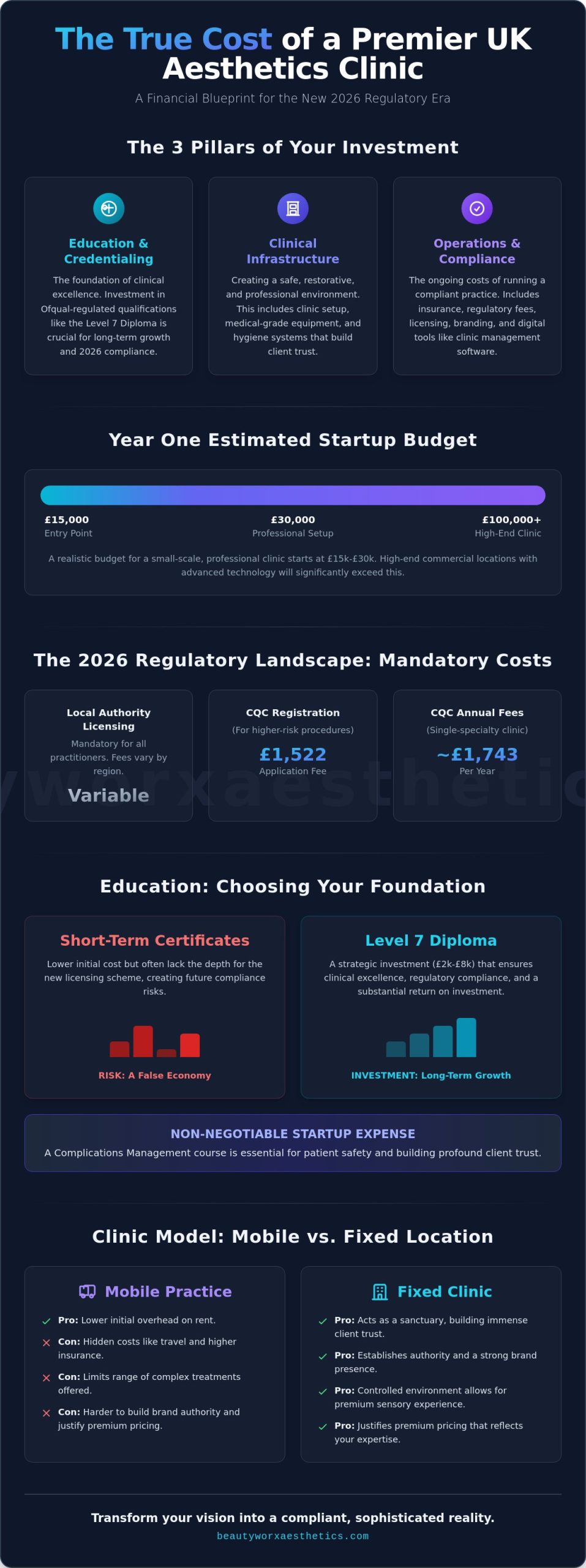
The transition from a beauty therapist to a clinical aesthetic practitioner involves a profound psychological and professional evolution. This journey is best understood through a comprehensive Aesthetic Medicine Overview, which frames these procedures as medical interventions rather than simple cosmetic enhancements. For a small-scale yet professional clinical setup in 2026, a realistic budget starts between £15,000 and £30,000. This ensures you have the capital to meet safety standards from day one. If you’re aiming for a high-end commercial location with advanced laser technology, that figure can easily exceed £100,000.
The Evolving Regulatory Landscape and Entry Costs
The regulatory environment in 2026 is uncompromising. With the mandatory licensing scheme for non-surgical cosmetic procedures implemented in England from July 2026, practitioners must budget for new registration fees. You’ll need to account for local authority licensing, which varies by region, and potentially CQC registration if you offer higher-risk procedures. The CQC application fee currently stands at £1,522, with annual fees for a single-specialty clinic around £1,743. While joining the JCCP is currently free, the cost of meeting their stringent standards for clinical hygiene and environmental health is a vital part of your financial planning.
Mobile vs. Fixed Clinic: The Real Cost Comparison
Many practitioners begin with a mobile model to save on rent, yet this path often hides significant expenses. Travel costs, higher insurance premiums for peripatetic work, and the inability to offer a full range of complex treatments can limit your growth. A dedicated physical space acts as a sanctuary for your clients. It builds a level of trust and authority that a mobile kit simply cannot replicate. Luxury branding relies on the sensory experience of a controlled environment. Without a physical clinical home, it’s difficult to justify the premium pricing that reflects your expertise and the sophisticated nature of your results.
Education and Credentialing: The True Cost of Clinical Excellence
Educational mastery is the most significant variable in the cost to set up an aesthetics clinic uk. While short, CPD-accredited certificates might offer a lower initial price point, they often lack the depth required to meet the rigorous standards of the UK Licensing Scheme for Cosmetic Procedures coming into force. For the discerning practitioner, the investment begins with a structured pathway. This journey usually starts with foundational certificates and progresses through to more advanced clinical practice. Beyond the course fees, you must budget for hidden variables. This includes travel to training centres, the procurement of live models for practical assessments, and the invaluable time spent under professional mentorship. One non-negotiable startup expense is a complications management course. This isn’t just a safety net; it’s a statement of clinical integrity that builds profound client trust.
The Level 7 Diploma: A Strategic Financial Move
Choosing a Level 7 Diploma in Clinical Aesthetic Injectable Treatments is a strategic financial decision. While the initial stock and training costs for such a high-level qualification can range from £2,000 to £8,000, the return on investment is substantial. Regulated qualifications often lead to lower medical malpractice insurance premiums. They also empower you to command premium prices that reflect your sophisticated skill set. Clients are increasingly seeking the reassurance of OFQUAL regulation as the legal market tightens. This level of training ensures your results remain subtle and authentic, preserving your reputation as an expert artisan.
Specialist Training and Treatment Diversification
Diversifying your treatment menu is essential for a steady revenue stream and a holistic client experience. Initial investment in vitamin b12 injection training allows you to offer wellness services that complement aesthetic work. Similarly, attending a lip augmentation filler masterclass refines your technique for those seeking artful, bespoke enhancements. Budgeting for ongoing CPD is vital. It ensures you maintain your status as a knowledgeable guide in an industry that prizes scientific advancement and artistic discernment. If you’re ready to elevate your credentials, exploring our comprehensive aesthetic courses guide is the gold standard for your career progression.
Clinical Infrastructure and the Logistics of a Professional Environment
Creating a physical space for your practice is an exercise in balancing the sterile requirements of a medical facility with the sensory warmth of a luxury sanctuary. The cost to set up an aesthetics clinic uk extends far beyond the monthly rent; it encompasses every touchpoint where safety meets sophistication. Your choice of premises must accommodate non-porous surfaces and clinical-grade flooring while still feeling restorative and inviting. An injectables-focused clinic usually requires an initial equipment investment of £2,000 to £5,000. This includes high-specification hydraulic couches that ensure patient comfort and medical-grade lighting to provide the clarity needed for precise, subtle results. Sterile storage solutions are equally vital, keeping your workspace organised and compliant with health standards.
Safety remains the cornerstone of professional practice. Every new clinic must factor in the mandatory cost of emergency kits, specifically an adrenaline and hyaluronidase setup. These are not optional extras; they’re essential tools for responsible complications management. When budgeting, consider the initial stock order of dermal fillers, toxins, and skin rejuvenation products. Balancing these levels is a delicate art. You want enough variety to offer customised care without tying up “dead money” in products that might expire before they’re used. Opening accounts with reputable pharmacies and wholesalers is a critical step in securing genuine, safe products for your clients.
The Clinical Setup: Beyond the Treatment Room
Operational efficiency often lies in the details that clients never see. You must secure waste management contracts for sharps disposal and clinical waste, which are ongoing but necessary expenses. Sourcing medical-grade furniture that reflects a facial aesthetics luxury brand is a worthwhile investment. It avoids the cold, sterile atmosphere of traditional hospitals. Maintaining a pristine environment also requires a consistent budget for high-quality PPE and rigorous sanitisation protocols. These elements reinforce the image of a meticulous, detail-oriented artisan who prioritises client safety above all else.
Initial Product Inventory and Prescribing Costs
The financial logistics of your inventory are influenced by your professional background. If you’re a non-medical practitioner, you’ll need to account for the costs of working with a prescriber for prescription-only medicines. This partnership is vital for maintaining transparency and compliance under the latest UK Aesthetics Licensing and Regulations. Establishing these professional relationships early allows for a fluid consultation process. It ensures that every treatment is framed as part of an ongoing partnership in self-care rather than a mere transaction. By carefully managing your pharmacy accounts and stock rotation, you protect your margins while ensuring every client receives the freshest, most effective formulations.
Safeguarding Your Practice: Insurance, Compliance, and Branding Costs
Building a clinic is more than a physical endeavour; it’s the creation of a secure legal and professional entity. Your choice between operating as a sole trader or incorporating a Limited Company is a pivotal first step. As of February 1, 2026, the digital fee to incorporate a new limited company is £100, while the annual confirmation statement fee is £50. While these administrative costs are modest, they represent the formal birth of your brand. Engaging a specialised accountant ensures your financial structures are as precise as your clinical work. This foundational clarity allows you to focus on the emotional journey of your clients, knowing your business is built on solid ground. Precision matters.
Insurance and Risk Management
Securing comprehensive medical malpractice and public liability insurance is a non-negotiable component of the cost to set up an aesthetics clinic uk. In 2026, premiums are heavily influenced by your level of training and the breadth of your treatment menu. Holding a Level 7 Diploma acts as a mark of quality that insurers often reward with more favourable rates. Joining professional support networks like the ACE Group provides an additional layer of security and peer-led guidance. Ultimately, your commitment to rigorous complications management serves as the most profound insurance policy for your professional reputation.
Digital Presence and Luxury Marketing
Your brand is a sensory promise of transformation and safety. For a high-end practice, a bespoke website is essential to convey the “Expert Artisan” persona. While template solutions exist, they rarely capture the sophisticated, quiet confidence required to attract discerning clients. Luxury isn’t just about a high price tag; it’s about the meticulous attention to detail in your visual identity. Budgeting for professional photography and videography is vital to showcase the subtle, natural-looking results that define your craft. Initial social media ad spend should be targeted and intentional, acting as a knowledgeable guide for local clients seeking authentic improvement. To ensure your digital footprint matches your clinical excellence, consider beginning your journey by exploring our professional aesthetics training programmes to build a brand founded on verified expertise.
Modern clinic management software has transitioned from a luxury to a fundamental requirement. It’s the backbone of GDPR compliance and meticulous digital charting, ensuring every client’s journey is documented with clinical precision. These systems facilitate a fluid, professional consultation process, mirroring the calm atmosphere of a high-end environment. They aren’t just administrative tools; they’re a guarantee of transparency and reliability in an industry where data security is as important as procedural safety. Safety is paramount.
Strategic Planning: Optimising Your ROI Through Elite Training
Strategic planning is the bridge between a quiet dream and a thriving clinical reality. While the initial cost to set up an aesthetics clinic uk might feel significant, it’s helpful to view these figures as the price of entry into a distinguished profession. A structured educational pathway is your most effective tool for reducing the “cost of mistakes.” In this industry, errors aren’t just financial; they’re reputational. By investing in high-level, regulated training from the outset, you bypass the expensive cycle of correcting poor techniques or navigating legal pitfalls. You’re not just buying a course; you’re securing your future as a trusted, expert artisan.
Your level of qualification directly dictates your earning potential. There’s a clear, rhythmic relationship between the depth of your credentials and your ability to command premium prices. Clients seeking subtle, natural-looking results are rarely looking for the lowest price; they’re looking for the highest level of safety and artistic discernment. Holding a Level 7 Diploma signals to your audience that you value their emotional journey toward self-confidence as much as the technical precision of the procedure itself. This transparency builds the kind of loyalty that transforms one-off transactions into lifelong partnerships in self-care.
- Regulated Training Pathway (Level 4 through to Level 7)
- Mandatory Licensing and Professional Insurance
- Clinical Premises Costs (Rent, Rates, and Utilities)
- Medical-Grade Equipment and Sterile Infrastructure
- Emergency Complications Kits (Adrenaline and Hyaluronidase)
- Bespoke Branding and Digital Presence
- Initial Product Inventory and Prescribing Fees
Calculating Your Break-Even Point
Understanding your margins is vital for sustainable growth. You must balance the cost of premium products with the value of your practitioner time. It’s not just about the price of a single syringe; it’s about the expertise required to place it with grace. Calculate how many bespoke treatments you need to perform each week to cover your fixed clinical overheads. Once you find your rhythm, you can begin to reinvest your profits into advanced innovations, such as polynucleotide treatment, to stay at the forefront of cellular skin rejuvenation. Steady growth is the hallmark of a professional.
The Beauty Worx Advantage: Mentorship and Support
We believe that your training shouldn’t end when you receive your certificate. The true value of a professional academy lies in the ongoing mentorship and the supportive network it provides during your vulnerable first year. Accessing live models and practical experience under the guidance of specialists allows you to build your confidence and your revenue much faster than working in isolation. We act as your knowledgeable guide, helping you navigate the complexities of the 2026 regulatory landscape with quiet confidence. If you’re ready to build a practice founded on excellence and safety, begin your professional journey with our Level 7 Diploma today. Your future as a specialist starts with a single, intentional step.
Cultivating Your Legacy in Aesthetic Excellence
The journey to opening your own clinical sanctuary is defined by the meticulous alignment of scientific rigour and artistic vision. We’ve explored how the cost to set up an aesthetics clinic uk is a multifaceted investment in your professional future, spanning from the physical infrastructure of a sterile, luxury environment to the essential digital compliance required in 2026. By prioritising high-level credentialing over short-term savings, you ensure that your practice remains resilient and respected in a tightening regulatory market. Safety and sophistication are the two halves of a successful whole.
Your success depends on a foundation of clinical safety and the quiet confidence that only expert mentorship can provide. Whether you’re refining your technique or navigating the complexities of new licensing, having a knowledgeable guide makes all the difference. We invite you to Explore our OFQUAL Regulated Aesthetics Qualifications, including our Level 7 Diplomas, over 25 CPD accredited courses, and advanced complications management training. Your commitment to excellence today is the guarantee of the subtle, authentic results your clients will cherish for years to come. The path to becoming an expert artisan is open to you.
Frequently Asked Questions
How much does it cost to start an aesthetics clinic in the UK on average?
The cost to set up an aesthetics clinic uk varies significantly based on your chosen scale and professional aspirations. For a modest home-based sanctuary, you might expect an initial investment between £5,000 and £10,000. However, launching a small-scale professional clinic typically requires a budget of £15,000 to £30,000. For those envisioning a high-end commercial space with advanced medical devices, the capital investment can easily exceed £100,000 to ensure a truly sophisticated client experience.
Do I need a medical degree to open an aesthetics clinic in 2026?
You don’t strictly need a medical degree to own or operate an aesthetics practice in 2026. However, the regulatory landscape is uncompromising, and you must meet the mandatory licensing requirements implemented in July 2026. Non-medical practitioners must collaborate with a prescriber for prescription-only medicines. Achieving clinical excellence through Ofqual-regulated qualifications is the most reliable way to ensure your practice remains compliant, safe, and respected by your discerning clientele.
What are the most expensive parts of setting up an aesthetics business?
Professional training and high-specification clinical equipment represent the most substantial financial pillars of your startup. While foundational injectables equipment might cost between £2,000 and £5,000, specialist devices for body contouring or advanced laser work can range from £20,000 to £80,000. When you add the cost to set up an aesthetics clinic uk with regulated education pathways, these elements form the core of your investment in safety and results.
How much is aesthetics insurance for a new practitioner?
Insurance premiums are highly individual and are influenced by your experience, treatment menu, and qualification level. Practitioners who hold prestigious credentials, such as a Level 7 Diploma, often find they can secure more favourable rates from specialist medical insurers. Your premium reflects the complexity of the procedures you offer. Investing in rigorous complications management training acts as a confident affirmation of your safety standards, which insurers value highly.
Is it cheaper to be a mobile aesthetic practitioner or have a clinic?
While a mobile practice avoids the immediate overheads of a physical premises, it often incurs higher hidden costs. You’ll face increased travel expenses and higher insurance premiums for peripatetic work. A fixed clinical environment acts as a sanctuary for your clients, building the deep trust and authority required for a luxury brand. A dedicated space allows for a more fluid consultation process and justifies the premium pricing your expertise deserves.
What qualifications do I need to be legally compliant in the UK?
Legal compliance in 2026 is centred on the new mandatory licensing scheme for non-surgical cosmetic procedures in England. To meet these standards, practitioners are encouraged to pursue Ofqual-regulated qualifications recognized by the JCCP. Moving through a structured educational pathway, from Level 4 skin needling to the Level 7 Diploma, ensures you possess the technical precision and clinical knowledge required to operate safely within the new government-mandated framework.
How much should I budget for my first stock order of fillers and toxins?
An initial stock budget typically ranges from £2,000 to £8,000, depending on the diversity of your treatment menu. This investment covers your opening inventory of dermal fillers and toxins, along with essential emergency reversal agents. It’s a delicate balance to maintain; you want enough variety to offer bespoke enhancements without tying up capital in products that may expire. Opening accounts with reputable wholesalers ensures you receive fresh, authentic formulations for your clients.
Can I get business funding or a loan for an aesthetics startup?
Yes, business funding is accessible for aesthetics startups, especially when supported by a meticulous formal business plan. Entrepreneurs who take the time to create a structured plan are 16% more likely to achieve long-term viability for their practice. Lenders generally look for evidence of regulated training and a clear roadmap for clinical compliance. Presenting yourself as a knowledgeable guide with a solid financial strategy makes your vision far more attractive to potential investors.














 Reviews