
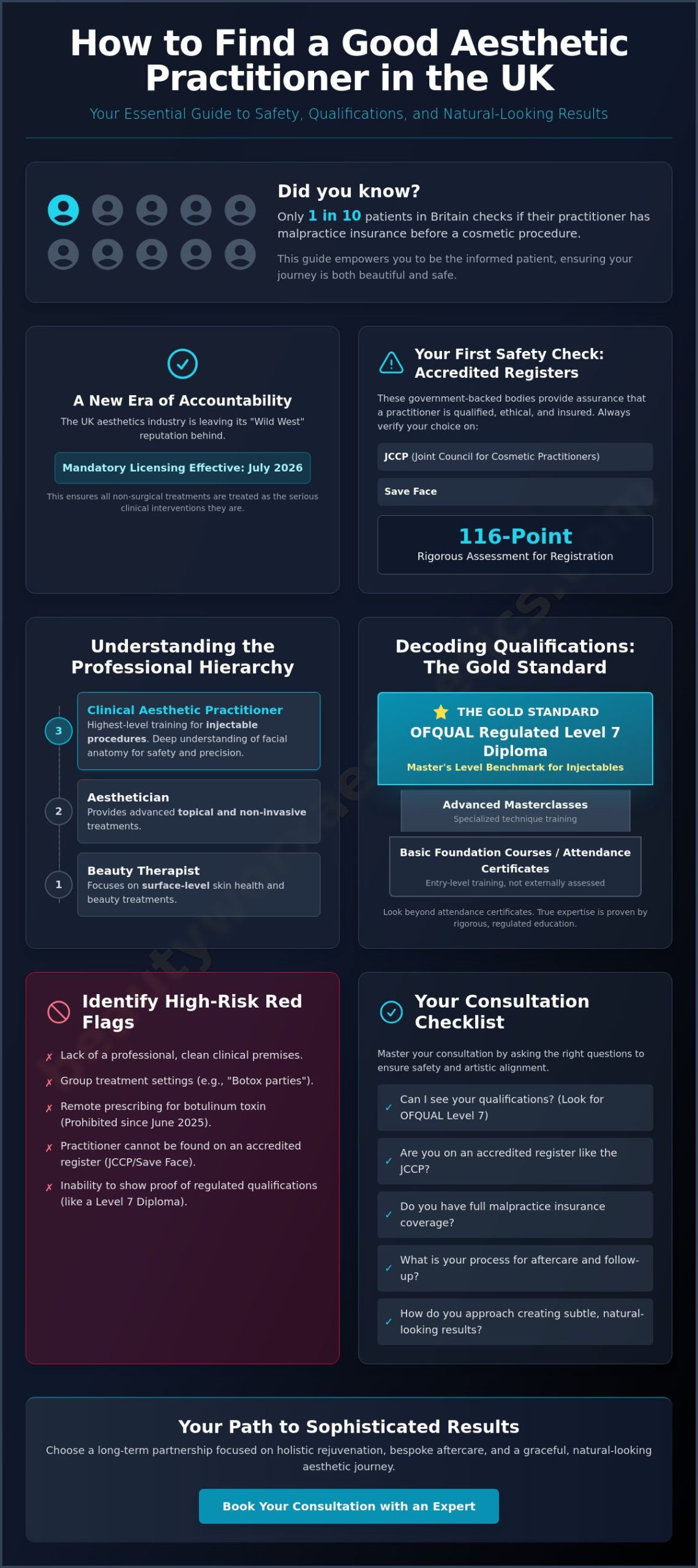
Did you know that only one in ten patients in Britain checks for malpractice insurance before undergoing a cosmetic procedure? It’s a startling figure that highlights a common disconnect between the desire for aesthetic enhancement and the rigorous safety standards required to achieve it. You likely feel the weight of this uncertainty as you scroll through social media, wondering if a practitioner’s skill actually matches their curated portfolio. Understanding how to find a good aesthetic practitioner uk is no longer just about seeking a recommendation; it’s about navigating a landscape where clinical excellence must meet artistic discernment.
We believe your journey toward self-confidence should feel both empowering and secure. You deserve to feel pampered in an upscale setting while remaining entirely safe in a professional environment. This guide provides the essential framework you need to vet practitioners with confidence. We’ll examine the July 2026 mandatory registration laws, the importance of the OFQUAL regulated Level 7 Diploma, and the specific questions that reveal a specialist’s commitment to subtle, natural-looking results. You’ll gain the clarity needed to move beyond the confusion of medical titles and book your consultation with absolute peace of mind.
Key Takeaways
- Navigate the evolving regulatory landscape by learning how to use accredited registers to verify a practitioner’s clinical standing and safety protocols.
- Discover why an OFQUAL-regulated Level 7 Diploma is the definitive benchmark for excellence when researching how to find a good aesthetic practitioner uk.
- Master a professional consultation framework to assess a specialist’s artistic discernment and ensure your results remain beautifully subtle and balanced.
- Learn to identify high-risk red flags, such as group treatment settings or a lack of professional clinical premises, to protect your health and your features.
- Understand the value of a long-term partnership focused on holistic rejuvenation and bespoke aftercare for a graceful, natural-looking aesthetic journey.
Navigating the UK Aesthetics Landscape: Regulation and Professional Registers
The UK aesthetics industry is shedding its “Wild West” reputation as it moves toward a new era of transparency and clinical accountability. For years, the lack of formal oversight meant that patients bore the burden of vetting their own specialists. However, with the landmark legislation implemented in July 2026, the landscape has fundamentally changed. If you’re researching how to find a good aesthetic practitioner uk, the first step is recognizing that true clinical excellence is now defined by a specialist’s adherence to these new, mandatory standards. A practitioner who views Aesthetic medicine as a delicate balance of science and art will always welcome this scrutiny as a hallmark of their professional integrity.
The Role of Accredited Registers in Patient Safety
Accredited registers like the Joint Council for Cosmetic Practitioners (JCCP) and Save Face serve as an essential first filter for your search. These bodies are overseen by the Professional Standards Authority (PSA), providing a layer of government-backed assurance that a practitioner is both qualified and ethical. When a specialist joins these registers, they undergo a rigorous 116-point assessment that evaluates everything from their clinical environment to their insurance coverage. You can use these databases to verify a practitioner’s standing, ensuring they’ve met the high benchmarks required for sophisticated, natural-looking results. Choosing a professional on these registers isn’t just about safety; it’s about choosing a partner who prioritizes your emotional and physical well-being.
It’s also vital to understand the professional hierarchy within the clinic. While a beauty therapist focuses on surface-level skin health and an aesthetician may provide advanced topical treatments, a clinical aesthetic practitioner possesses the high-level training required for injectable procedures. This distinction is the bedrock of a safe experience. A clinical expert understands facial anatomy with a level of precision that a non-medical provider simply cannot match, which is critical for avoiding complications and achieving a balanced, refreshed appearance.
Why Regulation Matters for Non-Surgical Procedures
The shift toward mandatory licensing in July 2026 reflects a growing recognition that non-surgical treatments are serious clinical interventions. For instance, botulinum toxin is a prescription-only medication that requires a face-to-face consultation with a qualified prescriber. Since June 2025, remote prescribing has been strictly prohibited to ensure patient safety. This level of regulation ensures that every step of your journey is documented, accountable, and tailored to your unique features. This commitment to transparency is a cornerstone of how to find a good aesthetic practitioner uk in a market that finally treats aesthetic enhancement with the clinical respect it deserves. When regulation is embraced, you can step into a clinic feeling both pampered and profoundly safe.
Decoding Qualifications: Why OFQUAL Regulation and Level 7 Diplomas Matter
When you begin your search for a specialist, you’ll encounter a confusing array of certificates and titles displayed on clinic walls. However, the true measure of a specialist’s skill lies in the depth of their formal education. Understanding how to find a good aesthetic practitioner uk involves looking past short-term attendance certificates and identifying truly regulated education. The hierarchy of aesthetic training moves from basic foundation courses to advanced masterclasses, but the gold standard remains the OFQUAL-regulated qualification. These credentials ensure that a practitioner hasn’t just attended a seminar, but has been rigorously assessed by an external body to meet strict clinical standards.
The Level 7 Diploma in Clinical Aesthetic Injectable Treatments stands as the masters-level benchmark for aesthetic excellence, representing the highest tier of postgraduate education in the field. This qualification reflects a significant investment in time and clinical practice, ensuring that your practitioner views their work as a disciplined science. The British Beauty Council continues to advocate for higher standards in UK aesthetics regulation, emphasizing that not all training is created equal. Safety is never accidental; it’s the result of meticulous study and verified competence.
CPD vs. OFQUAL Regulated Qualifications
Many practitioners rely on Continuing Professional Development (CPD) certificates, which are often obtained through one or two-day courses. While these are useful for learning specific techniques, they don’t offer the same consumer protection as a regulated diploma. Regulated aesthetic courses require extensive practical experience with live models and comprehensive written examinations. This ensures the practitioner has developed the muscle memory and clinical judgment necessary to handle your unique facial features with grace and precision.
The Importance of Advanced Facial Anatomy Training
A deep understanding of the anatomy of facial structures is what separates an artisan from a technician. This knowledge is crucial for identifying the precise depth and placement required for dermal fillers, especially in complex areas like the tear troughs or jawline. Continuous mentorship and peer review are also vital, as they keep a practitioner’s skills sharp and their safety protocols current. When a specialist understands the intricate network of vessels and nerves beneath your skin, they can deliver results that are both sophisticated and profoundly safe. If you value this level of detail, choosing a practitioner with advanced dermal filler training is a non-negotiable step in your journey.
The Consultation Framework: Essential Questions for Your Practitioner
A professional consultation should feel like an unhurried dialogue between two partners, never a hurried transaction. When you’re determining how to find a good aesthetic practitioner uk, look for a specialist who treats this initial meeting as a rigorous clinical assessment rather than a sales pitch. You aren’t just a patient; you’re an individual with unique facial dynamics and emotional goals. A true expert will spend significant time analyzing your bone structure, skin quality, and muscle movement before ever picking up a syringe. This meticulous approach ensures that the eventual treatment plan preserves your inherent features while providing a refreshed, vital appearance.
The clinical environment itself speaks volumes about a practitioner’s standards. While you should feel pampered in an upscale setting, the space must also adhere to strict hygiene protocols. Observe the lighting; it should be clear and bright enough for a precise anatomical assessment, not dimmed to mask imperfections. Before you commit, verify their credentials on the JCCP practitioner register to ensure their clinical standing is verified by an accredited body. Finally, a reputable specialist will always insist on a cooling-off period. This pause allows you to reflect on the information provided, ensuring you move forward with absolute confidence rather than under the pressure of a “limited time” offer.
Technical Questions to Ask About Your Procedure
Precision in aesthetics requires an intimate knowledge of the products being used. Don’t hesitate to ask about specific brands, such as the difference between Azzalure and Botox, and why one might be better suited to your muscle density. If you’re considering enhancement, ask about the safety profile and expected longevity of their lip augmentation filler options. A specialist who views their craft as a science will be able to explain the rheology of the gel and how it integrates with your natural tissue. They should also provide a clear plan for follow-up appointments to refine the results, showing they’re committed to your long-term satisfaction.
Evaluating the Practitioner’s Ethical Approach
The hallmark of a trusted artisan is the willingness to say “no.” If a requested treatment won’t yield a natural-looking result or if it compromises your facial balance, a good practitioner will explain why and offer a safer alternative. They should document your journey with professional, standardized photography, which acts as a clinical record of your progress. This level of detail-oriented care transforms a one-off procedure into an ongoing partnership in self-care. It’s this ethical discernment that defines how to find a good aesthetic practitioner uk who prioritizes your long-term beauty over short-term gains.
Identifying Red Flags: Protecting Yourself from Unsafe Practices
Aesthetics should never be treated as a casual social activity. Group treatment events or “Botox parties” are major clinical red flags that compromise your safety. In these settings, the clinical focus is often diluted by social distractions, making a thorough, private consultation impossible. A safe practitioner requires a controlled, quiet environment to assess your unique anatomy and medical history without the pressure of a social audience. If a provider prioritizes a party atmosphere over clinical precision, they aren’t the right choice for your journey. This is a foundational rule in how to find a good aesthetic practitioner uk.
Digital presence also matters. Be wary of practitioners who only advertise on social media without a professional website. A website serves as a transparent, permanent record of their qualifications, clinic policies, and clinical standards. Similarly, be cautious of pricing that seems suspiciously low. High-quality, regulated products and extensive training are significant investments. When a price is too low, it often indicates the use of unapproved supplies or a lack of professional medical malpractice insurance. Your face is not the place to seek a bargain.
Complications Management: The Ultimate Safety Net
True expertise is defined by how a specialist handles the unexpected. Before booking, ask if they carry an emergency kit that includes Hyaluronidase for immediate filler reversal. A practitioner who has completed a specialist complications management course demonstrates a commitment to your safety that goes beyond the procedure itself. They must have a clear, written protocol for managing a vascular occlusion or an allergic reaction. This level of preparedness is the ultimate safety net, ensuring that your emotional journey remains positive even if a rare complication occurs.
Inappropriate Treatment Environments
Injectable work requires a clinical setting that can be kept meticulously clean. Mobile services in private homes or hotel rooms cannot guarantee the sterile conditions necessary to prevent infection. These environments also lack the professional infrastructure needed to handle medical emergencies effectively. A dedicated clinic reflects a practitioner’s investment in their craft and your health, providing a sanctuary where safety and luxury coexist. If you value a meticulous approach to clinical care, we invite you to book a consultation for an Anti-Wrinkle Treatment in our professional, upscale setting.
The Path to Sophisticated Results: Customisation and Aftercare
The final stage of your journey involves moving beyond the immediate transformation to embrace a philosophy of long-term care. A master practitioner doesn’t just look at a single line; they view your facial aesthetics as a dynamic, evolving canvas. This perspective shifts the focus from merely “fixing a wrinkle” to achieving holistic facial rejuvenation and balance. It’s about preservation and the subtle enhancement of your inherent features over time. When considering how to find a good aesthetic practitioner uk, look for someone who proposes a journey rather than a destination. This ongoing partnership ensures that your results remain as authentic and vibrant as you are.
Professional aftercare is just as vital as the procedure itself. It’s the bridge between a clinical intervention and a lasting, sophisticated result. A dedicated specialist provides comprehensive guidance to support your skin’s healing process, ensuring you feel supported long after you leave the clinic chair. This commitment to the overall client encounter is what transforms a simple service into a high-end, luxury experience. You should always feel like your practitioner is a phone call away, ready to offer reassurance or refinement as your results settle.
The Importance of a Bespoke Treatment Plan
True artistry lies in the details of customisation. Expert practitioners often use advanced modalities like polynucleotide treatment or skin boosters to prime the skin before moving to injectables. Polynucleotides offer a sophisticated approach to cellular skin rejuvenation, improving elasticity and texture from within. This creates a healthy foundation that enhances the longevity and natural appearance of dermal fillers or anti-wrinkle treatments. Your plan should never be static. As your face and aesthetic goals change, your treatment strategy must evolve with you, maintaining a look that is always refreshed and never overdone.
Long-Term Support and Professional Mentorship
When researching how to find a good aesthetic practitioner uk, consider their standing within the professional community. A practitioner who is committed to their own ongoing development often functions as a mentor or trainer for others. Choosing a clinic that also operates as a training academy indicates a level of mastery that is rare and highly valuable. It shows they are at the forefront of safety protocols and artistic techniques. This level of expertise provides an extra layer of confidence, knowing you are in the hands of a specialist who views their craft as both a rigorous science and a refined art form. You deserve a partnership that prioritizes your safety, your confidence, and your long-term aesthetic health.
Your Journey Toward Refined Self-Confidence
Choosing to enhance your natural features is a deeply personal decision that deserves the highest standard of clinical care. You now possess a clear, professional framework for how to find a good aesthetic practitioner uk, moving beyond the superficiality of social media to prioritize regulated qualifications and ethical consultation practices. True beauty is found when artistic discernment is underpinned by a Level 7 Diploma and a rigorous commitment to long-term skin health. You shouldn’t settle for anything less than a specialist who views your safety as their primary craft.
At Beauty Worx Aesthetics, we embody these exacting standards through our OFQUAL Regulated Training Academy and our team of Level 7 Qualified Lead Practitioners. We maintain a meticulous focus on clinical safety and complications management, ensuring you feel both pampered in an upscale setting and protected by medical expertise. We invite you to Discover Sophisticated Results at Beauty Worx Aesthetics and begin a partnership that celebrates your unique vitality. Your path to a subtle, authentic version of yourself starts with a single, confident step.
Frequently Asked Questions
What is the most important qualification for an aesthetic practitioner in the UK?
The OFQUAL-regulated Level 7 Diploma in Clinical Aesthetic Injectable Treatments is widely considered the definitive benchmark for excellence. This postgraduate-level qualification ensures your specialist has undergone rigorous assessment in both facial anatomy and clinical safety. When researching how to find a good aesthetic practitioner uk, looking for this specific credential provides peace of mind that your artisan views their work as a disciplined science.
Can non-medics safely perform aesthetic injections like Botox and filler?
Safety in aesthetics is defined by the depth of a practitioner’s accredited training and their clinical environment. While the industry moves toward mandatory licensing in July 2026, the most secure choice is a practitioner who holds regulated qualifications like the Level 7 Diploma. These specialists possess the anatomical precision required to deliver subtle, sophisticated results while maintaining the highest standards of complications management.
How do I check if my aesthetics practitioner is properly insured?
You should feel empowered to ask for a copy of their medical malpractice insurance certificate during your initial consultation. A professional specialist will welcome this transparency as a hallmark of their integrity. You can also verify their standing through accredited registers such as the JCCP, which require practitioners to provide proof of valid, comprehensive insurance to maintain their registration.
Is it a red flag if a practitioner offers a discount for multiple areas?
Financial incentives that encourage you to undergo more treatment than you initially desired can be a significant clinical red flag. Ethical practitioners prioritize a bespoke approach, recommending only what’s necessary to achieve a balanced and refreshed appearance. If a provider uses bulk-buy discounts to influence your clinical decisions, they may be prioritizing transactions over your long-term aesthetic health.
What should I do if I am unhappy with my aesthetic results?
Contact your practitioner immediately to schedule a follow-up assessment, as a reputable specialist will always have a protocol for post-treatment concerns. They should possess the expertise and emergency supplies, such as Hyaluronidase for filler reversal, to address any issues with meticulous care. This ongoing partnership is a vital part of how to find a good aesthetic practitioner uk who remains committed to your satisfaction.
How much should a consultation with a good aesthetic practitioner cost?
Fees for professional consultations vary across the industry and typically reflect the specialist’s time, experience, and the depth of the clinical assessment. Some clinics charge a dedicated fee to ensure you receive an unhurried, thorough analysis of your facial dynamics. It’s best to check the clinic’s specific policy directly to understand if this fee is redeemable against your eventual treatment plan.
Can I have an aesthetic treatment on the same day as my consultation?
Most high-end clinics insist on a “cooling-off” period between the consultation and the procedure. This pause is a professional standard that allows you to reflect on the treatment plan and safety information without any external pressure. It ensures that when you do proceed, you’re doing so with absolute confidence and a clear understanding of your expected, natural-looking results.
What is the difference between an aesthetician and an aesthetic practitioner?
An aesthetician generally focuses on the health and vitality of the skin’s surface through topical treatments like facials or chemical peels. An aesthetic practitioner, however, performs clinical, injectable interventions that require a deeper mastery of underlying facial structures. Understanding this distinction is essential for ensuring your specialist has the specific level of training required for the sophisticated results you seek.












 Reviews