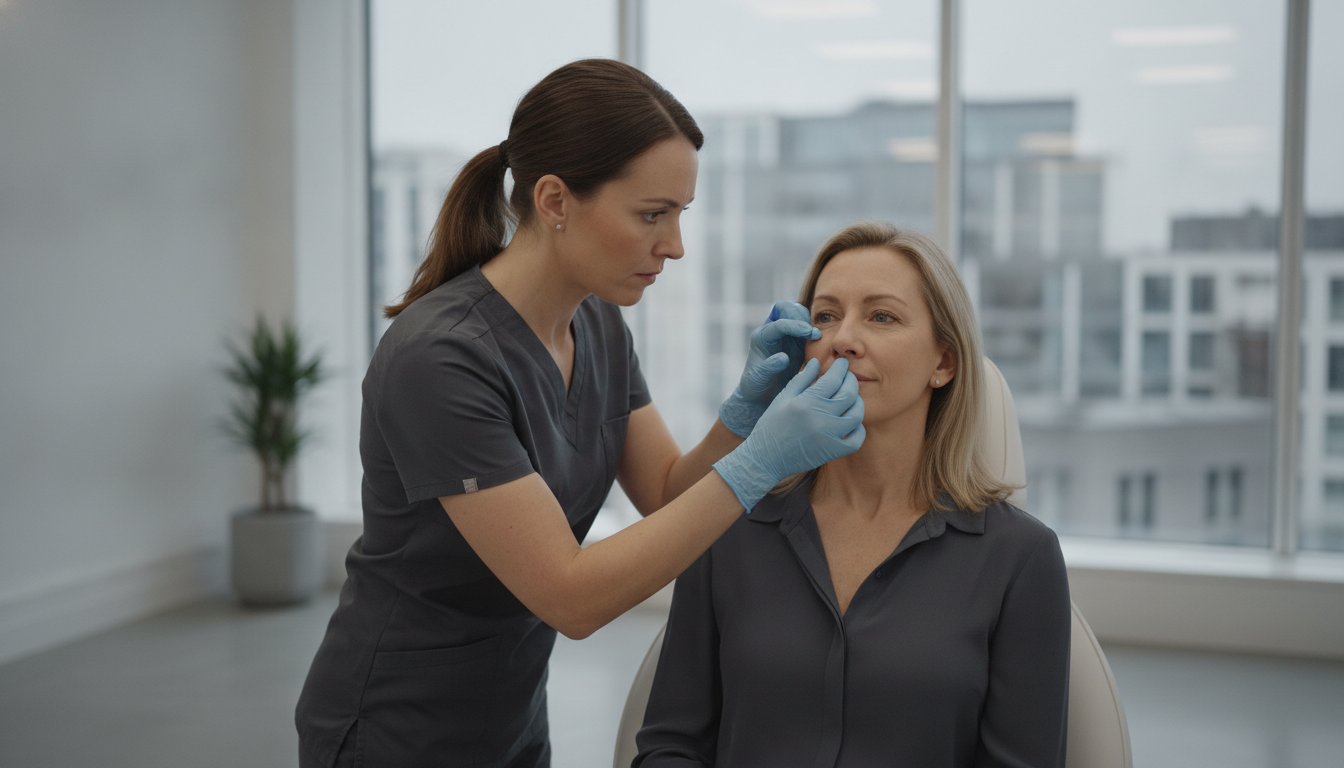

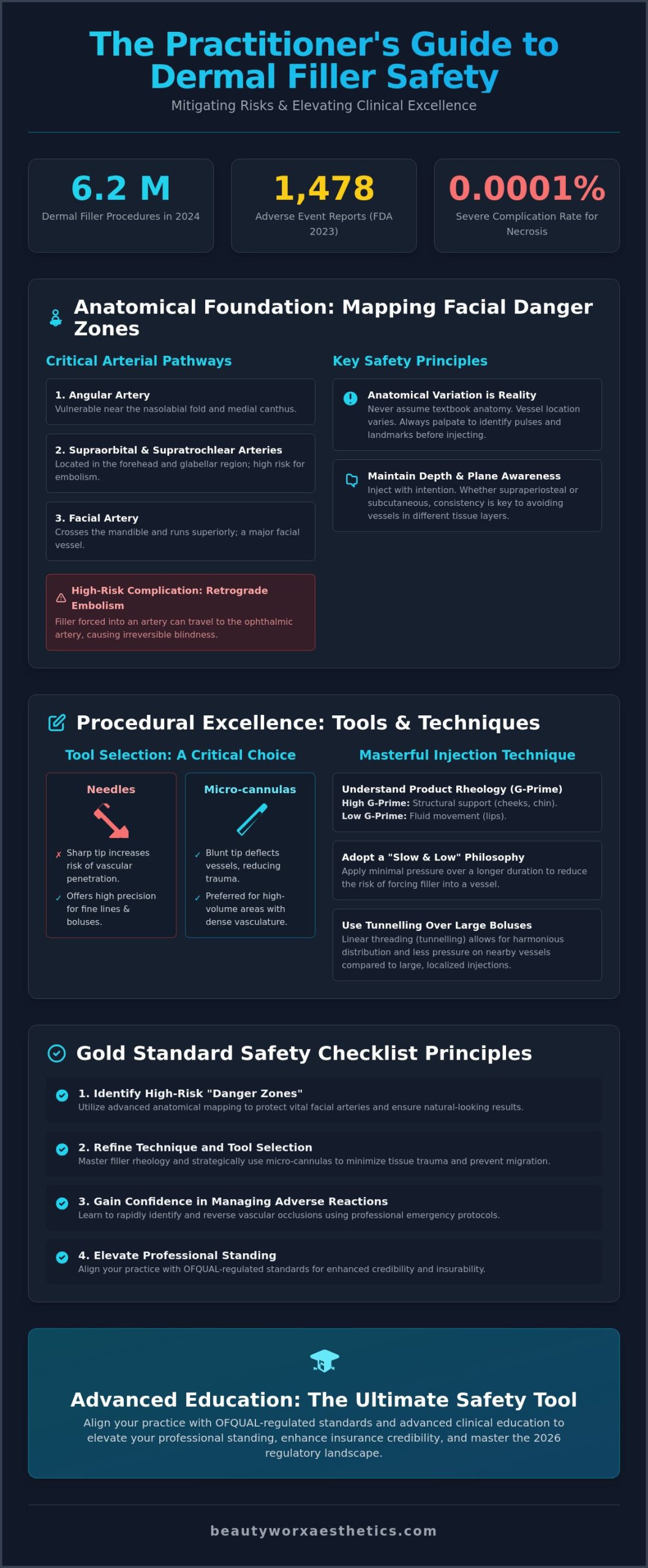
With 6.2 million dermal filler procedures performed in 2024, the aesthetic industry is flourishing, yet the FDA documented 1,478 adverse event reports in 2023. This rising volume means that even with a severe complication rate for necrosis as low as 0.0001%, the absolute number of risks is growing, making your expertise in avoiding dermal filler complications more vital than ever. You likely understand the delicate tension between delivering a refreshed, harmonious result and the silent anxiety that comes with every injection. It’s a weight every dedicated practitioner carries as they strive to protect both their clients and their professional reputation.
You’ll master the clinical protocols and anatomical precision necessary to mitigate these risks and elevate your practice to a new standard of excellence. We’ll provide you with a clear, repeatable safety checklist and the emergency confidence required to navigate the 2026 regulatory landscape with ease. This guide explores the essential steps to ensure every client’s journey toward self-confidence is both luminous and impeccably safe.
Key Takeaways
- Identify high-risk “Danger Zones” through advanced anatomical mapping to protect vital facial arteries and ensure sophisticated, natural-looking results.
- Refine your technique by mastering the nuances of filler rheology and the strategic use of micro-cannulas to minimize tissue trauma and prevent product migration.
- Adopt a comprehensive 20-point gold standard checklist essential for avoiding dermal filler complications and maintaining a meticulously safe clinical environment.
- Gain total confidence in managing adverse reactions by learning to rapidly identify and reverse vascular occlusions using professional emergency protocols.
- Elevate your professional standing and insurance credibility by aligning your practice with OFQUAL-regulated standards and advanced clinical education.
The Anatomical Foundation: Mapping Facial Danger Zones
Mastering facial aesthetics requires much more than an eye for symmetry; it demands a three-dimensional mastery of complex tissue layers. For a practitioner, the path to avoiding dermal filler complications begins with the recognition that “Danger Zones” aren’t just theoretical lines on a medical diagram. These are specific regions where major arteries are either terminal or exceptionally superficial, making them highly vulnerable to accidental cannulation. By viewing the face as a delicate landscape of intersecting vessels and fat pads, you ensure that every enhancement is as safe as it is beautiful.
It’s vital to remember that human anatomy is incredibly diverse, and no two faces are truly identical. While a textbook provides a baseline, the actual location of a vessel can vary by several millimeters due to age, genetics, or previous procedures. This is why manual palpation is your most trusted ally in the clinical room. By feeling for arterial pulses and identifying bony landmarks before the needle even touches the skin, you’re practicing the quiet, expert discernment that defines a high-end aesthetic service. It’s this meticulous attention to detail that transforms a standard procedure into a bespoke experience.
Critical Arterial Pathways to Memorise
The Angular, Supraorbital, and Facial arteries are the primary “highways” of facial circulation, and memorizing their typical paths is a non-negotiable requirement for safety. You must remain constantly aware of the risk of a retrograde embolism, a severe complication where filler is injected into an artery with enough force to travel backward against the blood flow. This can potentially reach the ophthalmic artery, leading to permanent, irreversible blindness. Anatomical Variation is the scientific reality that every client’s vascular network possesses unique branching patterns, meaning you can’t rely solely on memory; you must treat every face as a new anatomical puzzle.
Depth and Plane Awareness
True precision is found in maintaining the correct injection plane throughout the treatment. Whether you’re working in the supraperiosteal plane directly on the bone or the subcutaneous layers, your depth must be intentional and consistent. During a lip augmentation filler session, for example, staying in the superficial mucosal layers is essential to bypass the deeper, more vulnerable labial arteries. For those seeking a comprehensive overview of injectable fillers and the risks associated with improper placement, clinical history shows that “tunnelling” offers significantly more control than large bolus injections. While a bolus creates a localized pressure point that can compress nearby vessels, tunnelling allows for a harmonious distribution of product that respects the natural tissue architecture.
Procedural Excellence: Tools and Techniques for Risk Mitigation
The artistry of aesthetic medicine is a delicate balance of physics and biology. Excellence in this field isn’t just about the final transformation; it’s about the meticulous selection of tools and the disciplined application of technique. Choosing the right instrument is your first line of defense in avoiding dermal filler complications. While needles offer surgical precision for fine lines or supraperiosteal boluses, they inherently carry a higher risk of vascular penetration due to their sharp tips. Micro-cannulas, conversely, are designed with blunt ends that glide through tissue layers and tend to deflect off vessels rather than piercing them. This makes them the preferred choice for high-volume areas where the vascular network is dense.
Product rheology, specifically G-Prime, plays a silent but starring role in client safety. G-Prime measures a filler’s ability to resist deformation and maintain its shape under pressure. High G-Prime fillers provide the structural support required for cheek or chin augmentation, while low G-Prime products offer the fluid, harmonious movement necessary for the lips. Using a product with the wrong rheology for a specific tissue depth can lead to migration or the formation of palpable nodules. Adopting a “slow and low” injection philosophy is equally vital. By applying minimal pressure over a longer duration, you reduce the risk of filler being forced into a vessel and traveling toward terminal arteries. It’s a calm, rhythmic approach that mirrors the luxury experience your clients expect.
Cannula vs. Needle: A Safety Comparison
Blunt cannulas are widely regarded as the gold standard for safety in high-risk zones like the temple or the tear trough. A 25G or 22G cannula provides the necessary rigidity for control while significantly lowering the chance of an intravascular event compared to a standard needle. However, a needle is sometimes necessary for bespoke precision in areas where a cannula might be too cumbersome. The trade-off is clear: increased precision requires a heightened level of vigilance and anatomical awareness. Refining these skills is a continuous journey, and mastering advanced dermal filler techniques allows you to select the most appropriate tool for every unique face.
Aspiration Protocols and Product Choice
Aspiration remains a cornerstone of clinical best practice, acting as a vital early warning system. To perform a valid aspiration, you must hold the needle perfectly steady for a full 10 seconds, allowing enough time for blood to travel through the high-viscosity gel. While no technique is 100% foolproof, the FDA patient safety communication on dermal fillers emphasizes that unintentional vessel injection is a primary risk that practitioners must actively mitigate. Always ensure you’re using high-quality, CE-marked Hyaluronic Acid. Inferior products often contain impurities that can trigger late-onset inflammatory nodules, potentially appearing months after the initial “luminous” result. True safety is an ongoing partnership between your expert hands and the purity of the products you trust.
The Practitioner’s 20-Point Safety Checklist
Establishing a rigorous, 20-point clinical framework is the hallmark of a trusted expert artisan. Safety isn’t merely a reaction to a problem; it’s a proactive architecture built into every step of the client’s journey. By adhering to a “gold standard” checklist, you create a sanctuary where clinical excellence and high-end luxury coexist. This disciplined approach is essential for avoiding dermal filler complications, ensuring that the pursuit of radiance is never overshadowed by unnecessary risk. Comprehensive documentation serves as your most reliable safety net, providing a clear, luminous trail of your clinical decision-making and the bespoke care you provide.
Refining this checklist is an ongoing commitment to your craft. Many specialists find that enrolling in a complications management course provides the high-level insights needed to evolve their protocols beyond basic standards. These advanced frameworks align with the latest practitioner guidelines for dermal fillers, ensuring your practice remains at the forefront of the industry’s safety evolution.
Phase 1: The Consultation and Pre-Screening
Your safety protocol begins long before the first injection. A meticulous pre-screening process must include a review of autoimmune conditions, active infections, or dental work performed within the last 14 days, as these factors significantly increase the risk of delayed-onset nodules or biofilm formation. Psychological safety is equally paramount. Conducting a screening for Body Dysmorphic Disorder (BDD) ensures you’re supporting the client’s emotional well-being rather than just their physical appearance. Always capture “Before” photography from at least five different angles to document the baseline anatomy with absolute clarity.
Phase 2: Intra-Procedure Vigilance
Maintaining an impeccable aseptic environment is non-negotiable. Prepare the skin using a high-grade solution of chlorhexidine or alcohol to eliminate surface pathogens. During the treatment, maintain a steady, reassuring dialogue with your client. They are your best monitor; any report of unusual pain or sudden sensory changes can be an early warning of a vascular event. Visually scan the treatment area every 30 seconds for signs of blanching, livedo reticularis, or swelling that exceeds the expected “harmonious” response of the tissue.
Phase 3: Immediate Post-Treatment and Aftercare
The final phase of your checklist confirms the success of the procedure. Perform a Capillary Refill Test (CRT) on the injected area; a healthy, normal response is a return of color within 2 seconds. Provide every client with a dedicated 24-hour emergency contact number, reinforcing the sense of partnership in their care journey. Finally, instruct them on the “No-Touch” rule for at least 6 hours post-procedure. This simple boundary is a powerful tool for preventing localized infections and ensuring the filler settles into its intended, subtle position.
Managing the Unexpected: Identifying and Reversing Complications
True clinical mastery is revealed not during a routine procedure, but in the silent moments when the unexpected occurs. Even with the most disciplined adherence to anatomical mapping and refined technique, the possibility of a complication remains a reality of aesthetic practice. Your role as a trusted guide is to remain the calm center of the room, acting with the quiet confidence that comes from total preparedness. Avoiding dermal filler complications is a multi-layered pursuit that extends into the rapid identification and decisive management of adverse events. By distinguishing between early-onset vascular issues and late-onset inflammatory responses, you protect both the client’s physical health and their emotional journey toward self-confidence.
Vascular Occlusion (VO) is the most critical emergency you may face, occurring when filler is accidentally injected into or compresses a blood vessel. While late-onset issues, such as infectious biofilms or inflammatory nodules, may appear weeks or months later, a VO requires immediate intervention within minutes. Maintaining an “Emergency Dissolve Kit” that is on-site, fully stocked, and strictly in-date is a non-negotiable standard of a professional clinic. Managing the client’s psychological state is equally vital; your ability to explain the situation with empathy and transparency prevents panic and maintains the trust you’ve worked so hard to build.
Vascular Occlusion: The Early Warning Signs
Recognizing the “soft” signs of a complication before they escalate into a crisis is a skill that separates the novice from the expert artisan. While some paleness is expected from the lidocaine often found in fillers, true blanching is a distinct, porcelain-white change in skin tone that indicates a lack of blood flow. Disproportionate pain is perhaps the most significant red flag; if a client describes a sharp, radiating, or intense discomfort that feels “wrong” compared to previous treatments, you must stop immediately. Without swift action, the skin may progress to livedo reticularis, a dusky, mottled appearance that signals the beginning of tissue distress and potential necrosis.
The Emergency Dissolve Protocol
When a vascular event is suspected, your response must be swift and systematic. The “flood” technique using Hyaluronidase is the gold standard for reversal, involving high-dose, high-volume injections into the affected area and along the path of the involved vessel. Supporting measures include the application of warm compresses to encourage vasodilation and vigorous massage to help disperse the obstructing gel. In some clinical frameworks, the use of aspirin is recommended to prevent further platelet aggregation. If the situation does not resolve rapidly, you must have a pre-established referral pathway to a specialist or the nearest A&E. To ensure you are fully equipped for these high-stakes moments, consider enrolling in a complications management course to refine your emergency skills.
Elevating Standards: Why Advanced Education is the Ultimate Safety Tool
While a foundation course provides the initial keys to the industry, it’s merely the beginning of a dedicated practitioner’s evolution. True expertise in avoiding dermal filler complications is forged through a commitment to higher clinical standards and rigorous academic validation. Choosing aesthetic courses with OFQUAL regulation ensures that your risk management protocols are grounded in a recognized, national framework rather than just a basic workshop. This level of scrutiny transforms your practice from a series of procedures into a sophisticated medical art form, where every decision is backed by evidence-based safety.
The pursuit of excellence is what separates a technician from a trusted artisan. By investing in advanced education, you’re not just learning to inject; you’re learning to think critically about the unique anatomical landscape of every client. This intellectual depth is your most powerful tool for avoiding dermal filler complications and delivering the luminous, natural-looking results that define a high-end practice. Safety is the silent partner of beauty, providing the necessary structure for a client’s emotional journey toward self-confidence.
The Level 7 Difference
The Level 7 Diploma in Clinical Aesthetic Injectable Treatments represents the pinnacle of non-surgical training, moving beyond basic technique into the depths of complex clinical reasoning. It fosters a profound understanding of anatomical nuances and tissue interactions that a standard certificate simply cannot provide. Within a controlled academy environment, supervised practice allows you to refine your touch under the watchful eye of a master specialist. A “Fast-Track” approach often prioritizes speed over substance, frequently missing the subtle safety nuances and depth of knowledge required to manage the intricacies of the human face with absolute precision.
The Role of CPD and Mentorship
Mastery is a perpetual journey, not a static destination. Staying aligned with the latest JCCP and CPSA guidelines is essential for any professional who views client safety as an ethical mandate. Mentorship provides a vital space to review complex cases or “near misses” with a seasoned specialist, turning every challenge into a lesson in refined discernment. You should view complication management as an ongoing learning pillar rather than a one-time hurdle. This commitment to continuous professional development ensures that your practice remains a sanctuary of safety and artistic discernment, offering your clients the very best version of themselves through an ongoing partnership in care.
Refining Your Path to Clinical Mastery
Cultivating a reputation for excellence in the aesthetics industry is a journey that begins with a commitment to uncompromising safety. We’ve examined how the synthesis of anatomical precision and rigorous procedural discipline forms the ultimate defense for avoiding dermal filler complications. From the initial 20-point checklist to the mastery of emergency reversal protocols, your role as a practitioner is to act as a knowledgeable guide, ensuring every client’s path to self-confidence is both luminous and secure.
At Beauty Worx Aesthetics, we believe that advanced education is the bridge between a standard procedure and an artful, bespoke transformation. Our OFQUAL Regulated Qualifications and CPD Accredited Complications Management Training provide the clinical depth and expert mentorship required to navigate the complexities of modern aesthetic medicine. Master clinical safety with our OFQUAL-regulated Level 7 Diploma and join a community of specialists dedicated to enhancing natural beauty with absolute discernment. Your pursuit of safety is the foundation of your professional legacy.
Frequently Asked Questions
What are the first signs of a vascular occlusion?
The first signs of a vascular occlusion are typically immediate blanching of the skin and a level of pain that is disproportionate to the procedure. You should also monitor for a delayed capillary refill time, where color fails to return within 2 seconds after pressure is applied. These “soft” signs often precede more visible skin changes, allowing for rapid intervention before tissue distress becomes a clinical crisis.
Can I avoid all dermal filler complications if I am a medical professional?
While medical training provides a strong foundation, it is impossible to eliminate all risks entirely; however, avoiding dermal filler complications is highly achievable through rigorous protocol adherence. Statistics from the Journal of Aesthetic Nursing in June 2025 estimate the incidence of severe complications like necrosis at just 0.0001%. Your professional background acts as a critical safety filter, ensuring that when rare events occur, they are managed with expert discernment.
How much Hyaluronidase should I keep in my emergency kit?
Your emergency kit should contain at least 1,500 units of Hyaluronidase, typically found in one or two vials, to ensure you can perform multiple rounds of the “flood” technique. Clinical guidelines from the ACE Group recommend having enough stock to manage a high-dose reversal protocol immediately on-site. Maintaining in-date reversal agents is a non-negotiable standard for any practitioner committed to a safe, boutique clinical environment.
Is it safer to use a cannula or a needle for lip fillers?
Using a blunt cannula is generally considered safer for minimizing vascular risk in the lips, although a needle remains the tool of choice for fine, bespoke precision. A 25G or 27G cannula allows you to navigate tissue layers with less trauma, which significantly reduces the chance of accidental vessel penetration. The decision often rests on the desired outcome, balancing the need for a refreshed, voluminous look with the highest possible safety profile.
What should I do if a client has a delayed inflammatory reaction months later?
If a client presents with a delayed inflammatory reaction months later, you must assess for the presence of a biofilm or late-onset nodules. These reactions are often triggered by a recent immune challenge, such as dental work or a viral infection, and require a course of specific antibiotics like clarithromycin. Early identification and a calm, reassuring management plan are essential for maintaining the client’s long-term trust in their aesthetic journey.
Does having a Level 7 Diploma reduce my insurance premiums for complications?
Holding an OFQUAL-regulated Level 7 Diploma frequently leads to reduced insurance premiums, as it demonstrates a superior level of risk management and clinical reasoning. As new 2026 regulations for non-surgical procedures take effect in the UK, insurers are increasingly favoring practitioners with documented, high-level training. This qualification acts as a hallmark of your commitment to avoiding dermal filler complications, enhancing both your professional standing and your clinic’s safety reputation.
How do I explain the risk of complications to a client without scaring them?
You can explain the risk of complications by framing the conversation as a transparent partnership dedicated to the client’s safety and natural-looking results. Mentioning that 6.2 million procedures were performed in 2024 helps normalize the treatment while you highlight your meticulous 20-point safety checklist. This approach shifts the focus from fear to the expert care you provide, ensuring they feel both pampered and professionally protected throughout their experience.
What is the “Tyndall Effect” and is it considered a serious complication?
The Tyndall Effect is a bluish discoloration of the skin caused by the superficial placement of hyaluronic acid filler, and it is considered an aesthetic issue rather than a medical emergency. This phenomenon occurs when light scatters through the gel, creating a subtle hue that can be resolved with localized hyaluronidase. While it isn’t dangerous, addressing it promptly ensures the client achieves the harmonious, luminous appearance they originally sought.














 Reviews