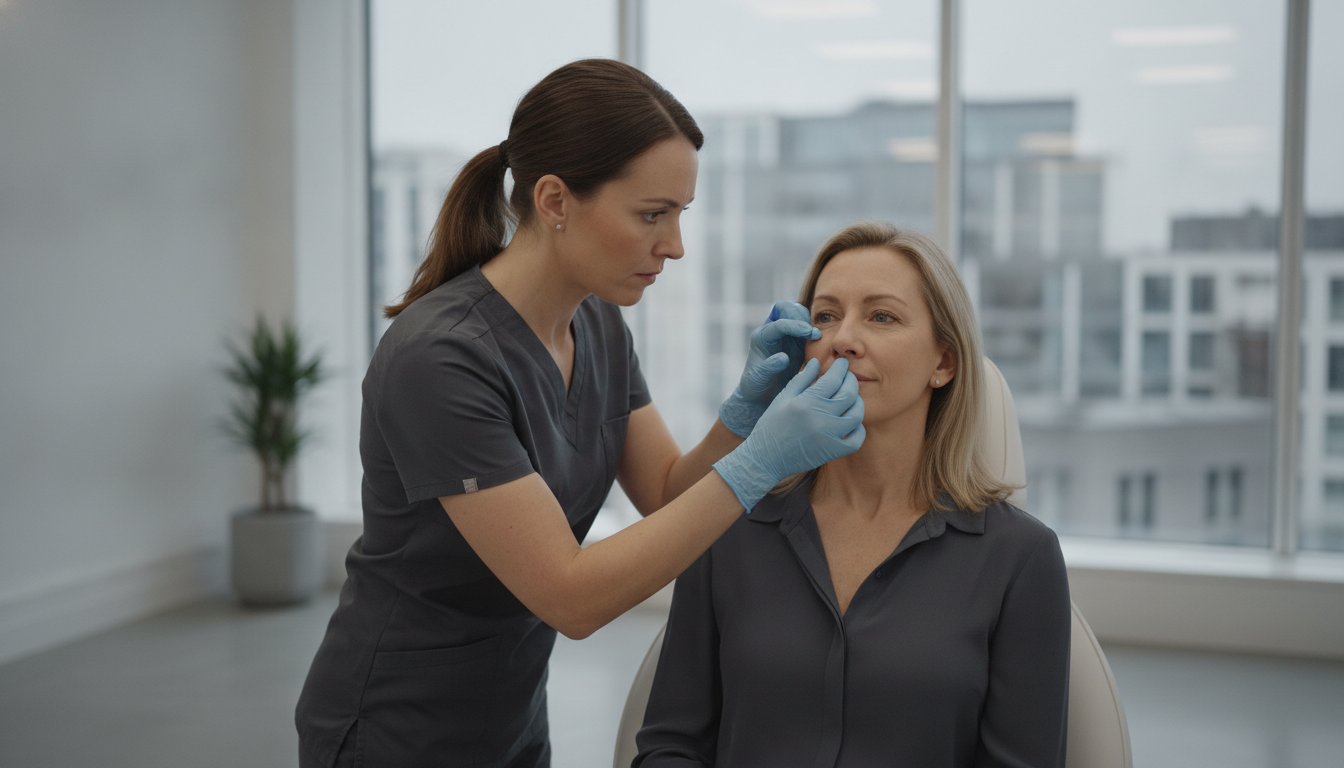
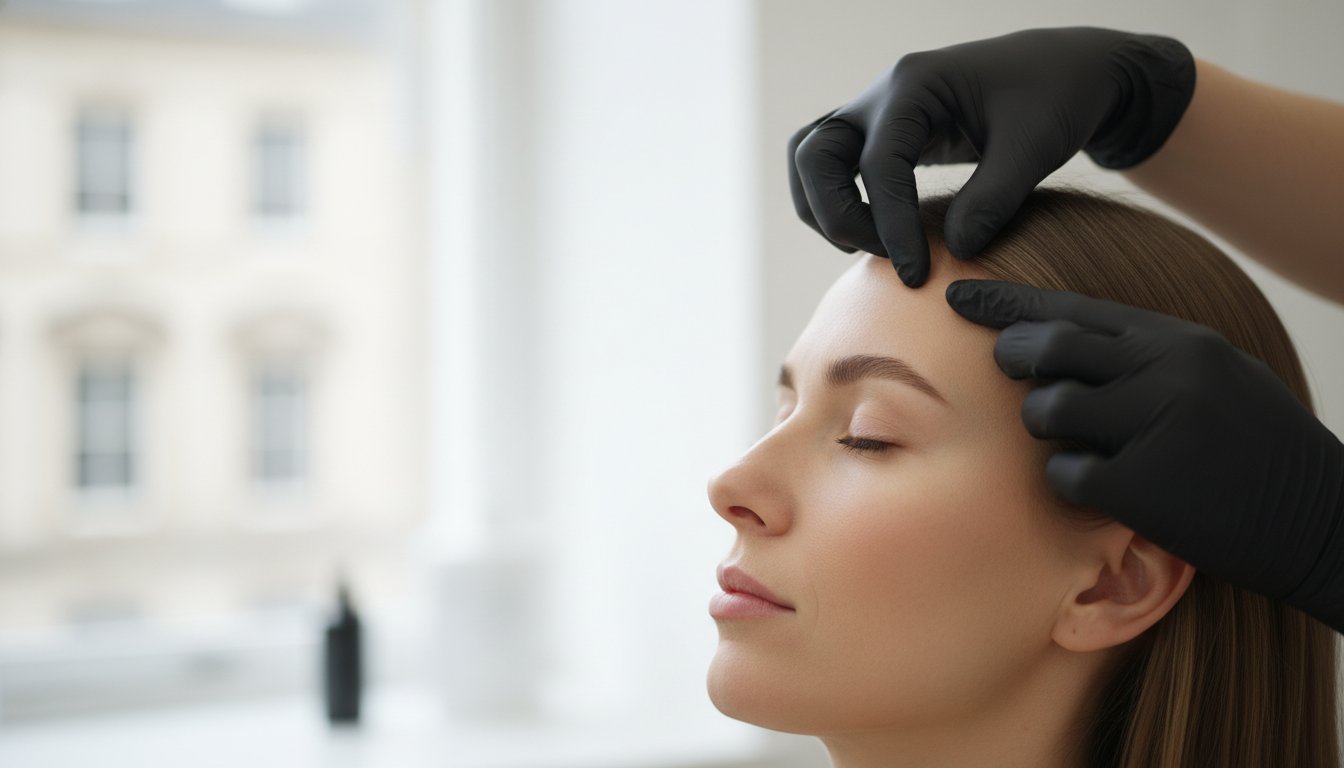
Last Tuesday, Sarah looked in the mirror ten days after her appointment only to find one eyebrow arching sharply toward her hairline while the other remained still. This “Spock brow” can feel like a personal aesthetic crisis, leaving you anxious about whether the look is permanent or if your routine treatment went wrong. Dealing with a spock brow after botox is a common concern that often stems from a minor muscle imbalance rather than a product failure. It’s a moment that requires a calm, expert hand to restore the natural vitality you initially sought.
You deserve to feel confident and poised, not unnatural or out of sync with your reflection. We understand that seeing an unexpected change in your facial expression can be unsettling, but it’s important to remember that this is a temporary and easily corrected occurrence. In this guide, you’ll discover exactly why the Spock brow occurs and how a sophisticated touch can expertly correct it within minutes. We’ll also explore why precision artistry is essential for natural-looking results, ensuring your future anti-wrinkle treatment (1, 2, or 3 areas) provides the subtle, refreshed appearance you desire. From understanding the “two-week tweak” to the science of muscle relaxation, we’re here to guide you back to facial symmetry.
Key Takeaways
- Understand the anatomy behind the “Mephisto sign” and why certain muscle movements cause an unnaturally sharp, peaked arch.
- Discover why patience is your first step when dealing with a spock brow after botox, specifically the importance of the two-week observation period.
- Learn how to distinguish between an over-elevated arch and brow ptosis to ensure you seek the correct restorative solution for your features.
- Explore the simple, non-invasive correction process that uses minimal units to gently settle the brow into a graceful, symmetrical position.
- Recognize how advanced practitioner training and anatomical precision prevent future complications while preserving your unique facial character.
Understanding the ‘Spock Brow’: Why Your Anti-Wrinkle Treatment Looks Unnatural
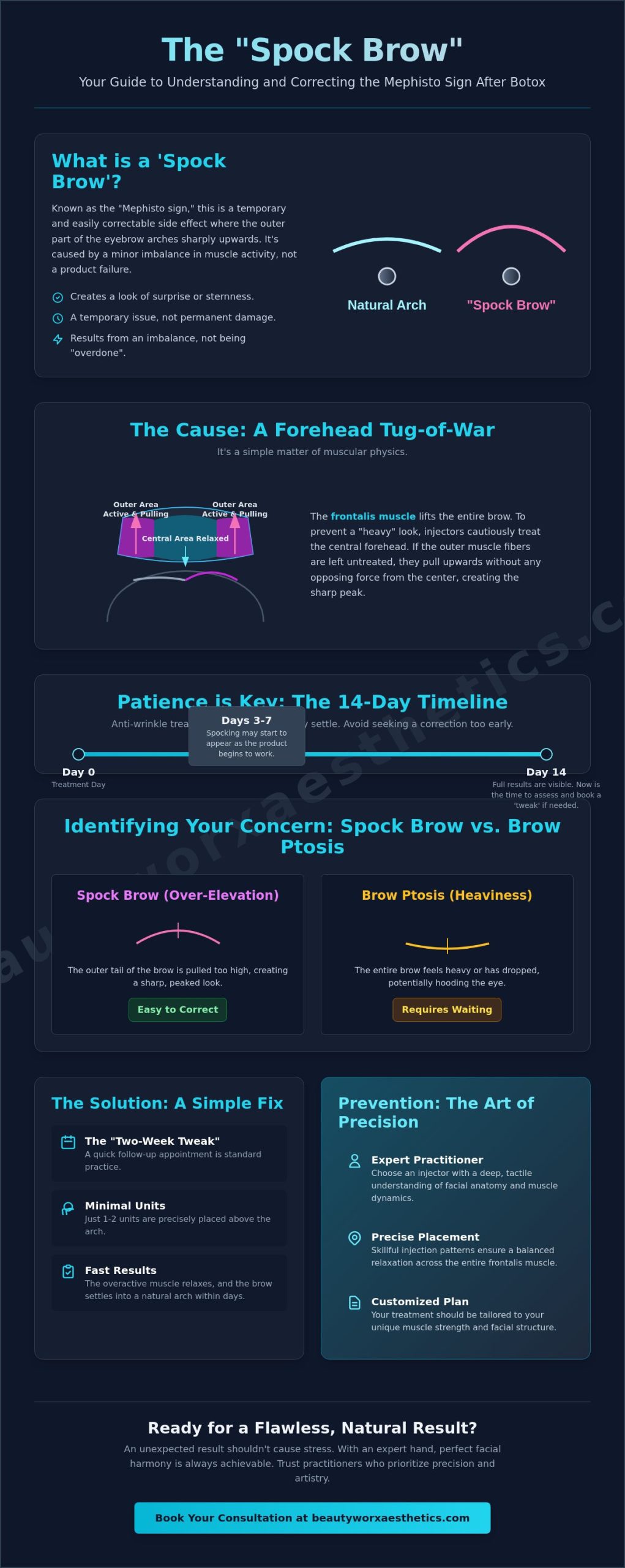
In the pursuit of a refreshed and youthful appearance, discovering an unexpected, sharp arch in your eyebrow can be quite jarring. This phenomenon, known in aesthetic medicine as the “Mephisto sign” or the “Samurai brow,” occurs when the outer edge of the eyebrow pulls upward while the center remains relaxed. It creates a distinctive, peaked look that mimics the famous character from Star Trek. While it may feel like a significant aesthetic setback, dealing with a spock brow after botox is a common and entirely manageable occurrence. It’s not a sign of permanent damage; rather, it’s a minor imbalance in muscle activity that can be elegantly refined by a skilled practitioner.
The Aesthetic Impact of Brow Imbalance
A symmetrical, natural brow is a cornerstone of facial harmony. When one or both brows arch too aggressively, it can disrupt the balance of your features, often projecting an expression of perpetual surprise or unintended sternness. This shift can be emotionally taxing. Many clients describe a feeling of being “overdone” or “unnatural,” which can lead to a temporary loss of self-confidence. We believe your aesthetic journey should be one of empowerment and grace. Rest assured that this imbalance is never permanent. It’s simply a stage where the artistry of the treatment requires a final, delicate touch to restore your authentic expression and vitality.
When Does Spocking Usually Appear?
You may notice these changes quite early in your recovery. Typically, the Mephisto sign begins to manifest between 3 to 7 days after your initial appointment as the product begins to settle into the target muscles. However, we always recommend waiting for the full 14-day settlement period before seeking an intervention. Understanding Botulinum toxin side effects is a fundamental part of any aesthetic journey, as it helps demystify the way these treatments interact with your unique anatomy. During these first two weeks, the product is still actively working to relax the muscle fibers. What looks like a complication at day five might naturally soften by day twelve. If the peak remains prominent after the two-week mark, it’s then considered a true imbalance that requires a professional correction to achieve the desired symmetry.
The Anatomy of an Arch: Why Frontalis Imbalance Causes the Mephisto Sign
The frontalis muscle serves as the sole architect of brow elevation, stretching across the forehead to lift our expressions and convey emotion. When we seek a smoother, more youthful appearance, we use botulinum toxin to selectively relax these muscle fibers. However, the frontalis isn’t a single, uniform sheet; it’s a complex network of fibers with varying degrees of strength and pull. Dealing with a spock brow after botox often comes down to a simple case of physics. If the central portion of the muscle is effectively relaxed while the outer edges remain active, those lateral fibers pull upward without any central resistance, creating that characteristic peaked arch.
This phenomenon is well-documented in clinical literature regarding the complications of botulinum toxin. It’s often the result of an injector being slightly too cautious. By avoiding the lateral forehead to prevent a heavy or “dropped” brow, they may leave the outer muscle fibers fully functional. These active fibers then overcompensate, lifting the tail of the brow into an unnatural, sharp position. Achieving true facial harmony requires a deep, tactile understanding of these opposing forces and how they interact on a unique face.
The Tug-of-War in Your Forehead
Think of the forehead as a delicate balance of power. The frontalis pulls up, while several smaller muscles between the eyes and around the lids pull down. When a treatment relaxes the central frontalis, the lateral fibers are left to perform a solo tug-of-war. Without the central fibers holding the brow’s shape in place, the edges soar. This creates a disconnect in facial fluidity, where the middle of your forehead is serene while the sides remain highly animated. It’s a clear signal that the muscle relaxation hasn’t been distributed with the necessary anatomical precision.
Factors Influencing Muscle Activity
Every face tells a different anatomical story. Some individuals possess naturally strong lateral forehead activity, meaning their outer frontalis fibers require more attention than the average patient. The depth of the injection and how the toxin diffuses also play critical roles. If the product doesn’t reach the lateral edges, the “Spock” effect is almost inevitable. Precision in dosage distribution is the hallmark of an expert artisan who views every face as a unique canvas. For those looking to master these nuances and prevent complications, exploring an Advanced Anti-Wrinkle Injections Course can provide the anatomical discernment needed to prevent such imbalances. When dealing with a spock brow after botox, the solution isn’t to wait in frustration; it’s to recognize that your unique muscle strength simply requires a more tailored, artistic approach to achieve the perfect, subtle result.
Spock Brow vs. Brow Ptosis: Identifying Your Aesthetic Concern
Distinguishing between an over-elevated arch and a heavy, descending brow is the first step toward reclaiming your facial harmony. While both are potential outcomes of anti-wrinkle treatments, they represent opposite ends of the muscle-activity spectrum. Dealing with a spock brow after botox involves managing hyperactive muscle fibers that are pulling too hard. Conversely, brow ptosis occurs when the muscles responsible for lifting are overly relaxed, causing the brow to sit lower than intended. Identifying which concern you’re facing is essential, as the remedy for one could inadvertently exacerbate the other.
A professional consultation is the most reliable way to ensure an accurate diagnosis. An expert artisan will assess your muscle movement in person, looking for the subtle nuances that define your unique anatomy. This precision is vital because the International Academy of Cosmetic Dermatology emphasizes that correcting a Mephisto look requires a different technical approach than managing a heavy brow. Applying more product to a brow that is already drooping would only increase the weight, potentially leading to eyelid ptosis or a “hooded” appearance that masks your natural vitality.
Signs of Brow Ptosis (The Heavy Brow)
Brow ptosis often manifests as a physical sensation of weight or pressure over the eyes. You might find it suddenly difficult to apply eyeshadow or notice that your eyelids appear more hooded than usual. This happens when the frontalis muscle, which we’ve identified as the primary elevator, is relaxed too deeply or too close to the brow line. The result is a flatter, lower brow that can make you look tired or stern even when you’re well-rested. It’s a reminder that in aesthetics, the goal is always balance rather than total immobilization.
Signs of Spocking (The Peaked Brow)
In contrast, spocking is characterized by an exaggerated, sharp arch that becomes most prominent when you’re expressive. You’ll likely see unwanted forehead wrinkles appearing exclusively at the temples while the center of your forehead remains smooth and calm. This creates a “menacing” or perpetually “surprised” look that doesn’t align with your internal state. When dealing with a spock brow after botox, the issue isn’t a lack of lift, but rather an uncoordinated lift. Recognizing these peaked lateral fibers allows your practitioner to pinpoint exactly where a tiny adjustment is needed to settle the arch into a soft, sophisticated curve.
Restoring Balance: How to Correct and Manage a Spock Brow
Dealing with a spock brow after botox is most effectively handled with a blend of patience and precision. The “Two-Week Rule” is the industry standard for a reason. Before this period, the product is still settling into the muscle fibers. Rushing into a correction too early can lead to unpredictable results, as the initial dose hasn’t reached its full potential. Once fourteen days have passed, a clear anatomical picture emerges, allowing your practitioner to see exactly which fibers require a gentle softening.
This follow-up appointment is a standard part of a high-end aesthetic journey. It’s a collaborative moment where your unique facial movements are assessed with a fresh perspective. Rather than a sign of failure, this “tweak” is a refined calibration. It ensures that your results aren’t just effective, but perfectly tailored to your personal expression. Most corrections are swift and comfortable, requiring only a minimal amount of product to achieve a dramatic improvement in symmetry.
The Precision Fix
The corrective procedure is a delicate refinement. A skilled artisan will identify the specific hyperactive fibers in the lateral frontalis and administer a tiny amount of product, often just 1 to 2 units. This targeted approach softens the peak without weighing down the entire brow. Results from this adjustment appear much faster than the initial treatment, typically within three to five days. In the world of aesthetics, the most impactful changes are often the most subtle. By using a “less is more” philosophy, your practitioner preserves your ability to express emotion while smoothing the unwanted arch.
Communicating with Your Practitioner
Open communication is vital to your self-confidence. Don’t worry about being a “difficult” patient; a professional practitioner views a follow-up as an essential part of the service. They welcome the opportunity to refine your results to perfection. For those seeking the highest standards of care, it’s worth noting that a complications management course is a hallmark of a truly dedicated specialist. It provides the peace of mind that your injector has the technical expertise to handle any minor imbalance with grace and clinical certainty.
Your future treatments should always be adjusted based on this experience. Your practitioner will record exactly where your lateral muscles showed extra strength, ensuring your next Anti-Wrinkle Treatment (1, 2, or 3 Areas) is meticulously planned. This ongoing partnership ensures that your aesthetic journey remains a consistent path toward a refreshed and authentic version of yourself.
The Importance of Precision: Preventing Complications through Expert Training
Mastering the delicate nuances of the human face requires more than just technical skill; it demands the eye of an expert artisan. While dealing with a spock brow after botox is a manageable part of the aesthetic process, high-level training minimizes these occurrences by prioritizing anatomical foresight. Choosing a practitioner who views their work as a precise craft ensures that your results are as safe as they are beautiful. This commitment to excellence is what separates a routine procedure from a bespoke transformation that honors your unique features.
Investing in your face is a decision that deserves the highest standard of care. Regulated practitioners who have undergone rigorous education are equipped to anticipate how different muscle groups interact. They don’t just treat lines; they manage the underlying architecture of your expression. This deep understanding of facial anatomy is the most effective tool for preventing the imbalances that lead to an over-arched brow. It provides the clinical certainty you need to feel both pampered and protected throughout your treatment journey.
Advanced Mapping Techniques
A dynamic assessment is the foundation of a successful, natural-looking result. Instead of following a rigid, one-size-fits-all template, an expert maps the injection points based on how your muscles move in real-time. We view facial aesthetics as a sophisticated blend of science and art, where the goal is to preserve your natural character while achieving a refreshed look. By observing the face in motion, a skilled injector can identify strong lateral fibers early. This proactive approach ensures the frontalis muscle is relaxed evenly, preventing the unopposed pull that causes a peaked arch.
Choosing an OFQUAL Regulated Academy
The security of your aesthetic journey often depends on the depth of your practitioner’s education. Training with a Level 7 Diploma provider represents the pinnacle of clinical safety and professional standards. This level of comprehensive education ensures that practitioners aren’t just memorizing injection sites; they are developing a mastery of complications management and toxin diffusion. Dealing with a spock brow after botox becomes a rare event when an injector is empowered with the confidence and anatomical knowledge that only a regulated, high-standard curriculum can provide. By choosing an expert trained at this level, you’re choosing a partner dedicated to the long-term health and vitality of your skin.
Embracing the Art of Balanced Restoration
Restoring your facial symmetry is a journey of refinement rather than a correction of failure. We’ve explored how a deep understanding of the frontalis muscle and the “two-week rule” are vital when dealing with a spock brow after botox. By identifying whether you face a peaked arch or a heavy brow, you empower yourself to seek the most sophisticated and effective solution. It’s important to remember that this minor imbalance is simply a call for a more tailored, artistic touch to align your reflection with your inner vitality.
Achieving consistently sophisticated, natural-looking aesthetic results begins with choosing a practitioner committed to the highest standards of safety and education. As an OFQUAL Regulated Training Academy, we pride ourselves on being expert complications management specialists who view every procedure as a masterpiece of clinical precision. Whether you’re a client seeking restoration or a professional looking to master your craft, we invite you to explore our Level 7 Aesthetics Training for unrivalled clinical precision. You deserve the peace of mind that comes from meticulous expertise. Your path to lasting self-confidence is a partnership we’re honored to share.
Frequently Asked Questions
Is a Spock brow after Botox permanent?
No, a Spock brow is never a permanent condition. It’s a temporary effect caused by the way the product interacts with specific muscle fibers and will naturally resolve as the treatment’s influence fades. While you can choose to have it corrected with a simple refinement, your features will return to their original baseline state within a few months without any lasting change to your facial structure.
How many units does it take to fix a Spock brow?
Correcting this minor imbalance typically requires a very small amount of product, often just 1 to 2 units per side. This micro-dose is strategically placed into the overactive lateral fibers of the frontalis muscle to gently soften the sharp arch. This precise refinement ensures the brow settles into a more graceful position without causing the forehead to feel heavy or look frozen.
Can I fix a Spock brow at home with facial massage?
It’s not advisable to attempt fixing the issue with facial massage or manual manipulation at home. Rubbing the area can inadvertently cause the toxin to migrate to unintended muscles, which might lead to more complex concerns like a droopy eyelid. Dealing with a spock brow after botox is a clinical task that requires the expert hand of a professional who understands the specific anatomical depth required for a safe result.
How long should I wait before getting a Spock brow corrected?
You should wait a full 14 days before seeking a corrective treatment from your practitioner. This window allows the initial dose to reach its maximum effect and settle completely within your muscle tissue. Intervening earlier can lead to an over-correction, as your injector needs a stable and final anatomical picture to determine the exact amount of product needed to restore your facial symmetry.
Will my eyebrows go back to normal if I do nothing?
Yes, your eyebrows will naturally return to their baseline position without any professional intervention as the product wears off. This process typically takes between three and four months, depending on your individual metabolism and the initial dosage. While waiting is a perfectly safe option, most clients prefer a quick two-week adjustment to regain their authentic expression and confidence much sooner than the natural cycle allows.
Why did my injector let this happen?
This result is often a sign of an injector being intentionally cautious to prevent your brows from feeling heavy or “dropping.” By avoiding the outer edges of the forehead, they aim to preserve a natural, open-eyed look, but sometimes those lateral fibers are stronger than expected. It isn’t a failure of care; it’s simply a moment where your unique muscle strength requires a more tailored approach during a follow-up.
Can a Spock brow happen even with an experienced injector?
Yes, even the most seasoned expert artisans can encounter this because every face possesses a unique muscular blueprint that may react differently to standard placement. Dealing with a spock brow after botox is often just part of the initial calibration between a practitioner and a new client’s anatomy. A truly professional injector will always welcome a review to ensure your results are perfectly customized to your movements.
Is Spock brow a sign of a Botox allergy?
No, an arched brow isn’t a symptom of an allergic reaction to the product. It’s a purely mechanical issue related to the balance of muscle relaxation across your forehead. True allergic reactions are exceptionally rare and would typically manifest as systemic symptoms like hives, swelling, or difficulty breathing, rather than a localized change in how your eyebrow arches when you’re expressive.













 Reviews