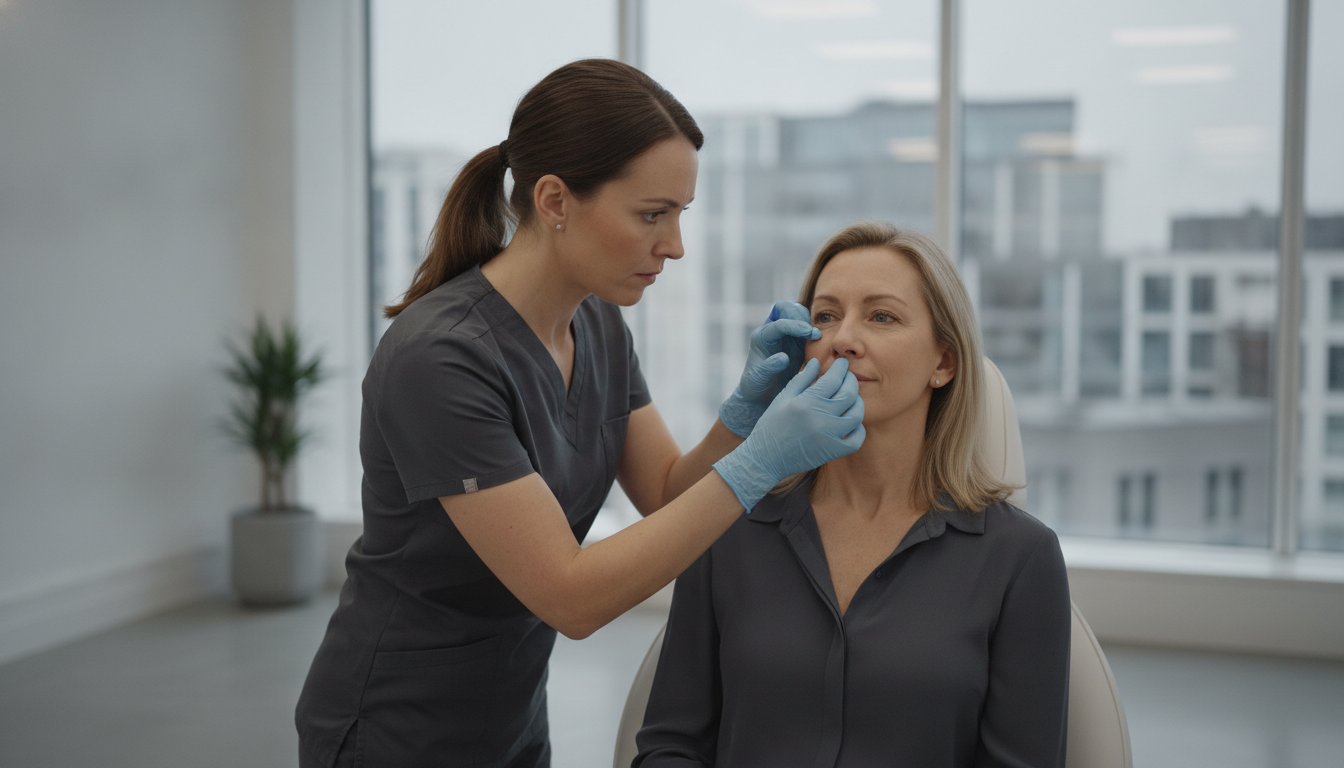

What if the most efficient path to your new career isn’t the course with the fewest days in the classroom, but the one that ensures your license is unshakeable? You’ve likely felt a sense of hesitation while looking at the thousands of providers currently in the market, perhaps feeling overwhelmed by the complex shift from simple certificates to mandatory regulated standards. It’s natural to worry about whether your training will satisfy the 2026 licensing requirements or if you’ll find yourself unable to secure professional indemnity insurance. This fast track aesthetic courses uk review provides the clarity you need to distinguish between fleeting certifications and the high-calibre education required for long-term clinical success.
We agree that the current landscape is confusing; the transition from beauty to clinical practice requires a guide who understands the weight of patient safety. We promise to help you navigate these options with the steady hand of an expert artisan at Beauty Worx Aesthetics, ensuring you choose a pathway that prioritizes artistic discernment. This article previews the essential differences between accreditation types and outlines the financial realities of building a sustainable, prestigious practice in the modern UK market.
Key Takeaways
- Learn why a modern fast track aesthetic courses uk review must prioritize regulatory compliance over mere speed to ensure your career is built on a foundation of long-term legitimacy.
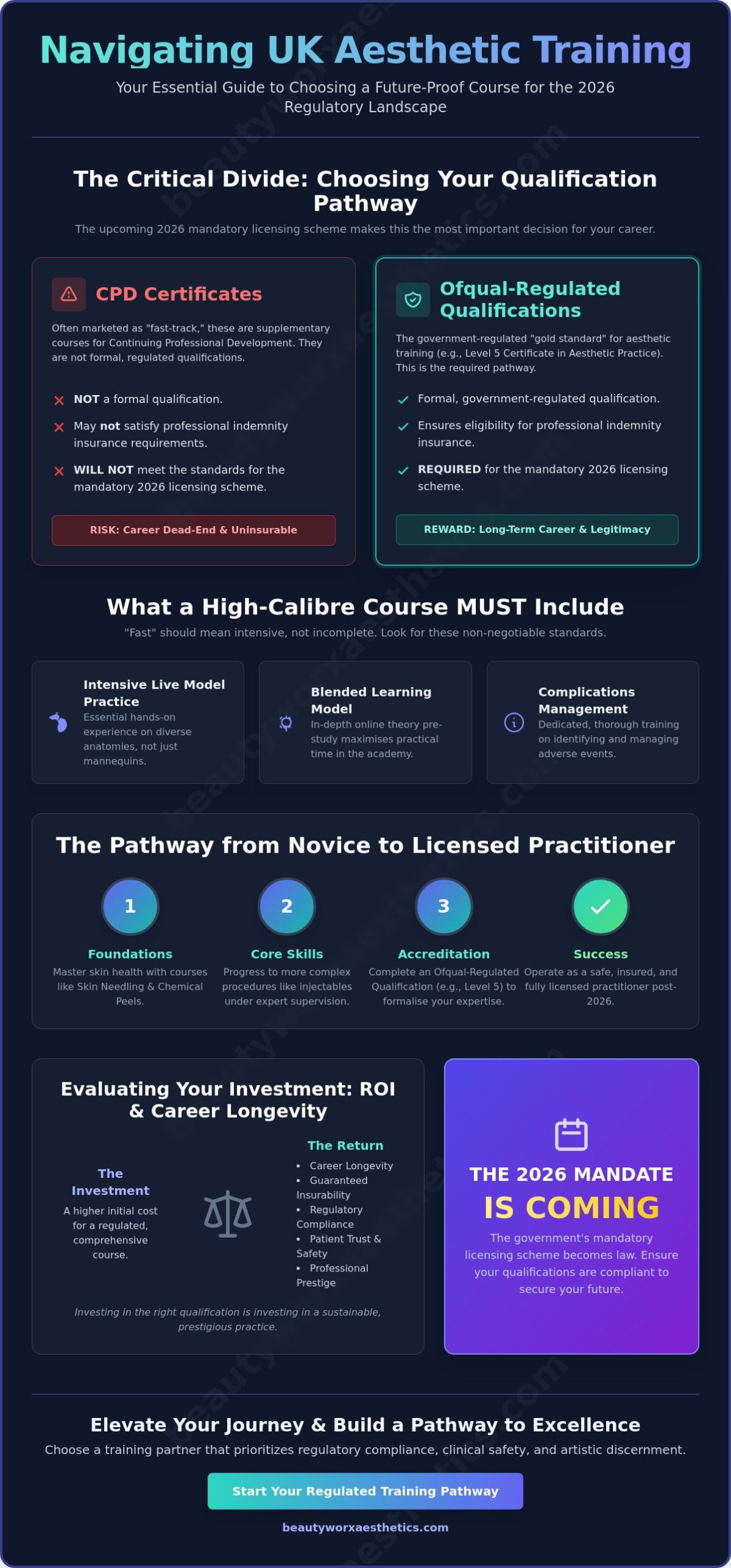
- Discover the critical difference between supplementary CPD certificates and the Ofqual-regulated qualifications, such as the Level 5 Certificate in Aesthetic Practice, required for 2026 licensing.
- Identify the non-negotiable clinical standards of a professional programme, including the necessity of intensive live-model practice and dedicated complications management training.
- Evaluate the true financial landscape of your new career, balancing initial training costs against the long-term rewards of being a safe, insurable practitioner.
- Understand how the right training partnership offers more than a certificate, providing the mentorship needed to master the art of subtle, restorative enhancements.
Understanding the Fast Track Phenomenon in UK Aesthetics
In the evolving landscape of British beauty, the term “fast track” has undergone a profound transformation. What once described a brief weekend workshop has matured into a sophisticated, intensive clinical pathway. These programmes are designed for individuals who possess the drive to master complex skills without the traditional multi-year academic delay. When conducting a fast track aesthetic courses uk review, it becomes clear that the modern standard is no longer about how quickly you can finish. Instead, it focuses on how thoroughly you are prepared for the weight of clinical responsibility. This evolution reflects a shift toward excellence, where the pace of learning is matched by the depth of curriculum.
The surge in demand for these accelerated routes is driven by a market valued at approximately £3.6 billion. Professionals from various backgrounds are drawn to the delicate balance of clinical expertise and artistic discernment. However, a vital distinction exists between fast learning and cutting corners. True professional acceleration involves high-density training environments where theory and practice are seamlessly integrated. This ensures that while the timeline is condensed, the mastery of this Aesthetic medicine overview remains uncompromising. It’s about efficiency, not shortcuts.
The Appeal of Accelerated Learning for Non-Medics
For those outside the traditional healthcare sector, the potential for a career pivot is both aspirational and accessible. The pathway model provides a reassuring structure, often beginning with skin health before advancing to more complex procedures. By engaging with structured aesthetic courses, non-medics can bridge the knowledge gap effectively. This journey often starts with foundational certificates in skin needling or chemical peels, creating a steady progression toward injectables. It’s a meticulous process that builds confidence alongside technical skill. You aren’t just earning a certificate; you’re cultivating a new professional identity.
The 2026 Regulatory Landscape: Why “Fast” Must Also Be “Regulated”
The year 2026 marks a pivotal moment for the industry with the implementation of the government’s mandatory licensing scheme. This oversight, supported by bodies like the JCCP, ensures that every practitioner meets a rigorous standard of safety. Any credible fast track aesthetic courses uk review must now look beyond the classroom and examine the awarding body. Ofqual-regulated qualifications have become the non-negotiable gold standard. These certifications provide the transparency and reliability crucial for securing professional indemnity insurance and long-term career longevity. In this new era, your credentials must be as unshakeable as your clinical technique.
What Should a High-Calibre Fast Track Course Include?
Selecting the right training provider requires a discerning eye. A high-calibre fast track aesthetic courses uk review should prioritize programmes that mirror the rigour of clinical practice rather than the simplicity of a beauty workshop. The most effective courses utilize a blended learning approach, where sophisticated pre-study theory portals allow you to master the science at your own pace before ever stepping into the academy. This ensures that your time on-site is dedicated to the nuances of artistry and technical precision. Furthermore, look for providers that offer an ongoing partnership; true excellence is cultivated through mentorship that extends far beyond the day you receive your certificate.
Practical experience is the cornerstone of safe practice. While mannequins offer a risk-free introduction, they cannot replicate the subtle variations in skin elasticity, vascularity, or patient anatomy. A professional programme must provide ample live model practice under the watchful eye of an expert artisan. This hands-on experience is vital for developing the tactile sensitivity required for delicate procedures. It also aligns with the GMC guidance for cosmetic interventions, which emphasizes the necessity of high-level competency and professional standards in every aesthetic procedure.
Anatomy, Physiology, and the Science of Aging
Deep anatomical knowledge is what separates a technician from a true specialist. To ensure a safe and successful career, Level 3 and Level 4 Anatomy and Physiology (A&P) are essential prerequisites that provide the biological foundation for all injectable work. You must understand the layers of the dermis, the location of major vessels, and how the facial structure changes over time. Accurate facial mapping serves as the essential blueprint for every procedure, ensuring that enhancements respect the natural architecture of the face while preserving the client’s unique character. This meticulous approach guarantees that results are always subtle, balanced, and deeply restorative.
Safety First: The Complications Management Pillar
A course is only as robust as its safety protocols. A reputable academy will place an immense focus on identifying and managing adverse events, treating this knowledge as a vital pillar of your career. This includes comprehensive training on the use of an emergency kit, which should contain essentials like hyaluronidase for filler reversal and adrenaline for rare allergic reactions. Understanding these protocols isn’t just about safety; it’s about the quiet confidence that comes from being prepared for any outcome. Investing in a dedicated complications management course is perhaps the most significant step you can take toward becoming a trusted, professional practitioner. This level of preparation is what clients look for when seeking a safe, expert hand for their aesthetic journey.
Reviewing the Regulation Gap: CPD Certificates vs. OFQUAL Qualifications
The divide between a simple certificate and a regulated qualification has never been more significant. As you conduct a fast track aesthetic courses uk review, you’ll encounter two distinct paths: CPD and Ofqual-regulated diplomas. While both have their place in a practitioner’s portfolio, their weight in the eyes of insurers and regulators differs immensely. Understanding this gap is essential for anyone aiming to build a practice that is both legally compliant and clinically respected. It’s the difference between a temporary permit and an unshakeable professional foundation.
In April 2026, data showed that while 73% of providers are led by healthcare professionals, only 36% of the qualified market is formally registered with a healthcare regulator. This discrepancy highlights why choosing the right accreditation is so vital. Insurers are increasingly selective, with specialist annual premiums for £1 million treatment liability starting at approximately £371.40 for those with the correct credentials. The 2025 ban on remote prescribing has already tightened the industry. It makes formal qualifications even more essential for those who wish to operate legally and safely.
What is CPD and When is it Sufficient?
CPD stands for Continuing Professional Development. It serves as an excellent way to refine existing skills or add niche services to an established menu. For example, vitamin b12 injection training is often perfectly suited for CPD accreditation, as it supplements a practitioner’s broader expertise with specific, targeted knowledge. However, relying solely on CPD for foundational injectable work is a strategy of the past. These certificates are suitable for “add-on” skills, but they lack the depth required to satisfy the upcoming mandatory licensing requirements for high-risk procedures.
The Power of OFQUAL Regulation (Levels 4, 5, and 7)
The true power of Ofqual regulation lies in its national recognition and standardized assessment. Qualifications like the Level 5 Certificate in Aesthetic Practice or the prestigious Level 7 Diploma in Clinical Aesthetic Injectable Treatments provide a level of security that short-term certificates simply cannot match. These diplomas are mapped to the UK government’s new licensing scheme, ensuring your right to practice remains protected as new laws take effect. This distinction between beauty and clinical practice is vital. It signals to your clients that you’ve met a rigorous, externally verified standard of excellence, establishing you as a trusted, expert artisan. Ultimately, any comprehensive fast track aesthetic courses uk review must conclude that Ofqual regulation is the only way to future-proof your professional journey.
The Practitioner’s Review: Evaluating ROI, Insurance, and Career Longevity
The transition into the aesthetics industry is a significant commitment of both time and resources. When conducting a fast track aesthetic courses uk review, the potential return on investment is often a primary consideration. With the UK aesthetics market projected to grow by 8-9% annually, the opportunity for a successful career is vast. However, a sophisticated practitioner understands that the initial course fee, typically ranging between £2,000 and £5,000 in 2026, is merely the beginning. To build a sustainable, high-end brand, you must account for the “cost of safety.” This includes investing in premium products, maintaining a robust complications kit, and securing specialist insurance. These elements aren’t just expenses; they’re the pillars of a professional reputation that commands premium prices.
A common concern for those entering the field is whether a non-medic can truly thrive. The answer lies in the “Pathway” model discussed earlier. By following a regulated route, non-medics can achieve a level of clinical excellence that rivals traditional medical backgrounds. Success in this field is defined by your commitment to continuous learning and your ability to provide a safe, luxurious experience for every client. To help you evaluate potential training providers, use this discernment checklist:
- Does the academy have a lead medic present during all practical sessions?
- Is the student-to-tutor ratio small enough to allow for personalized, hands-on guidance?
- Do they provide a clear route to Ofqual-regulated qualifications rather than just CPD?
- Is there a formal mentorship programme available after the course concludes?
Insurance: The Ultimate Litmus Test for Any Course
Before you commit to any training, your smartest move is to contact a specialist insurer. They act as the ultimate gatekeepers of professional standards. An insurer will scrutinize the tutor’s credentials, the depth of the curriculum, and the accreditation of the course. In 2026, specialist annual premiums for a £1 million treatment liability policy start at approximately £371.40. If an insurer refuses to cover a specific course, it’s a clear signal that the training doesn’t meet the required safety standards. For non-medics, establishing a clear prescribing relationship is also a mandatory step that your training provider should help you facilitate. Ensuring these details are in place from day one is essential for your peace of mind and professional standing.
Building a Brand on Natural Results
Modern UK consumers are increasingly moving away from exaggerated features, opting instead for “prejuvenation” and restorative work. This shift toward subtlety is where the true artisan shines. High-level training allows you to master techniques that preserve the client’s inherent features while providing a refreshed, vital appearance. For instance, mastering lip augmentation filler techniques that prioritize balance and hydration over volume will set you apart in a crowded market. When you prioritize natural-looking results, you aren’t just performing a procedure; you’re acting as a knowledgeable guide in your client’s journey toward self-confidence. This artistic discernment is what transforms a simple service into a bespoke clinical encounter.
Ready to begin your journey with a provider that prioritizes your professional longevity? Explore our full range of Ofqual-regulated aesthetics training and take the first step toward excellence.
Elevating Your Journey: The Beauty Worx Aesthetics Pathway to Excellence
Selecting the right academy is the defining choice in your professional evolution. As noted in any comprehensive fast track aesthetic courses uk review, the environment where you train shapes the standards you will ultimately uphold. Beauty Worx Aesthetics offers a sanctuary of learning that balances clinical precision with an atmosphere of high-end luxury. We believe training should be as restorative and inspiring as the treatments you will provide. By avoiding the sterile coldness of traditional settings, we create a warm, welcoming space where both medical and non-medical practitioners can master their craft with poise.
Our commitment to your growth extends far beyond the academy doors. We understand that the transition into clinical practice can feel overwhelming; this is why Beauty Worx Aesthetics prioritizes your emotional journey toward self-confidence. You are not just a student; you are a future colleague. Our expert artisans act as knowledgeable guides, offering the meticulous, detail-oriented mentorship required to navigate the complexities of modern aesthetics with a steady, certain hand.
From Foundation to Masterclass: A Structured Career Map
We have designed our curriculum to provide a logical progression that mirrors the natural development of a specialist. Your journey might begin with a Level 4 Certificate in Skin Needling or a Level 5 Certificate in Aesthetic Practice, establishing a robust foundation in skin health and safety. From there, you can advance toward the Level 7 Diploma in Clinical Aesthetic Injectable Treatments, the industry’s hallmark of prestige. We view facial aesthetics as a holistic science where every needle placement is an intentional act of restoration. Specialized masterclasses, such as our Lip Masterclass, allow you to refine the specific skills that define your unique artisan style.
Your Future in Aesthetics Starts Here
Your future in this vibrant industry depends on the strength of your professional foundation. We encourage you to view your education at Beauty Worx Aesthetics as a vital investment in your personal brand, building a reputation for safety and artistic discernment. By choosing a regulated pathway, you ensure your credentials carry the weight of authority. You’ll emerge with the unshakeable confidence of a practitioner who prioritizes subtle, natural-looking results. We invite you to explore our full course prospectus or reach out for a professional consultation to discuss how we can help you achieve your aspirations.
Your Future in Clinical Artistry Awaits
The landscape of 2026 demands more than just speed; it requires an unwavering commitment to regulated excellence. This fast track aesthetic courses uk review has demonstrated that the most direct route to success is one paved with Ofqual-regulated credentials and rigorous clinical standards. By prioritizing deep anatomical knowledge and safety through complications management, you aren’t just starting a job. You’re cultivating a legacy of trust and subtle, restorative results that define the modern aesthetic professional.
With access to OFQUAL Regulated Levels 4, 5, and 7, alongside over 25 CPD accredited specialist courses, your professional progression is clearly mapped. Expert-led practical training with live models ensures you possess the tactile confidence required for a high-end practice. It’s time to invest in your own artisan brand and step into a career where science meets art in perfect balance. We invite you to Explore Our OFQUAL Regulated Aesthetic Pathways and begin your journey toward professional excellence today. Your transformation into a trusted specialist starts with the right foundation.
Frequently Asked Questions
Is a fast-track aesthetics course enough to get me insured in the UK?
Yes, provided the training is accredited by a recognized awarding body and meets the specific criteria of specialist insurers. Most reputable insurers require evidence of a low tutor-to-student ratio and extensive live model practice. It’s essential to verify your eligibility with an insurance provider before committing to a course to ensure your professional journey is fully protected from day one.
Can non-medics still perform Botox and dermal fillers in 2026?
Non-medics can continue to practice these procedures provided they hold the mandatory licenses and Ofqual-regulated qualifications required by the new government scheme. The industry has shifted toward a competency-based model that prioritizes safety and clinical excellence. This ensures that every practitioner, regardless of their professional background, meets the same rigorous standards of care and artistic discernment for their clients.
How much does a reputable fast-track aesthetics course typically cost?
While costs vary across the industry, a comprehensive training pathway for beginners represents a significant professional investment in your future brand. You should account for the tuition fees alongside the necessary costs for specialist insurance and high-end clinical equipment. Reputable academies focus on providing a high-calibre education that ensures your long-term career longevity and prestige in a competitive market.
What is the difference between a CPD certificate and an OFQUAL regulated qualification?
An Ofqual-regulated qualification is a nationally recognized diploma that meets strict government standards, whereas a CPD certificate is intended for ongoing professional development. In any fast track aesthetic courses uk review, the distinction is vital: Ofqual levels provide the legal foundation for licensing. CPD is best reserved for adding niche skills once your primary, regulated qualifications are firmly in place.
How long does it actually take to become a confident aesthetic practitioner?
Confidence is cultivated through a blend of intensive initial training and consistent clinical practice over several months. While the term fast track refers to the efficient delivery of theory and practical sessions, true mastery is an ongoing journey. Most practitioners find that their artisan skills truly flourish after performing a diverse range of treatments under the steady guidance of a mentor.
What happens if I encounter a complication after a fast-track course?
You must follow the emergency protocols established during your complications management training, which include utilizing your emergency kit and contacting your clinical lead. Reputable training providers offer ongoing support and a clear pathway for expert advice when adverse events occur. Being meticulously prepared for these moments is what distinguishes a professional specialist from those who merely hold a certificate.
Are these courses recognized by the JCCP?
Many high-calibre courses are designed to align with the standards set by the Joint Council for Cosmetic Practitioners (JCCP). When researching a fast track aesthetic courses uk review, you should verify if the curriculum meets the JCCP educational requirements for the specific treatments you intend to offer. This alignment provides an additional layer of professional credibility and reassures your clients of your commitment to safety.
Can I start my own aesthetics business immediately after qualifying?
You can begin establishing your clinic once you have secured your practitioner license, specialist insurance, and a reliable prescribing relationship. While you’ll possess the technical skills to perform treatments, building a luxury brand requires careful attention to the clinical environment and the client’s emotional journey. Many successful practitioners use their initial months to refine their bespoke service offering and build a loyal client base.













 Reviews