What if the difference between a luminous, rested gaze and a complicated recovery isn’t the product itself, but the precision of the hand that guides it? It’s natural to feel a sense of hesitation when considering treatments so close to the eyes, especially when you’re faced with conflicting advice from various clinics. You’re likely asking, is tear trough filler safe, or are the risks of vascular occlusion and unnatural puffiness too significant to ignore? We understand that your journey toward self-confidence requires a delicate balance of clinical expertise and high-end care.
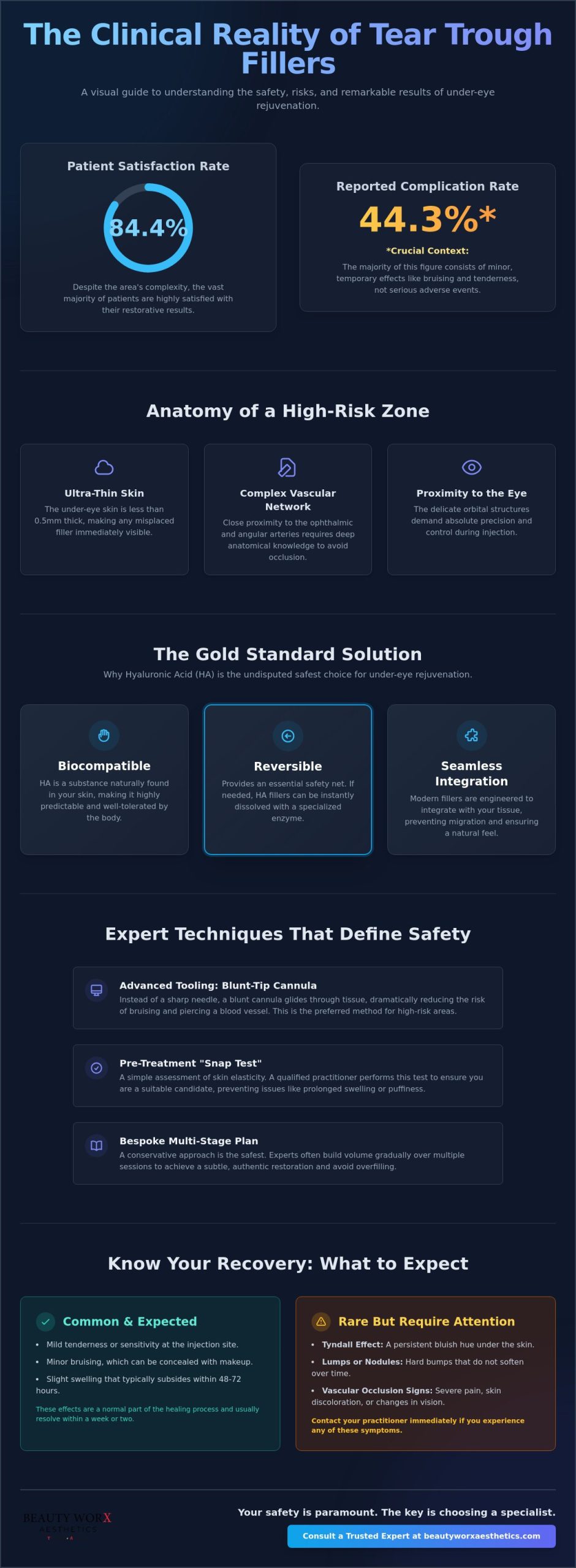
This guide will clarify the clinical reality of under-eye safety, moving beyond the headlines to explore the anatomical risks and the vital role of practitioner qualification. We’ll examine the latest 2026 data, including why a 44.3% complication rate, mostly involving minor bruising, still results in a high 84.4% patient satisfaction rate. You’ll learn how the snap test and blunt-tip cannulas ensure a result that’s both discreet and restorative. By the end, you’ll have the criteria needed to choose a trusted expert, providing you with total peace of mind before your consultation.
Key Takeaways
- Understand the intricate vascular network beneath the eyes and how a deep knowledge of facial anatomy prevents common aesthetic issues like lumps or migration.
- Learn why Hyaluronic Acid remains the gold standard for under-eye rejuvenation, offering a reversible and biocompatible solution for a refreshed, natural appearance.
- Discover the essential criteria for choosing a specialist, specifically how advanced training ensures that your answer to “is tear trough filler safe” is a confident yes based on clinical mastery.
- Distinguish between expected, temporary effects like mild tenderness and serious concerns such as the Tyndall Effect, allowing you to monitor your recovery with absolute clarity.
- Explore why a bespoke, multi-stage treatment plan is often the safest path to achieving a subtle and authentic restoration of your unique features.
Is Tear Trough Filler Safe? The Clinical Reality
The quest for a refreshed, youthful gaze often leads to a central question: is tear trough filler safe? While some clinics might describe this as a simple volume-adding exercise, the clinical reality is far more nuanced. Tear trough rejuvenation is an advanced dermal filler application that requires a profound understanding of facial architecture. It isn’t just about filling a hollow; it’s about the delicate restoration of light and shadow under the eyes. This area is medically classified as a high-risk injection zone due to its proximity to vital structures. However, a practitioner’s expertise transforms this risk into a controlled, safe environment for aesthetic improvement.
What Makes the Tear Trough Unique?
The skin in the periorbital region is the thinnest on the entire body, often measuring less than 0.5mm in thickness. Unlike the cheeks, which are supported by robust fat pads, the under-eye area sits directly over the orbital bone and a complex network of vessels. This lack of structural padding means that any product placed here must be managed with absolute precision. Additionally, the way light interacts with this translucent skin affects the visible result. If a filler is placed too superficially, it can catch the light in a way that creates a bluish hue or an unnatural ridge, a phenomenon that requires artistic discernment to avoid.
The Safety Profile of Modern Dermal Fillers
Choosing the right material is the first step in ensuring a secure outcome. Modern Injectable filler technology has evolved to prioritize patient safety through biocompatibility and precision. Hyaluronic Acid (HA) is the undisputed gold standard for this region because it is a substance naturally found in our skin, making it highly predictable and, crucially, reversible. If a result is ever less than perfect, HA can be dissolved instantly with a specialized enzyme, providing an essential safety net that permanent fillers lack.
Safety also depends on product rheology, specifically cohesivity and “G-prime,” which describes the filler’s firmness. We select fillers that integrate seamlessly with your natural tissues, preventing the product from migrating or feeling heavy. This level of detail is a hallmark of sophisticated facial aesthetics, where the goal is always to preserve your inherent features. When performed by a specialist who understands these technical nuances, the answer to whether is tear trough filler safe becomes a reassuring “yes,” backed by clinical discernment and an artisan’s touch.
Understanding the Risks: Anatomy and Potential Complications
The under-eye area is a masterclass in anatomical complexity, requiring a practitioner to navigate a dense network of vessels and delicate tissue layers. When patients ask, is tear trough filler safe, they are essentially asking about the management of this intricate landscape. At the heart of these safety concerns is the ophthalmic artery and its branches, which provide blood supply to the eye region. A deep understanding of facial layers allows a specialist to place product precisely within the sub-muscular plane, far beneath the thin surface skin where lumps or visible ridges might otherwise form. By staying within the “safety triangle” of the mid-face and avoiding high-danger zones near the angular artery, a skilled injector ensures the procedure remains a graceful enhancement rather than a medical risk.
While complications are rare, transparency is a cornerstone of professional care. Vascular occlusion is a rare but manageable emergency in expert hands. Choosing a practitioner who uses FDA-approved dermal fillers ensures that the materials themselves meet rigorous safety standards, even when applied to the off-label tear trough area. It’s this combination of premium products and anatomical mastery that defines a high-end clinical experience.
Vascular Safety and the Use of Cannulas
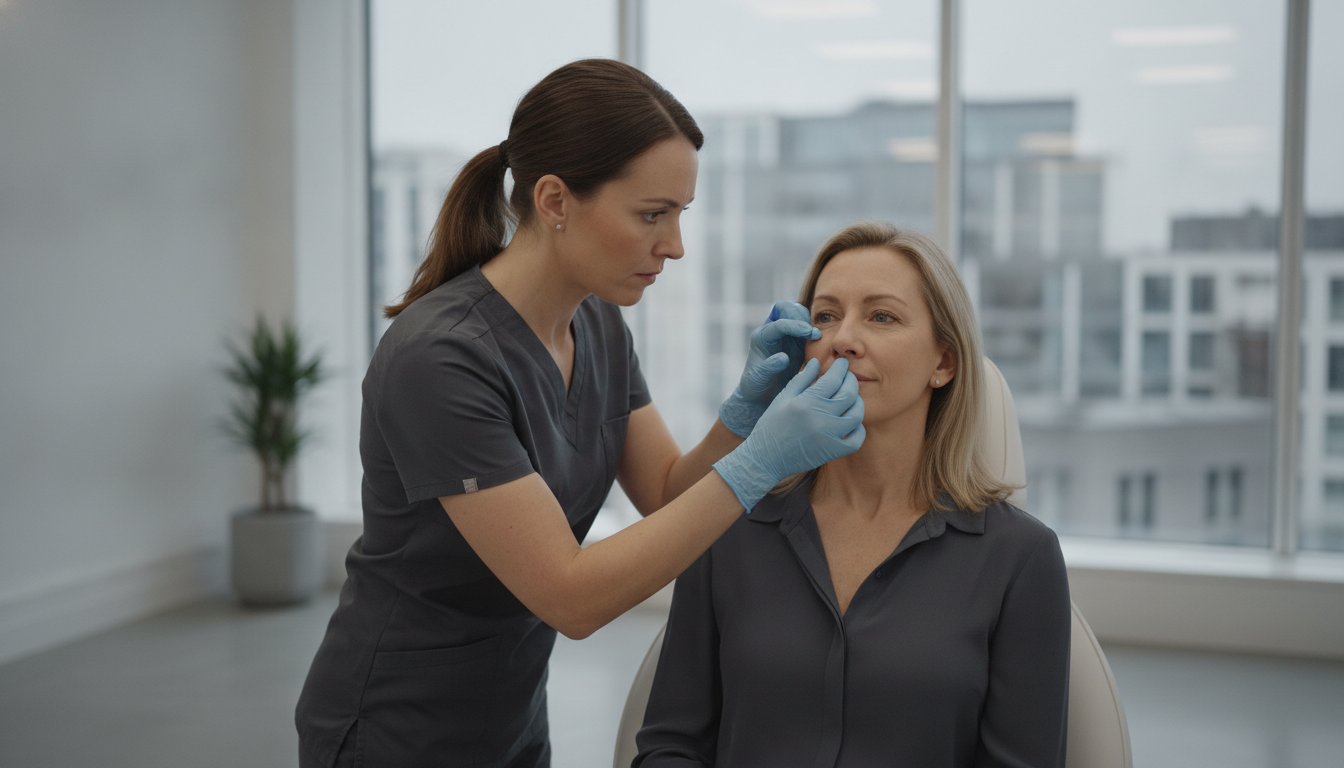
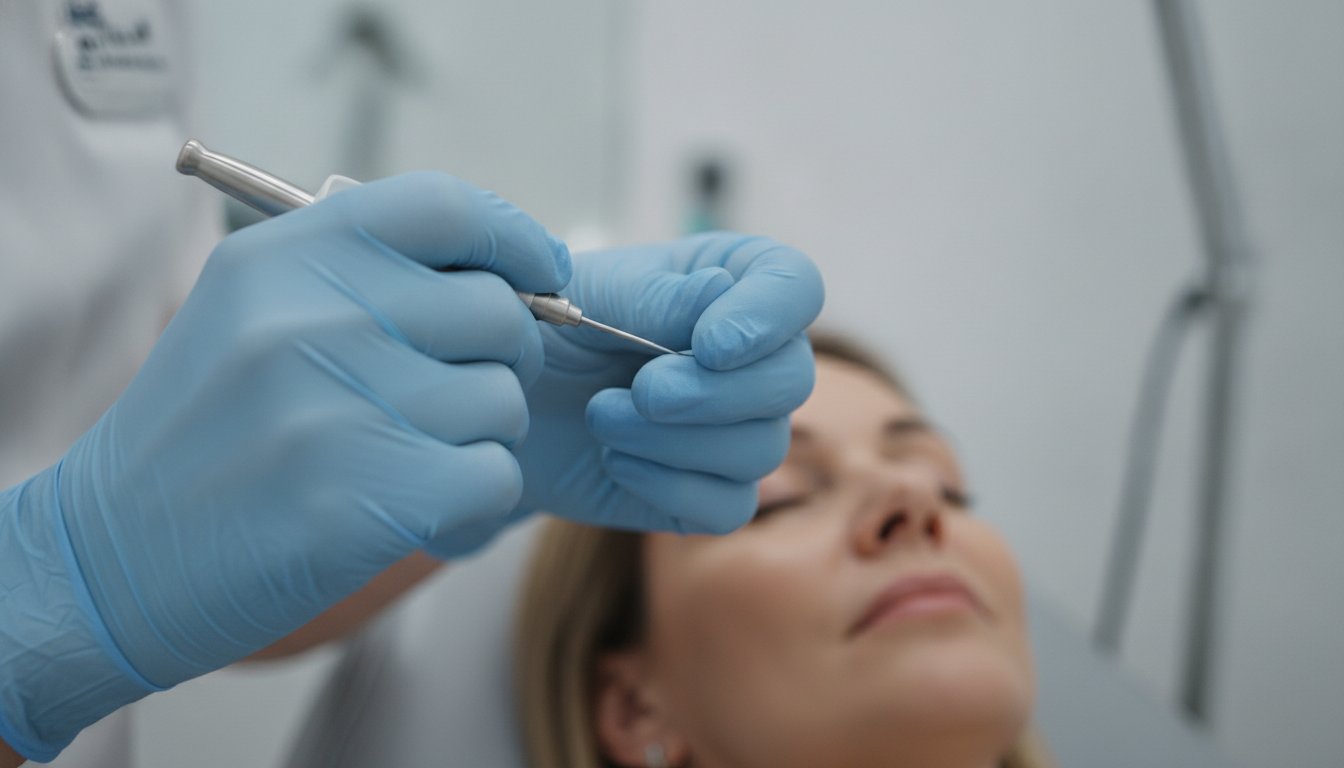
To further elevate the safety profile of the treatment, many expert artisans prefer blunt-tipped cannulas over traditional sharp needles. A cannula acts as a gentle guide, sliding through tissues rather than piercing them. This technique significantly reduces the risk of accidental vessel trauma or bruising. The practitioner receives immediate tactile feedback, feeling the subtle resistance of different anatomical layers, which allows for a more controlled and rhythmic injection process. This meticulous approach is what creates the smooth, airbrushed finish our clients desire.
Anatomical Contraindications: When Safety Means Saying No
True expertise often lies in knowing when a treatment is not the right path. For some, concerns like festoons or malar bags (chronic puffiness on the cheekbone) can actually be worsened by filler, as the product may attract water and increase swelling. Similarly, significant skin laxity might mean the tissue cannot adequately support the filler, leading to potential migration. This is why we believe a complications management course is an essential credential for any injector. It guarantees they possess the discernment to prioritize your long-term health over a quick result. If you’re ready to explore a tailored approach to your aesthetic journey, we invite you to learn more about our bespoke treatment philosophies.
Common Side Effects vs. Serious Safety Concerns
When considering an aesthetic enhancement, it’s vital to distinguish between the expected “social downtime” and genuine clinical complications. Most clients experience mild swelling or slight tenderness immediately following their procedure, which typically resolves within a few days as the product integrates with the tissue. These minor reactions are a normal part of the body’s healing response. According to a 2020 prospective study on tear trough filler safety, the procedure remains highly secure with a low rate of serious adverse events when performed by a specialist. However, understanding the nuances of your recovery helps ensure the question of is tear trough filler safe is answered with absolute clarity throughout your journey.
Managing the Tyndall Effect and Overfilling
One of the most common aesthetic concerns is the Tyndall Effect, a phenomenon where the under-eye area takes on a faint, bluish hue. This isn’t a bruise; it’s a matter of physics. When a practitioner places filler too superficially, light scatters as it passes through the translucent skin and hits the hyaluronic acid particles, reflecting blue light back to the surface. While some competitors suggest this is simply bad luck, it’s almost always a result of incorrect product depth or using a filler with the wrong rheology for such thin skin.
Overfilling can also lead to a “puffy” or unnatural appearance, especially when you smile. The beauty of modern aesthetics lies in the safety net of Hyaluronidase, a specialized enzyme that can dissolve unwanted results almost instantly. If you’re unhappy with the placement or volume, we can gently refine or remove the product, restoring your natural contours without delay. This reversibility is a cornerstone of why we consider HA fillers the only appropriate choice for this delicate zone.
Identifying True Emergencies
While the vast majority of treatments proceed without incident, your practitioner must be prepared for the rare event of a vascular emergency. Vascular compromise occurs if filler accidentally enters or compresses a blood vessel, impeding blood flow. It’s a rare occurrence, but it requires an immediate, practiced response. You should contact your practitioner instantly if you notice any of these red flags:
- Blanching: The skin appears unusually pale or white in a specific patch.
- Livedo Reticularis: A dusky, mottled, or “net-like” purple pattern on the skin.
- Intense Pain: Discomfort that feels significantly more severe than typical post-injection tenderness.
A professional clinic will always have emergency dissolving agents on-site and a clear protocol for immediate reversal. This level of preparedness is what truly determines is tear trough filler safe for you. Safety isn’t just about the absence of risk; it’s about the presence of meticulous expertise and a commitment to your long-term well-being.
The Safety Link: Why Practitioner Qualification is Non-Negotiable
When you consider an advanced procedure like under-eye rejuvenation, the most significant variable in your outcome isn’t the syringe itself, but the years of study behind the person holding it. Many prospective clients ask, is tear trough filler safe, yet they often overlook the vast disparity in practitioner training. In the UK, the aesthetics landscape remains largely self-regulated, meaning a “weekend course” certificate carries far less weight than an OFQUAL-regulated qualification. True safety is born from a deep, clinical understanding of facial architecture that simply cannot be mastered in a two-day workshop. It requires a dedicated commitment to anatomical precision and a refined artistic eye.
A specialist’s journey involves more than just learning where to inject; it’s about developing the clinical discernment to know when a treatment isn’t appropriate. This level of expertise is what transforms a high-risk zone into a canvas for subtle, restorative change. Before booking any consultation, it’s essential to ask about a practitioner’s specific aesthetic courses and formal certifications to ensure they possess the necessary mastery to protect your delicate features.
What is a Level 7 Diploma in Clinical Aesthetics?
The Level 7 Diploma represents the gold standard for both medical and non-medical injectors in the UK. This postgraduate-level qualification is a rigorous undertaking that demands an exhaustive study of complications management, ethics, and deep-plane anatomy. Unlike shorter programs, a Level 7 practitioner has been assessed on their ability to handle rare emergencies and their commitment to evidence-based practice. This academic rigor acts as a vital shield, protecting patients from “cowboy” injectors who lack the foundational knowledge to navigate the complex vascular networks we explored in previous sections.
The Role of Continued Professional Development (CPD)
Aesthetics is an ever-evolving field where new techniques and safety protocols emerge constantly. A trusted artisan doesn’t stop learning after their initial qualification. They engage in ongoing mentorship and specialized masterclasses to refine their craft in specific areas, such as an advanced lip augmentation filler course. This dedication to Continued Professional Development (CPD) ensures that your practitioner is using the most current, safest methods available in 2026. Beyond their certificates, always verify that a clinic holds comprehensive aesthetic insurance and is part of a regulated professional body. This transparency is the hallmark of a specialist who views their work as both a science and a lifelong art form.
If you’re seeking a practitioner who prioritizes clinical excellence and subtle, authentic results, we invite you to book a consultation with our expert team today.
Your Journey to Safe Tear Trough Rejuvenation
The path to a luminous, rested appearance begins long before the first droplet of filler is administered. It starts with a dialogue. A truly professional experience is defined by a thorough, no-pressure consultation where your unique anatomy is the primary focus. During this session, the question of is tear trough filler safe for your specific skin type and bone structure is addressed with absolute transparency. We believe in a “less is more” philosophy, especially in the periorbital region. Often, the most sophisticated results come from a bespoke plan that may involve supporting the mid-face or cheeks first, providing a structural foundation that allows for a more subtle and secure under-eye correction.
Our commitment to your well-being doesn’t end when you leave the clinic. We view aesthetic care as an ongoing partnership in self-care and graceful aging. This means providing dedicated long-term follow-up and support, ensuring your results integrate beautifully over time. By prioritizing a conservative, multi-stage approach, we preserve your inherent features while achieving a refreshed look that feels entirely authentic to you.
The Consultation: Your Safety Screen
Think of your initial meeting as a vital safety screen rather than a simple sales appointment. It’s the moment to discuss your full medical history and any previous aesthetic work, as these factors directly influence how your body interacts with new treatments. You should feel empowered to ask your practitioner about their specific experience with the tear trough zone and their emergency protocols. Managing expectations is equally crucial; while we strive for excellence, we must distinguish between the airbrushed reality of social media and the beautiful, natural restoration possible through clinical artistry. This honest exchange ensures that is tear trough filler safe is answered not just in theory, but in the context of your personal health journey.
Aftercare: Protecting Your Investment and Health
The first 48 hours following your treatment are essential for protecting both your health and your aesthetic investment. To ensure the product settles perfectly, we recommend sleeping on your back with an extra pillow to keep your head slightly elevated. You’ll need to avoid strenuous exercise, as increased blood flow can exacerbate minor swelling. Additionally, we advise clients to observe the following precautions:
- Avoid Extreme Heat: Stay away from saunas, steam rooms, or intense sun exposure for at least two weeks.
- Postpone Dental Work: We recommend waiting at least two weeks before and after filler for any dental procedures to minimize the risk of infection.
- Gentle Care: Avoid applying firm pressure or massaging the treated area while the product integrates with your tissues.
At Beauty Worx, our commitment to artisan-level care means we are always available to guide you through your recovery. This meticulous attention to detail projects the safety and discernment you deserve. By following these refined aftercare steps, you ensure that your journey toward self-confidence remains as smooth and rewarding as the result itself.
Embarking on Your Under-Eye Restoration
Achieving a luminous, authentic gaze is a journey that prioritizes clinical precision above all else. We’ve explored how the intricate anatomy of the periorbital region demands a specialist’s touch, ensuring that every placement respects your natural vascular network. When you ask, is tear trough filler safe, the answer lies in the intersection of premium hyaluronic acid products and the mastery of an expert artisan. True safety is a result of meticulous planning, from the initial consultation to the final aftercare step. It’s a process that values your emotional journey as much as your aesthetic outcome.
At Beauty Worx, we pride ourselves on being an OFQUAL Regulated Level 7 Training Academy. Our team is Advanced Complications Management Certified, acting as specialists in natural-looking clinical enhancements that preserve your unique features. We invite you to take the next step toward a refreshed, confident version of yourself in an environment that balances clinical expertise with high-end luxury. Book a Professional Consultation with our Expert Practitioners and experience a partnership dedicated to your long-term self-care. We look forward to guiding you through a safe and restorative aesthetic experience with the quiet confidence you deserve.
Frequently Asked Questions
Can tear trough filler cause blindness?
While extremely rare, vascular occlusion leading to blindness is a documented risk of dermal fillers in the periorbital area. This occurs if the product is inadvertently injected into an artery that supplies the retina. However, when performed by a specialist with advanced anatomical training, the risk is minimized through precise technique and the use of safety-focused tools like blunt-tip cannulas. This level of care ensures your safety remains the absolute priority.
How do I know if my tear trough filler has migrated?
Migration typically presents as fullness or puffiness in areas where the filler wasn’t originally placed, such as the upper cheek or closer to the bridge of the nose. You might notice a loss of the original defined contour or a persistent swelling that doesn’t resolve. If you suspect the product has shifted, a consultation is necessary to determine if dissolving the filler is the best path toward restoring your natural features.
Is the Tyndall effect permanent if it occurs?
The Tyndall effect is not permanent and can be effectively resolved with a specialized dissolving agent. This bluish discoloration happens when light scatters through filler placed too close to the skin’s surface. Because we use hyaluronic acid fillers, we can simply dissolve the misplaced product. This instantly removes the blue tint and allows for a fresh, more precise application at the correct depth during a future session.
What is the safest type of filler for the under-eye area?
Hyaluronic acid (HA) fillers are widely considered the safest choice for the under-eye area because they are biocompatible and completely reversible. Their soft, gel-like consistency allows for seamless integration into the thin periorbital skin. When patients ask, is tear trough filler safe, we emphasize that using a reversible HA product provides an essential safety net that permanent or semi-permanent alternatives simply cannot offer in this high-risk zone.
How long do I need to wait to see the final, safe result?
You should expect to see the true, settled result approximately two to four weeks after your treatment. While the initial volume is visible immediately, the product needs time to integrate with your tissues and for any minor swelling to subside. This timeframe ensures the filler has reached its final position, allowing us to assess the subtle, authentic improvement during your scheduled follow-up appointment at our clinic.
Can I have tear trough filler if I have hay fever or allergies?
Yes, you can have the treatment, but it’s best to avoid booking during a period of active, severe hay fever symptoms. Allergic reactions can cause natural inflammation and fluid retention under the eyes, which may interfere with the precision of the filler placement or affect the settling process. We recommend waiting until your symptoms are well-managed and the eyes are no longer irritated, red, or puffy.
Is it safer to use a needle or a cannula for tear troughs?
A blunt-tipped cannula is generally considered the safer option for the delicate under-eye region. Unlike a sharp needle, a cannula is designed to slide through tissues and push vessels aside rather than piercing them, which significantly reduces the risk of bruising or vascular trauma. This technique is a key factor in ensuring is tear trough filler safe for clients seeking a discreet, secure, and sophisticated enhancement.
What should I do if I see a lump after my treatment?
Most minor lumps seen in the first few days are simply localized swelling or the product settling and will resolve with time. However, if a lump is persistent, painful, or accompanied by skin color changes, you should contact your practitioner immediately. A specialist can assess whether the lump requires a gentle massage or if a small amount of dissolver is needed to refine the contour for a smoother finish.














 Reviews