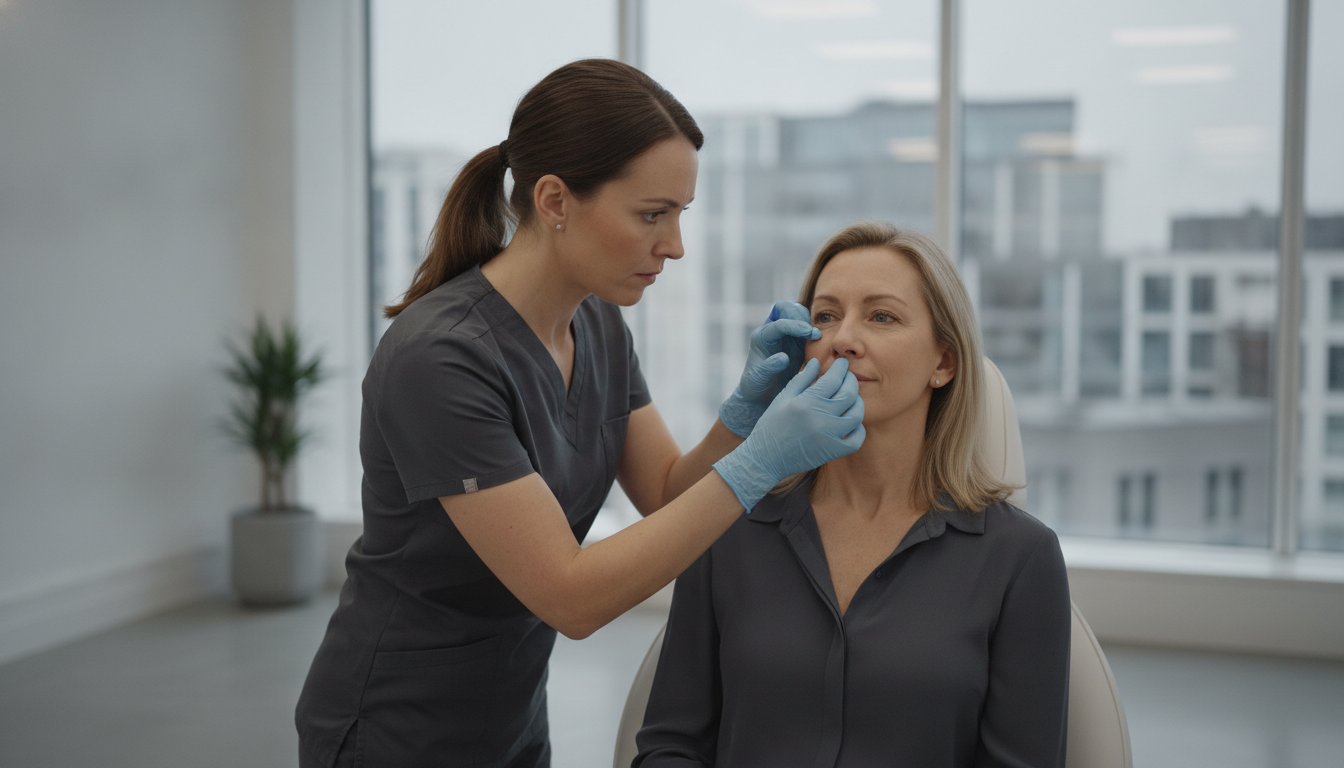

Imagine waking up three days after your lip augmentation, running your tongue over your smile and feeling a small, firm knot where you expected only smooth, supple volume. It’s entirely natural to feel a surge of concern when your journey toward self-confidence encounters an unexpected texture. You deserve the elegant, subtle results that professional artistry provides; the sudden appearance of a bump can feel like a shadow over that vision. We understand that the transition from the treatment chair to your final, refined look requires both patience and a meticulously informed perspective.
This guide provides the clinical clarity you need to understand lumps after dermal filler what to do, helping you distinguish between the standard integration process and signs that require expert intervention. You’ll discover the typical healing timeline for various filler types, safe techniques for gentle at-home management, and the specific red flags that necessitate a professional consultation. We will provide a clear path forward, ensuring you feel supported and safe as you navigate the delicate process of aesthetic restoration.
Key Takeaways
- Distinguish between standard post-injection swelling and true filler nodules to understand why the first five days are the most critical for product integration.
- Learn the clinical distinctions between normal texture changes and complications to determine exactly how to manage lumps after dermal filler what to do safely.
- Recognize the urgent red flags of vascular occlusion or infection, such as skin blanching or throbbing pain, that require immediate professional intervention.
- Discover how practitioner expertise and advanced qualifications, like the Level 7 Diploma in Clinical Aesthetic Injectable Treatments, serve as your primary safeguard against preventable complications.
Is it Normal to Have Lumps After Dermal Filler?
Discovering a small, firm area shortly after your treatment is a frequent experience that often indicates the start of a beautiful transformation rather than a cause for alarm. During the first 14 days, your body actively engages with the hyaluronic acid gel in a process known as tissue integration. Because high-quality fillers are hydrophilic, they naturally draw moisture to the area. This can create localized pockets of fluid that feel firm or slightly uneven as the product settles. While these injectable filler side effects might feel unexpected, they’re usually a standard part of the inflammatory response.
Most clients find that days one through five are the most “lumpy” phase of their journey. This is especially common in delicate zones with thin skin, such as the tear troughs, or high-movement areas like the lips. In these regions, the filler must find its place within the complex facial anatomy. While it’s tempting to worry, these early textures are typically the byproduct of minor injection trauma and the product’s initial volume before it fully softens and blends with your natural features.
The “When to Worry” Timeline
Understanding the progression of your healing helps clarify lumps after dermal filler what to do at each specific stage. Your body’s response evolves significantly as the days pass, moving from acute trauma to total integration.
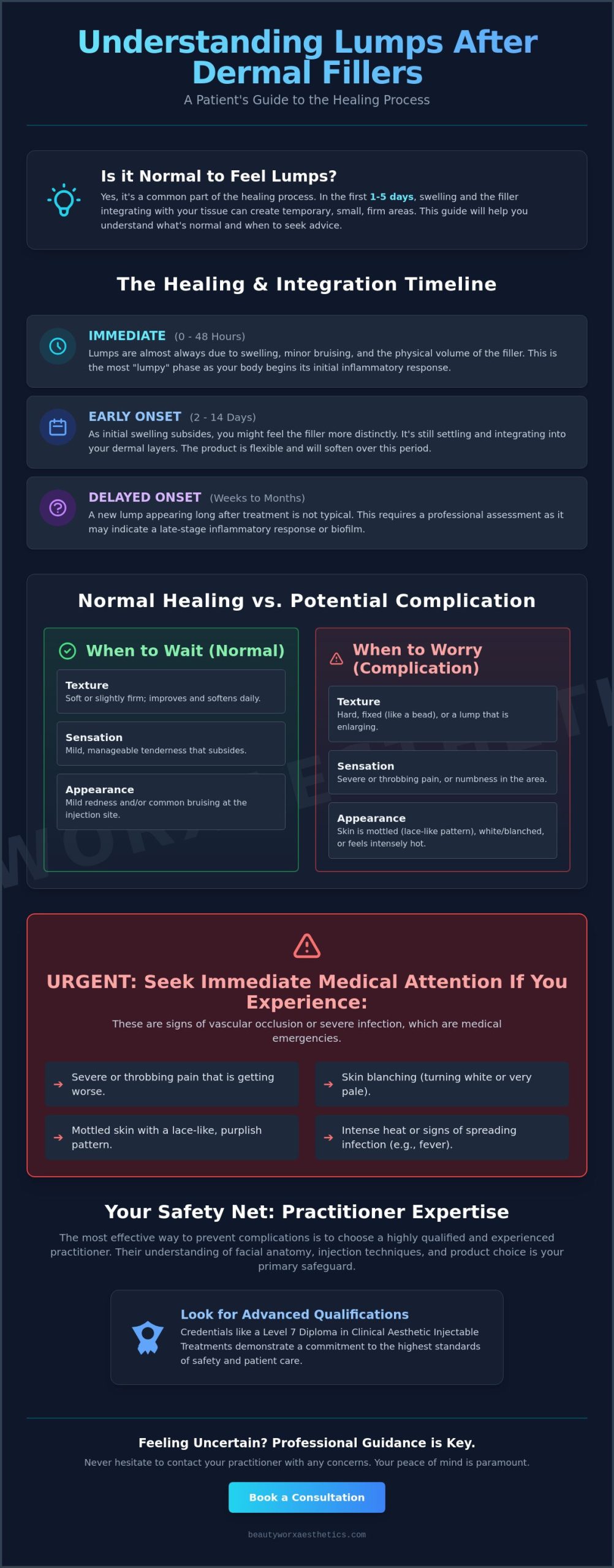
- Immediate (0-48 hours): These lumps are almost always related to the physical injection process. Swelling, minor bruising, and the initial volume of the product are the primary culprits here.
- Early-onset (2-14 days): As the initial swelling subsides, you may feel the filler itself more clearly. This is a normal phase where the product is still flexible and hasn’t yet fully integrated into the dermal layers.
- Delayed-onset (Weeks to Months): If a lump appears suddenly long after the initial treatment, it requires a professional clinical assessment. This could indicate a late-stage inflammatory response or a biofilm, which necessitates expert care.
| Feature | When to Wait (Normal) | When to Worry (Complication) |
|---|---|---|
| Texture | Soft or slightly firm; improves daily | Hard, fixed, or enlarging over time |
| Sensation | Mild tenderness; manageable | Severe pain, throbbing, or numbness |
| Appearance | Mild redness or common bruising | Mottling, whitening, or intense heat |
Normal Healing vs. Clinical Complications
A normal lump is typically non-painful and becomes less noticeable as the days progress. It should move fluidly with your facial expressions rather than resisting them. In contrast, a clinical nodule feels like a hard bead under the skin and remains static or worsens. True tissue integration results in a seamless, natural look where the filler becomes indistinguishable from your own features. Achieving this balance is an art form; minor early imperfections are often just the prelude to a polished, refreshed result.
Common Causes of Bumps and Hard Areas
Identifying the root cause of a post-treatment texture is the first step in deciding on lumps after dermal filler what to do. These occurrences are rarely the result of a single factor; instead, they represent a delicate interaction between the product’s chemistry, the injector’s technique, and your body’s unique immune profile. While most lumps are transient, understanding why they appear provides the clarity needed to proceed with confidence. Whether it is the physical presence of the gel or your body’s natural inflammatory response, most issues are manageable with the right clinical approach.
Technique and Product Distribution
The method used to place the filler significantly influences how it feels during the first few weeks. A “bolus” injection involves placing a concentrated amount of product in a specific deep plane to provide structural lift. This may feel like a firm bead until the gel integrates with the surrounding tissue. In contrast, retrograde linear threading disperses the product in fine lines, which generally feels smoother but can still result in temporary ridges if the distribution is slightly uneven. If a filler is placed too superficially, it can create visible “blebs” or small, hard areas that haven’t yet settled into the dermal layer. Choosing a practitioner with advanced clinical education ensures that the correct filler weight is selected for each facial zone, as high-viscosity products designed for the chin or cheeks will naturally feel firmer than those used for the lips.
Biological Factors and Immune Response
Your immune system is inherently vigilant, and it may treat the filler as a foreign substance during the initial integration phase. This can cause localized swelling that feels like a lump, particularly if you are dehydrated or currently fighting a minor illness. While most reactions are mild, reviewing FDA information on dermal fillers confirms that while nodules or granulomas are possible, they are statistically infrequent when compared to the millions of successful procedures performed annually. In 2023, the FDA received 1,478 adverse event reports, a small number relative to the 5.3 million hyaluronic acid procedures performed that same year.
Sometimes, what feels like a hard lump is actually a haematoma. This occurs when a small amount of blood is trapped beneath the skin during the injection process. It feels firm and may be tender, but it will naturally dissipate as the bruise heals, usually within seven to ten days. More complex issues, such as biofilms, occur when bacteria are introduced during the procedure, creating a protective layer that can cause late-onset lumps. This underscores why a sterile environment and medical-grade skin preparation are absolutely non-negotiable for a safe, high-end experience. Understanding these biological nuances helps you remain calm as your body completes its journey toward a refined, natural result.
How to Manage Filler Lumps at Home
While the urge to intervene is natural when you feel a small imperfection, the first step in understanding lumps after dermal filler what to do is recognizing that your skin is in a state of delicate recovery. Your primary safeguard is the expert who performed your treatment. Always reach out to your practitioner before attempting any self-correction, as they understand the specific product used and the depth of its placement. To support your clinical team, maintain a daily photographic diary in consistent lighting. This documentation allows both you and your specialist to track the subtle daily improvements that are often missed when looking in the mirror frequently. For broader context on recovery, the American Academy of Dermatology on filler side effects provides an excellent overview of standard healing protocols and what to expect during the initial weeks.
Applying a cold compress for ten minutes every few hours during the first day can significantly dampen the inflammatory response. This gentle cooling doesn’t just reduce swelling; it calms the tissue surrounding the product, allowing for a more comfortable integration. Hydration also plays a surprising role in how your filler feels. Hyaluronic acid is a moisture-loving molecule that thrives on internal hydration. If you’re dehydrated, the gel may feel more granular or stiff beneath the skin. Drinking ample water helps the filler remain supple and encourages it to blend seamlessly into your natural dermal layers.
The Art of Gentle Massage
Patience is paramount. You should wait at least 48 hours before attempting to massage any lumps, as the initial inflammatory window is when the tissue is most reactive. Once this period passes, use the clean pad of your index finger to apply firm but gentle pressure directly onto the lump for thirty seconds. Avoid aggressive rubbing or circular motions, as these can displace the product or cause unnecessary trauma to the healing skin. The goal is to encourage the gel to “settle” rather than forcing it to move. If the lump doesn’t soften after a few sessions of gentle pressure, stop and wait for your follow-up appointment.
Lifestyle Adjustments for Better Healing
The environment you provide for your skin in the days following treatment dictates the quality of the final result. Avoid strenuous exercise, saunas, and steam rooms for the first 48 hours to keep your blood pressure stable and minimize localized heat. When you rest, try to sleep on your back with your head slightly elevated to prevent accidental pressure on the treated areas. You should avoid alcohol for at least 24 to 48 hours after your procedure to prevent unnecessary blood vessel dilation and increased swelling. These small, intentional choices create the calm atmosphere your body needs to reveal a refreshed and balanced aesthetic.
When to Seek Urgent Medical Attention
While most textures are a fleeting part of the healing journey, certain symptoms signal a need for immediate clinical intervention. Distinguishing between a benign lump and a medical emergency is the most critical aspect of understanding lumps after dermal filler what to do. One of the rarest but most serious complications is vascular occlusion, which occurs when product accidentally enters or compresses a blood vessel. Following a spike in vascular events, the FDA reiterated in March 2026 that injections in deep planes, such as the cheeks or chin, should only be performed by injectors with rigorous anatomic training. Unlike a standard bruise, an occlusion often presents as skin blanching, which is a sudden whitening or a pale, mottled pattern that looks like lace across the skin.
Infection is another concern that demands professional eyes. While mild tenderness is expected, you should watch for increasing heat, spreading redness, or a deep, throbbing pain that keeps you awake. If a lump is accompanied by pus or a fever, your body is fighting more than just a foreign substance. It is also essential to distinguish between a localized lump and angioedema. Angioedema is a rapid, widespread allergic swelling that often affects the lips or eyes, requiring antihistamines or more urgent care rather than simple massage. If you notice a sudden change in a lump that has been stable for months, it may indicate a delayed-onset immune response or a biofilm, both of which require a specialist’s review to ensure your long-term skin health.
Red Flag Symptoms Checklist
If you experience any of the following, contact your practitioner immediately. These symptoms are not part of the standard aesthetic journey and require expert diagnostic tools to prevent permanent damage.
- Severe or Disproportionate Pain: Pain that worsens significantly after the first 24 hours or feels deep and stabbing.
- Skin Discolouration: Any area that looks dusky, blue, or grey, particularly if the skin feels cold to the touch or appears white.
- Visual Changes: Any blurring or loss of vision following a facial injection is a critical emergency that requires immediate medical attention.
- Systemic Illness: The presence of a fever, chills, or a general sense of malaise alongside localized swelling.
The Role of Hyaluronidase
For hyaluronic acid-based fillers, we have the benefit of a safety net known as hyaluronidase. This specialized enzyme acts as a dissolving agent, breaking down the cross-linked chains of the filler gel almost instantly. In cases of vascular compromise or persistent, unsightly nodules, dissolving is the preferred clinical path. It allows the practitioner to reset the area, ensuring your safety and the preservation of your natural features. This procedure should only be performed by those with advanced training, as it requires precise dosage and an intimate understanding of facial vasculature.
The complexity of managing these events underscores why we emphasize the importance of choosing a clinician who has completed a complications management course. This level of expertise ensures that every step of your treatment is governed by a deep commitment to safety and artistic discernment. If you are concerned about the appearance or feel of a recent treatment, please contact our expert team for a professional assessment to ensure your peace of mind and the continued health of your skin.
The Importance of Expert Injections and Safety
The journey to aesthetic refinement should always be anchored in absolute safety. While we have discussed lumps after dermal filler what to do in the context of immediate aftercare, the most effective management strategy begins before the needle even touches the skin. Foundation-level training provides the essential basics, but true mastery requires an exhaustive understanding of facial architecture. An expert clinician doesn’t just place product; they navigate a complex network of nerves and vessels to ensure every millilitre of filler integrates flawlessly. A 2025 report by the American Society of Plastic Surgeons noted a 38% year-over-year increase in filler complications attributed to non-physician injectors, highlighting the critical need for advanced qualifications. Beauty Worx Aesthetics prides itself on setting a national benchmark, ensuring that clinical precision and high-end luxury coexist in every treatment.
Choosing a Regulated Practitioner
In the UK, the distinction between a high-street beauty treatment and a clinical aesthetic procedure is significant. When seeking a practitioner, look for those who hold an OFQUAL regulated Level 7 Diploma in Clinical Aesthetic Injectable Treatments. This qualification represents the gold standard in the industry, proving that the injector possesses the medical depth to prevent and manage complications. Sophisticated facial aesthetics require both an artistic eye and a medical mind to achieve results that look entirely natural while maintaining the highest safety standards. A regulated clinical environment ensures that sterile techniques are strictly followed, which is your primary defence against the late-onset nodules or biofilms discussed earlier.
Advancing the Industry Through Training
Our commitment to excellence extends beyond our own treatment rooms. Through our elite aesthetic courses, we mentor the next generation of practitioners, prioritizing patient safety and complications management above all else. By teaching advanced anatomy and the nuances of product viscosity, we help injectors understand how to avoid the “blebs” and ridges that cause patient anxiety. This ongoing partnership in self-care and professional growth ensures that every client receives the discreet, tailored improvement they deserve. Safety is the foundation of confidence.
Whether you are a patient seeking a subtle restoration or a professional looking to elevate your craft, the path to confidence is built on a foundation of expert knowledge. If you are currently managing lumps after dermal filler what to do and need professional guidance, we invite you to book a consultation with our specialist team. For those ready to lead the industry in safety, explore our elite training pathways to join a community of trusted aesthetic artisans who view their craft as both a science and an art form.
Restoring Your Peace of Mind and Radiant Results
Navigating the initial days of your aesthetic journey requires a delicate balance of patience and clinical awareness. Most textures you encounter are simply the skin’s way of embracing its new, refined volume during the standard 14-day integration period. By monitoring your progress and following gentle at-home care, you’ll support your body’s natural healing process. Staying vigilant for red flags remains essential for your long-term safety and well-being. Knowing lumps after dermal filler what to do empowers you to act with confidence rather than anxiety.
Your safety is our highest priority. We maintain the most rigorous standards in the industry as an OFQUAL Regulated Level 7 Academy. We provide expert practitioners with clinical oversight to ensure every result is both subtle and secure. Whether you seek a corrective assessment or wish to advance your own skills, our CPD Accredited Complications Management Specialists are here to guide you. Explore our Level 7 Aesthetics Training and Professional Treatments to begin your partnership with a team that views patient care as a meticulous art form. We’re here to help you achieve the authentic, refreshed look you envision.
Frequently Asked Questions
How long do lumps last after dermal filler?
Lumps typically last between two and fourteen days as the product integrates with your natural tissue. While the first five days are often the most noticeable, the hyaluronic acid gel gradually softens as it attracts moisture and settles into its intended plane. If you’re wondering about lumps after dermal filler what to do beyond this two-week window, a follow-up appointment with your clinician is the most appropriate next step to ensure a smooth, balanced result.
Can you massage out lumpy filler at home?
You can perform a gentle massage at home, but only after the initial 48-hour inflammatory window has passed. It’s essential to consult your practitioner before attempting this to avoid displacing the product or worsening any bruising. Use the pad of a clean finger to apply steady, localized pressure for thirty seconds. This helps the gel blend with your anatomy without the risks associated with aggressive rubbing or circular motions that can disrupt the aesthetic outcome.
Will filler lumps go away on their own?
Most filler lumps will resolve on their own as the initial swelling subsides and the product hydrates. These transient textures are a normal part of the body’s response to the injection process. However, lumps caused by superficial placement or true nodules may persist without professional intervention. If a lump remains firm and unchanged after fourteen days, it likely requires a clinical assessment to determine if dissolving with hyaluronidase is necessary for a seamless finish.
What does an infected filler lump feel like?
An infected filler lump typically feels hot to the touch and is accompanied by a persistent, throbbing pain that intensifies over time. Unlike standard post-treatment tenderness, an infection often presents with spreading redness, localized swelling that feels increasingly firm, and potentially systemic symptoms like fever. This is a clinical concern that requires immediate professional review to ensure your safety and to begin the appropriate course of treatment to protect your skin’s health.
Is it normal to feel hard lumps in my lips after filler?
It is entirely normal to feel small, firm areas in the lips during the first week following a lip augmentation treatment. The lips are a highly vascular and mobile area, which can lead to localized swelling or the filler feeling distinct as it settles. These textures should feel soft and non-painful; they typically disappear as the product integrates. If the lumps are visible or causing asymmetry after ten days, your specialist can provide a refined adjustment.
When should I be worried about a lump after filler?
You should seek urgent advice if a lump is accompanied by skin blanching, severe pain, or any changes in your vision. These red flags can indicate a vascular complication that requires immediate expert care to prevent tissue damage. While most lumps are benign, a sudden change in skin colour or a lace-like mottled pattern is not part of the normal healing process. Knowing lumps after dermal filler what to do in these rare instances is vital for your safety.
Can filler lumps appear months later?
Yes, filler lumps can occasionally appear months or even years after your initial treatment. These are known as delayed-onset nodules and are often triggered by a systemic immune response, such as a viral illness or dental work. While rare, these lumps require a professional clinical review to distinguish between a late-stage inflammatory reaction and a biofilm. Your practitioner can then determine the most effective management plan to restore the smooth, subtle appearance of your results.
Does drinking water help dissolve filler lumps?
While drinking water won’t physically dissolve the filler gel, proper hydration is essential for achieving a supple and integrated texture. Hyaluronic acid is naturally hydrophilic, meaning it draws moisture from your body to create volume. If you’re dehydrated, the filler may feel firmer or less blended with your natural tissue. Maintaining high hydration levels during the first two weeks encourages the product to soften and settle into a more natural, undetectable state within the dermal layers.














 Reviews