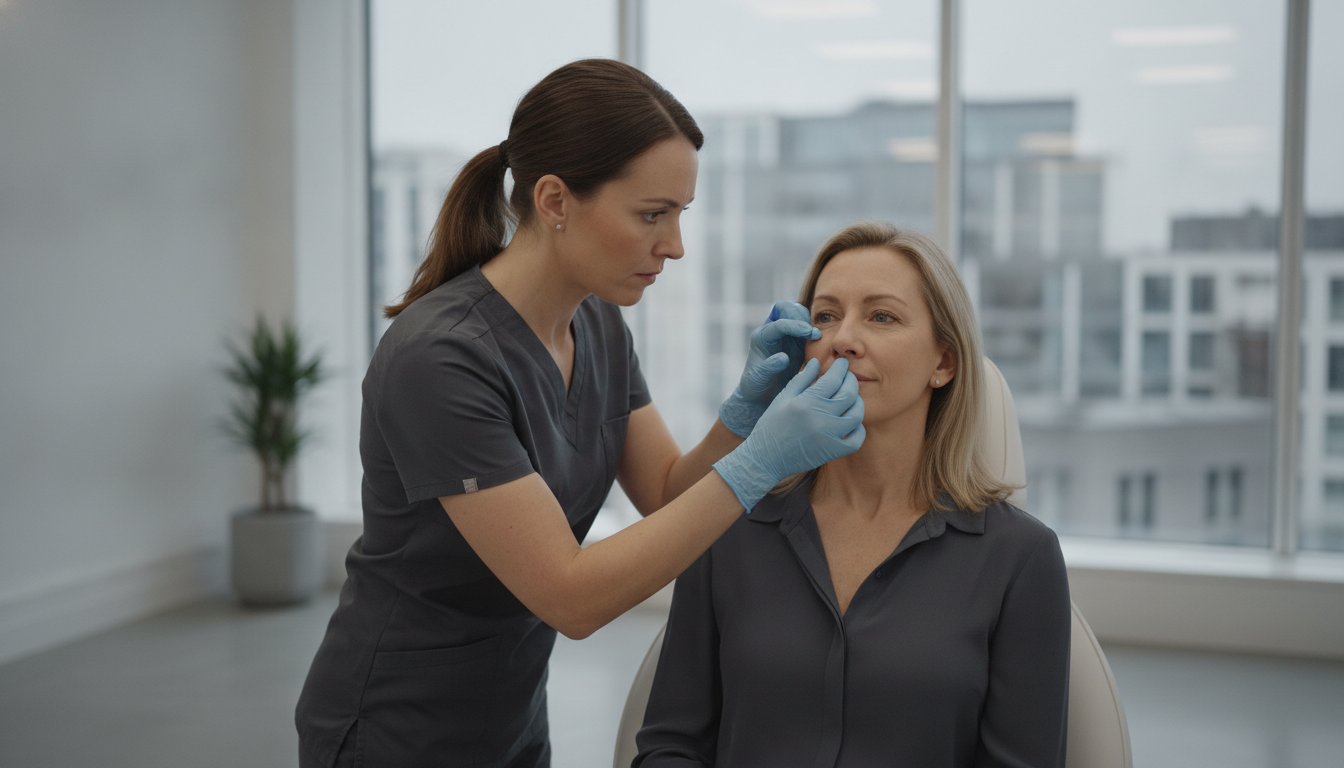

What if the most effective strategy for your clinic isn’t competing on price, but making your clinical expertise your most exclusive luxury? You likely feel that marketing for aesthetic practitioners often feels uncomfortably ‘salesy’ or risks diluting the medical integrity you’ve worked years to establish. It’s a common frustration to see that 43% of patients in 2024 industry surveys still prioritise cost over clinician credentials, yet the most successful practitioners are those who refuse to join the race to the bottom. We believe your communication should be as refined as a bespoke treatment plan.
This guide reveals how to build a practice that feels both safe and aspirational, allowing you to attract loyal patients who value a luminous, natural look. You’ll learn to master CAP and ASA regulations while positioning your clinic as a sanctuary of expertise that justifies premium pricing. We’ll walk through the essential pillars of authority-first growth, from showcasing your medical precision to crafting a patient journey that feels like a partnership in self-confidence. By the end, you’ll have a roadmap to grow your practice with the quiet confidence of a true artisan.
Key Takeaways
- Transition from high-volume advertising to an authority-first model that prioritises clinical education and value-driven content over generic social media posts.
- Master the art of sophisticated marketing for aesthetic practitioners by crafting a bespoke brand identity that balances medical precision with a high-end, artisan aesthetic.
- Optimise the patient journey by transforming the initial consultation into a powerful retention tool that fosters long-term loyalty and confidence.
- Discover how to leverage OFQUAL-regulated qualifications and Level 7 Diplomas as essential trust signals to attract medical-grade clients and justify premium UK pricing.
- Build a multi-channel content ecosystem designed to educate and empower your audience, moving beyond traditional sales tactics to establish genuine clinical authority.
The Evolution of Aesthetics Marketing: Why Authority Trumps Advertising in 2026
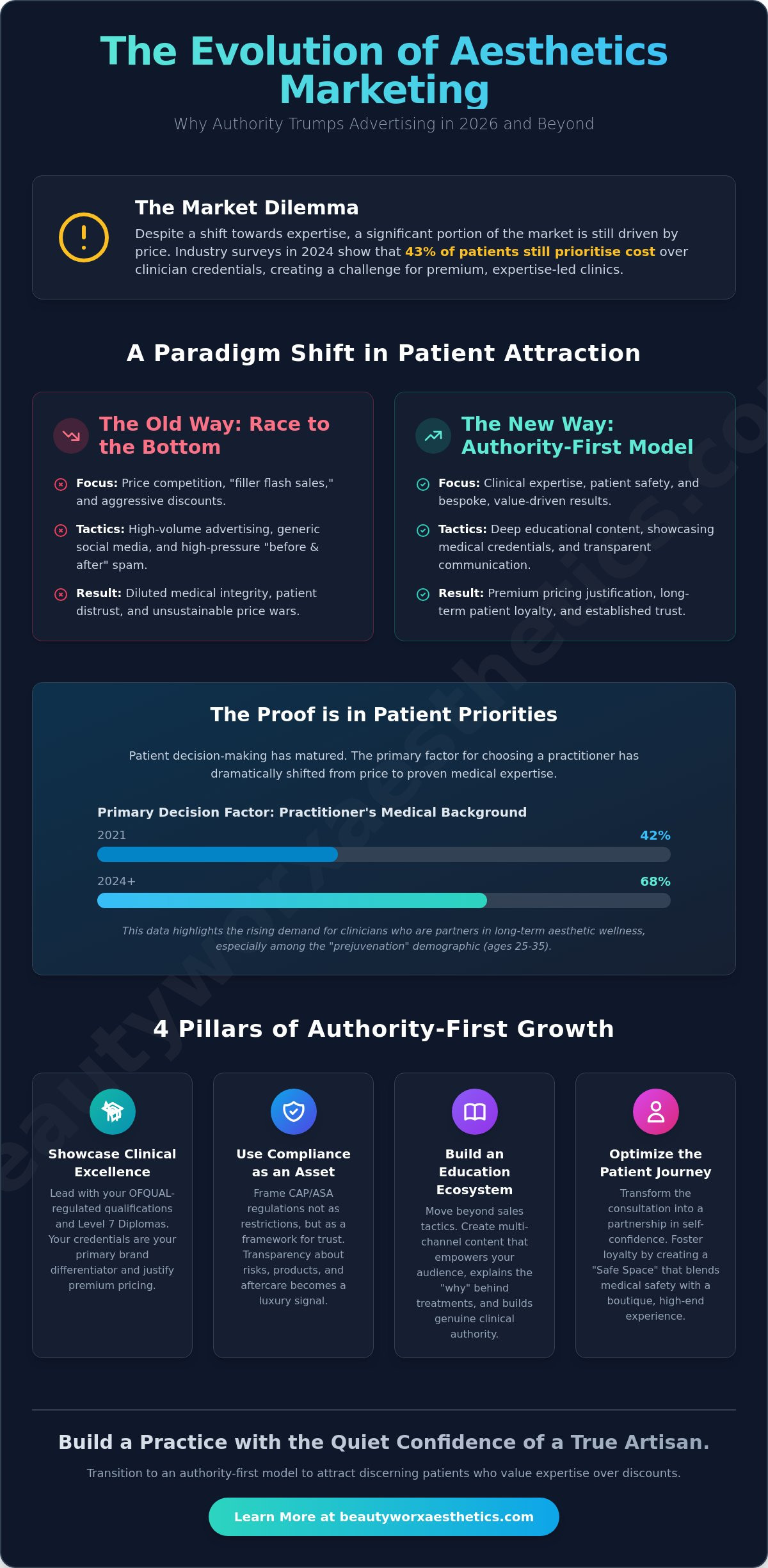
The UK aesthetics market has reached a definitive tipping point. By 2026, the era of “filler flash sales” and aggressive discount codes has effectively ended, replaced by a sophisticated “Authority-First” model. Effective marketing for aesthetic practitioners now centers on the clinician’s medical expertise rather than the product’s price tag. Patients have become savvy consumers who can spot a social media filter at a glance. They no longer respond to the high-pressure “before and after” spam that dominated digital feeds a few years ago. Instead, they seek out practitioners who provide deep, value-driven education. This shift reflects a broader evolution in Aesthetic medicine, where the focus has moved from drastic transformation to the subtle, restorative art of aging gracefully.
Patient trust is harder to earn in 2026, largely because the psychological barrier to entry has changed. With the 2024 implementation of stricter licensing and oversight in England, the “wild west” era of aesthetics is fading. This means your clinical safety isn’t just a background detail; it’s your primary brand differentiator. When you lead with your medical credentials, you’re not just selling a treatment. You’re offering the reassurance that the client’s face is in expert hands. It’s a journey toward self-confidence that begins with the quiet confidence of the practitioner.
The Saturated Market Challenge
High-street saturation means a race to the bottom for those competing on price alone. Recent industry data shows that 68% of patients now cite a practitioner’s medical background as their primary decision-making factor, up from just 42% in 2021. The rise of “prejuvenation” among the 25 to 35 demographic has also changed the conversation. These clients aren’t looking for a bargain; they’re looking for a long-term partner to maintain their natural radiance. Clinical Authority is the precise intersection of advanced medical qualification, an unyielding commitment to patient safety, and the refined artistry required to deliver undetectable, harmonious results.
Regulatory Compliance as a Marketing Asset
Using the ASA and CAP guidelines as a framework for trust is a powerful strategy for growth. Rather than viewing these regulations as restrictions, leading clinics use them to demonstrate their integrity and professionalism. Transparency has become the new luxury in marketing for aesthetic practitioners. When you’re clear about the products you use, such as the specific nuances between Azzalure and Botox, you’re building a foundation of honesty. It’s about positioning your clinic as a “Safe Space” in a market where many practitioners still operate without medical oversight. Consider these points for your brand messaging:
- Showcase your ongoing training and certifications as a badge of honor.
- Provide clear, accessible information about potential risks and aftercare.
- Use sensory, lifestyle-oriented language to describe the luminous results of your bespoke treatments.
- Highlight your clinical environment as a blend of medical safety and boutique luxury.
Your compliance isn’t just a legal necessity; it’s your most persuasive marketing hook. It tells your clients that you value their health as much as their appearance. This creates a sense of reliability that is crucial for building a loyal, long-term patient base in a competitive landscape.
Crafting a Bespoke Brand Identity: From Clinical Expert to Trusted Artisan
Successful marketing for aesthetic practitioners begins with a fundamental shift in perspective. You aren’t just a clinician; you’re a curator of confidence. In a market where 68% of patients now research a practitioner’s personal brand before booking, moving beyond a generic logo is essential. You must cultivate a clinical-luxury persona that feels both safe and indulgent. This transition relies on identifying your Unique Clinical Proposition (UCP). Your UCP isn’t just the services you offer, but the specific “how” and “why” behind your work. Perhaps it’s a signature “micro-droplet” technique for subtle rejuvenation or a focus on 45-degree profile harmony. By 2025, data suggests that practitioners with a defined UCP see a 24% increase in high-value patient enquiries compared to those offering broad, non-specific treatments.
Your communication should always lead with a benefit-first structure. Instead of leaden descriptions of needle gauges or product viscosity, focus on the emotional and sensory outcome. Use descriptive language to paint a picture of the results; aim for a “luminous” complexion, “harmonious” facial proportions, or a “refreshed” look that doesn’t scream “treatment.” This approach builds an aspirational bridge between clinical reality and patient desires. While your brand should be evocative, it must remain grounded in ethical transparency. Adhering to FTC advertising and marketing guidelines ensures your claims are truthful and evidence-based, which is the bedrock of professional authority in the UK’s increasingly scrutinised aesthetic sector.
The Psychology of Luxury Branding
Luxury is defined by the consistency of the experience. Your digital presence must mirror your physical clinic environment perfectly. If your website feels cluttered but your waiting room is minimalist and chic, you create a sense of cognitive dissonance that can erode trust. Develop a brand voice that’s aspirational yet accessible. It shouldn’t feel like a cold, detached medical lecture. Instead, it should feel like a warm, professional conversation with an expert artisan. You can avoid “medical coldness” by focusing on the patient’s emotional journey toward self-confidence while maintaining the clear boundaries and safety standards expected of a medical professional.
Visual Identity and Clinical Artistry
High-quality, professional photography is your most persuasive asset. In 2024, 76% of patients reported that the quality of “before and after” imagery was the primary factor in their decision-making process. However, modern marketing for aesthetic practitioners involves documenting the journey rather than just the final result. Show the meticulous planning, the gentle touch during the procedure, and the patient’s glowing recovery. This narrative approach links your brand to artful lip enhancement and holistic facial balance. It positions you as a specialist who views aesthetic medicine as both a science and an art form. If you’re ready to elevate your clinical image, consider how a bespoke brand strategy can reflect your unique skills and artistic discernment.
An Ethical Multi-Channel Strategy: Social Media, SEO, and Beyond
In 2026, effective marketing for aesthetic practitioners centers on a harmonious multi-channel ecosystem. It’s about creating a digital presence that feels as refined and reassuring as your physical consultation room. Instead of chasing fleeting viral moments, successful clinicians focus on a value-first framework. You should aim to educate your audience on skin health, entertain through sophisticated storytelling, and empower them to make informed, safe choices. This approach ensures your marketing works for you, building a reputation of clinical excellence that precedes the first appointment.
Social Media for the Professional Practitioner
Social media for the professional practitioner requires a shift in focus from style to substance. Move away from generic trending audios and focus on “Expert Q&A” sessions that address real patient concerns. This transparency humanizes your brand while maintaining a meticulous professional distance. Showcasing your expertise in complications management is a powerful way to build safety trust. It proves you’re a specialist who prioritizes patient welfare above all else. As detailed in The New Era of Marketing in Plastic Surgery, the shift toward educational, evidence-based content is fundamentally reshaping how patients select their providers. When using patient testimonials, prioritize video reviews that capture the emotional journey toward self-confidence, ensuring every post remains ethical and understated.
Search Engine Optimization (SEO) for Aesthetics
Your website acts as your digital clinic. It must be optimized for “Treatment Searches” to capture high-intent patients looking for specific solutions. Targeting long-tail keywords such as “pathway to aesthetics for beginners” or “level 7 qualification” helps you reach a dedicated audience seeking expert guidance. Furthermore, writing detailed guides about polynucleotide treatments builds topical authority, signaling to search engines that you’re at the forefront of regenerative medicine.
Local SEO remains vital for national-standard clinics. While your results may be world-class, approximately 72% of patients still prefer a practitioner within a manageable travel distance. To convert this traffic, your technical basics must be flawless:
- Page Speed: Ensure your site loads in under 2.5 seconds to prevent potential clients from bouncing.
- Mobile-First Design: Most aesthetic searches happen on smartphones; your site must look luminous on every screen.
- Clear CTAs: Use soft, inviting calls to action like “Start Your Journey” or “Book a Bespoke Consultation.”
By blending technical precision with an empathetic voice, your marketing for aesthetic practitioners becomes an invitation to a premium experience rather than a loud sales pitch. It establishes you as a knowledgeable guide in a crowded market.
The Patient Journey: Optimising the Experience from Discovery to Consultation
The path to a first aesthetic treatment is rarely linear. It usually begins with a quiet dissatisfaction or a desire for restoration, often spanning six to twelve months of research before a booking occurs. Effective marketing for aesthetic practitioners acknowledges this period of vulnerability. You aren’t simply selling a clinical procedure; you’re facilitating a transition toward self-assurance. Every touchpoint must mirror the luminous, refined results you promise in the treatment room.
The consultation represents the most potent marketing tool in your clinical arsenal. Industry audits from 2024 suggest that 72% of patients decide whether to return for a second treatment within the first ten minutes of their initial consultation. This session isn’t just a medical screening; it’s a demonstration of your artistic discernment and medical integrity. By prioritising the patient’s emotional journey, you transform a clinical necessity into a luxury experience that justifies premium UK pricing.
Reducing friction during the booking process is essential, yet it must be balanced with rigorous clinical screening. A seamless digital interface that allows patients to select time slots while completing necessary health declarations creates a sense of professional efficiency. This meticulous attention to detail at the start of the journey builds the trust required for long-term clinical growth.
The Digital Handshake
Your digital presence acts as the virtual foyer of your clinic. A refined Instagram bio and a clear website header must communicate safety and luxury instantly. Automation plays a vital role here. Using personalised, automated messaging to confirm appointments or provide pre-care instructions reduces friction without sacrificing the boutique feel. For many, a high-stakes procedure feels daunting. Offering vitamin B12 injection training or wellness-focused services provides a “soft” entry point. These treatments allow patients to experience your clinical environment and professional touch before committing to more complex aesthetic work.
Retention and Life-Long Advocacy
Clinical excellence ensures a successful procedure, but bespoke planning ensures a lifelong patient. A “best version of you” philosophy shifts the focus from one-off transactions to a curated ageing strategy. By delivering subtle, harmonious results, you turn patients into brand ambassadors who advocate for your skill through their quiet confidence. A bespoke treatment plan, documented and shared with the patient, provides a clear roadmap for their aesthetic journey over the next 24 to 36 months. This long-term vision is the cornerstone of sustainable marketing for aesthetic practitioners.
Ready to elevate your clinical standards and patient experience? Explore our professional aesthetic training and partnership opportunities at BeautyWorx Aesthetics.
Leveraging Advanced Qualifications: How Clinical Excellence Becomes Your Best Marketing Asset
Clinical excellence is no longer a silent background feature of a successful practice. In 2026, your educational pedigree is the most persuasive element of marketing for aesthetic practitioners. As the UK government moves closer to mandatory licensing, patients are increasingly savvy about the credentials behind the needle. They look for OFQUAL regulated qualifications as a primary trust signal before booking a consultation. This shift allows you to move away from price-driven competition and toward a value-based model where your expertise justifies a premium.
Your commitment to Continuous Professional Development (CPD) acts as a living portfolio of your dedication. It tells your clients that your techniques are current, safe, and refined. By highlighting your ongoing education, you transform your clinic from a service provider into a center of clinical authority. This transparency builds a bridge of trust, ensuring clients feel both safe in a medical environment and pampered by a true specialist.
The Level 7 Advantage
The Level 7 Diploma is the gold standard for non-surgical injectables. It signals a postgraduate level of understanding that “Fast-Track” courses simply cannot replicate. When communicating with potential clients, describe the complexity of facial anatomy and the precision required for safe outcomes. Position “Fast-Track” certificates as a marketing red flag that compromises patient safety. While a CPD certificate records the time spent on professional development, an OFQUAL regulated diploma represents a formally assessed, nationally recognized standard of clinical competence and academic rigor. This distinction allows you to attract medical-grade clients who prioritize their health over a bargain. It’s about selling the “best version of you” through the lens of academic mastery.
Niche Marketing through Specialization
Specialization is the most effective way to dominate a local market. Instead of being a generalist, focus your marketing for aesthetic practitioners on becoming the recognized expert for specific, high-skill procedures. Whether you specialize in delicate tear trough rejuvenations or bespoke jawline contouring, niche expertise allows for more targeted digital campaigns. You can achieve this by investing in specialized aesthetic courses that provide the technical depth required for complex cases.
- Corrective Work: Position your clinic as an “Advanced Treatment Centre” for patients seeking to rectify poor results from less qualified injectors.
- Mentorship: Market your academy services to the next generation of practitioners, using your clinical success as a blueprint for their own growth.
- Bespoke Protocols: Develop signature treatment combinations that are unique to your brand, emphasizing the “artisan” nature of your work.
This strategic focus on advanced qualifications ensures your marketing remains sophisticated and reassuring. It moves the conversation from the cost of a syringe to the value of a safe, luminous, and natural-looking result. By leading with your credentials, you invite clients into a long-term partnership built on the quiet confidence of a master practitioner.
Mastering the Art of Clinical Authority
The landscape of 2026 demands a shift from traditional advertising to a strategy rooted in deep clinical expertise. By prioritizing a bespoke brand identity and an ethical patient journey, you transform your practice from a service provider into a sanctuary of trust. Effective marketing for aesthetic practitioners now relies on your ability to showcase harmonious, natural results backed by rigorous medical standards. Your advanced qualifications aren’t just credentials; they’re the heartbeat of your professional reputation and the primary driver of patient loyalty.
To truly lead in this competitive market, your education must be as refined as your technique. Our OFQUAL regulated and CPD accredited training offers advanced clinical mentorship from expert practitioners who understand the delicate balance of science and artistry. We provide bespoke training pathways for both medical and non-medical students, ensuring you gain the precision required for luminous results. Elevate your clinical authority with our OFQUAL regulated Level 7 Diploma at beautyworxaesthetics.com. Your journey toward becoming a distinguished aesthetic artisan starts with a commitment to excellence.
Frequently Asked Questions
How much should an aesthetic practitioner spend on marketing per month?
You should aim to invest between 10% and 15% of your gross monthly revenue to maintain consistent clinical growth. For a clinic generating £20,000 each month, this equates to a dedicated budget of £2,000 to £3,000. These funds support essential activities like SEO, high-end content creation, and patient retention strategies. Investing in professional marketing for aesthetic practitioners ensures your brand maintains its premium positioning while attracting high-value clients who prioritise safety over price.
Is it ethical to use “before and after” photos in aesthetics marketing?
Using “before and after” imagery is entirely ethical and highly effective provided you obtain written consent and present results without digital manipulation. The ASA reported in 2023 that misleading imagery remains a primary cause of consumer complaints in the beauty sector. Ensure your lighting and angles remain identical to provide an honest, transparent view of the transformation. This clarity builds a foundation of trust, allowing patients to visualise their own journey toward a refreshed and harmonious appearance.
What are the most effective social media platforms for aesthetic clinics in 2026?
Instagram and TikTok remain the dominant platforms for visual storytelling, but LinkedIn is now a vital channel for establishing clinical authority. Statistics from 2025 show that 68% of high-net-worth patients use LinkedIn to research a practitioner’s professional credentials before booking a consultation. Use Instagram for showcasing luminous results and TikTok for educational, short-form video content. A multi-channel approach ensures your expertise reaches diverse demographics seeking bespoke aesthetic care and natural-looking enhancements.
How can I compete with cheaper clinics without lowering my prices?
You can compete by highlighting your superior clinical outcomes, patient safety records, and the luxury experience you provide. Data from the 2024 Aesthetics Industry Report indicates that 74% of patients are willing to pay more for a practitioner with specialist medical qualifications. Focus your messaging on the value of a bespoke consultation and the peace of mind that comes with expert care. Emphasise that artistry and safety are investments in long-term confidence rather than mere transactions.
Do I need a professional marketing agency for my aesthetics business?
Hiring a professional agency is often beneficial once your monthly turnover exceeds £15,000, as it allows you to focus entirely on clinical excellence. While DIY marketing works for startups, a specialist agency provides the technical precision needed for advanced SEO and CAP-compliant ad campaigns. This partnership ensures your marketing for aesthetic practitioners remains sophisticated and effective. Outsourcing these complex tasks protects your time, allowing you to dedicate yourself fully to the delicate art of patient care.
How can I ensure my aesthetics marketing is ASA and CAP compliant?
Ensure compliance by avoiding the promotion of prescription-only medicines and making only evidence-based claims about your treatments. The CAP Code strictly prohibits advertising Botox or other neurotoxins to the public. You must also review the 2024 updated guidance on social media influencers to ensure all paid partnerships are clearly labelled as advertisements. Maintaining these standards protects your professional reputation and ensures your clinic operates with the highest level of integrity and transparency.
What is the best way to attract male patients to an aesthetics clinic?
Attract male patients by using gender-neutral branding and focusing on “tweakments” that offer subtle, structural improvements to the face. Research from 2025 shows a 22% increase in men seeking aesthetic procedures like jawline contouring and skin rejuvenation. Use language that emphasises a refreshed, well-rested look rather than “beauty” or “glamour.” Creating a dedicated section on your website for male aesthetics helps these clients feel welcome and understood throughout their self-care journey.
Can I market prescription-only medicines like Botox on social media?
You cannot legally advertise prescription-only medicines (POMs) like Botox or any specific brand-name neurotoxin to the general public in the UK. This regulation is strictly enforced by the ASA and the MHRA to protect patient safety. Instead, focus your marketing on the consultation process or the specific skin concerns you treat, such as “fine lines” or “wrinkle relaxation.” This approach keeps your clinic compliant while highlighting your medical expertise and commitment to providing a safe, professional environment.









 Reviews