

What if the most transformative profile alignment didn’t require a single incision, but instead demanded the precision of a master sculptor and the anatomical depth of a surgeon? As the global demand for refined, liquid procedures grows, choosing the right non-surgical rhinoplasty training uk becomes a pivotal step in securing a legacy of safety and artistry. It’s a delicate balance of clinical expertise and aesthetic vision. You understand that true mastery is found in the subtle details that others might overlook.
Many practitioners feel a quiet anxiety when facing the complex vascular landscape of the nose, particularly as UK aesthetic regulations move toward mandatory licensing and higher qualification standards. You likely recognize that your clients deserve more than a simple correction; they seek a restorative experience that preserves their inherent beauty while addressing their deepest insecurities. It’s about more than just a procedure. It’s a partnership in self-confidence and a commitment to clinical excellence.
In this article, you’ll discover how to safely master advanced nasal reshaping techniques through elite, clinical-grade training. We’ll explore the nuances of complex nasal anatomy and the steps required to attain an elite practitioner status that rivals traditional surgical outcomes. You’ll gain clarity on the evolving 2026 regulatory landscape, ensuring your practice remains both compliant and prestigious.
Key Takeaways
- Understand how the right non-surgical rhinoplasty training uk bridges the gap between advanced dermal filler techniques and surgical-grade profile restoration.
- Master the intricate layers of nasal anatomy to safely navigate vascular danger zones and ensure patient safety during every procedure.
- Learn to sculpt a refined profile by mastering dorsal hump camouflaging and the delicate ‘Tinkerbell lift’ for sophisticated tip projection.
- Navigate the evolving landscape of UK aesthetic standards by understanding the importance of OFQUAL regulated Level 7 qualifications for your career.
- Discover how an artisan-led education prepares you to deliver subtle, individualized results that preserve a client’s unique inherent features.
What is Non-Surgical Rhinoplasty Training?
The liquid rhinoplasty masterclass represents the absolute pinnacle of injectable aesthetic artistry. It’s a specialized discipline that moves far beyond the foundational principles of volumizing. Instead, it focuses on the meticulous restoration of profile harmony and the subtle camouflage of structural imperfections. Choosing the right non-surgical rhinoplasty training uk is a pivotal step for any practitioner who wishes to bridge the gap between basic cosmetic work and the high-level artistry required for precise nasal reshaping. Unlike standard dermal filler applications, this procedure involves the strategic placement of product to create structural illusions that can straighten a bridge, lift a tip, or refine a profile.
Distinguishing between basic filler techniques and advanced nasal structural reshaping is vital for patient safety. While many treatments focus on soft tissue enhancement, Non-surgical rhinoplasty requires an uncompromising approach to depth, product rheology, and light reflection. It’s a high-stakes environment where the difference between a beautiful result and a complication lies in a single millimeter of placement. This training provides the clinical-grade knowledge necessary to handle these complexities with the quiet confidence of a specialist who views their craft as both a science and an art form.
The Rise of the Liquid Nose Job
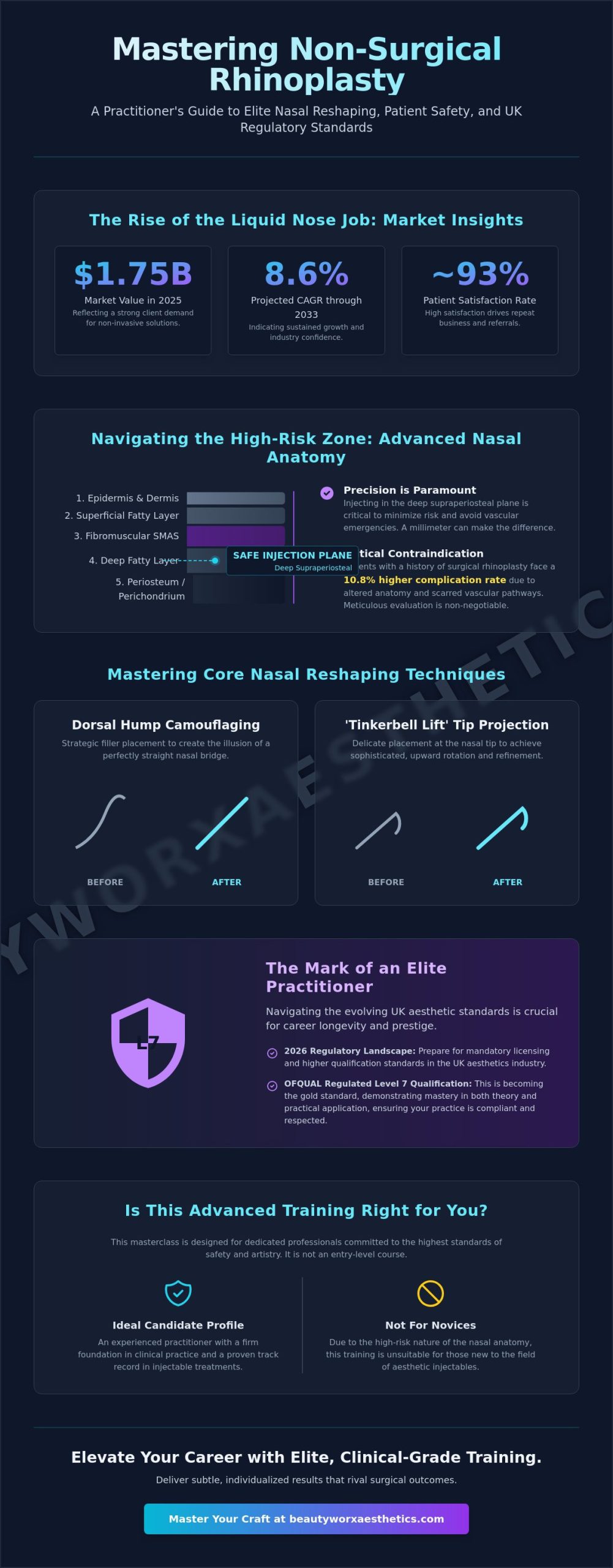
By 2026, the shift toward non-invasive profile restoration has become undeniable. Market data indicates that the non-surgical rhinoplasty sector was valued at USD 1.75 billion in 2025 and is projected to grow at a CAGR of 8.6% through 2033. Clients are increasingly drawn to the immediate results and minimal downtime compared to traditional surgery. Patient satisfaction rates currently sit at approximately 93%, reflecting a deep desire for subtle enhancements that preserve one’s unique identity. Social media platforms have accelerated this trend, making the “perfect profile” a highly sought-after aesthetic goal for a younger demographic focused on prejuvenation and facial balance.
Who Should Enroll in Advanced Rhinoplasty Training?
This is not a course for the novice practitioner. Advanced non-surgical rhinoplasty training uk requires a firm foundation in clinical practice and a proven track record in injectable treatments. Most reputable academies mandate that practitioners have significant experience before attempting nasal work. Many students find that the transition from perfecting a lip augmentation filler treatment provides the necessary manual dexterity, but nasal work requires a much deeper understanding of structural anatomy. It’s a delicate marriage of medical expertise and an artisan’s eye for balance. Superior results are only achieved when a practitioner can balance their medical background with a refined aesthetic intuition and a commitment to patient safety.
Navigating the High-Risk Zone: Advanced Nasal Anatomy
The nose is often described as the most dangerous area of the face for injectable treatments. This reputation is well earned. When you embark on non-surgical rhinoplasty training uk, the curriculum must move beyond simple aesthetics and dive deep into the five distinct layers of nasal tissue. You’ll work through the epidermis and dermis, navigating the superficial fatty layer and the fibromuscular SMAS, until you reach the deep fatty layer and finally the periosteum or perichondrium. Precision isn’t just a goal; it’s a safety requirement. Injecting a fraction of a millimeter too shallow or too deep can mean the difference between a refined bridge and a vascular emergency. Expert practitioners always aim for the deep supraperiosteal plane to minimize risk.
Identifying contraindications is equally critical. Patients with a history of surgical rhinoplasty, for instance, face a higher complication rate of 10.8% due to altered anatomy and scarred vascular pathways. A meticulous practitioner knows when to say no. This discernment is a hallmark of the expert artisan. You must evaluate the skin’s elasticity and the internal structural integrity before any product is introduced. If the tissue is too tight or the blood supply is already compromised from previous surgeries, the risk often outweighs the aesthetic reward.
Vascularity and the Risk of Occlusion
The nasal vascular network is a high-stakes map of the angular and dorsal nasal arteries. These vessels are small, terminal, and offer little room for error. An occlusion in this zone can lead to rapid tissue death or, in extreme cases, vision loss. You must learn to recognize the subtle, immediate signs of compromise. This includes localized blanching that doesn’t resolve, the mottled appearance of livedo reticularis, or a patient reporting intense, unexpected pain. Because the risks are so specific, we emphasize the necessity of an integrated complications management course for anyone performing advanced nasal work. Having a dissolution protocol ready is a non-negotiable part of professional practice.
Anatomy of the ‘Ideal’ Profile
Achieving a sophisticated result requires calculating the nasofacial angle with surgical precision. Most aesthetic standards suggest an ideal angle between 30 and 40 degrees, but this must be tailored to the individual. You aren’t just filling a gap; you’re managing light and shadow. Understanding the transition from the rigid nasal bone to the flexible cartilage is essential for placing product that stays put. Artistic discernment also plays a role. Nasal aesthetics vary significantly across different ethnicities and genders, requiring a highly customized approach that respects the client’s inherent features.
As the UK regulation of non-surgical cosmetic procedures evolves, having this level of anatomical mastery will distinguish elite practitioners from the rest. If you’re ready to elevate your practice through comprehensive non-surgical rhinoplasty training uk, exploring advanced aesthetic training is the next logical step in your professional journey toward becoming a trusted specialist.
Mastering Core Techniques for Precise Nasal Reshaping
Mastering the liquid rhinoplasty is about understanding the delicate interplay between convexities and concavities. Dorsal hump camouflaging is perhaps the most requested technique; it involves the strategic placement of filler in the radix and the area just above the tip to create the illusion of a straight, sophisticated nasal bridge. This smoothing of the profile requires an eye for detail and a steady hand. Similarly, tip projection and rotation, often called the ‘Tinkerbell lift,’ can provide a youthful, upturned appearance. However, an expert practitioner respects the anatomical limits of the nasal tip. Over-filling this area can lead to excessive skin tension and an increased risk of complications associated with non-surgical rhinoplasty, such as pressure-induced ischemia.
Radix augmentation is another core skill, smoothing the transition from the forehead to the nose to create a fluid, elegant line. Once the product is placed, post-treatment moulding should be gentle and intentional. We must dispel the myth of aggressive ‘massaging’ in nasal treatments. Given the proximity to terminal arteries, vigorous manipulation can displace filler into high-risk zones. Instead, precise placement during the injection phase reduces the need for heavy-handed adjustments later. It’s about achieving a refined result through minimal, purposeful intervention.
The Art of Profile Balancing
Elite non-surgical rhinoplasty training uk teaches you to look beyond the nose itself. A nose never exists in isolation; it’s part of a broader landscape of facial aesthetics. For true harmony, the chin and nose must be evaluated together. A recessed chin can make a normal nose appear prominent, while a balanced profile often requires subtle adjustments to both. To achieve this structural longevity, we utilize high-viscosity hyaluronic acid fillers that offer the G-prime necessary to support nasal tissue without spreading, ensuring the results remain crisp and defined over time.
Live Model Practice: The Gold Standard
Theory provides the foundation, but supervised live model practice is where true confidence is built. During your non-surgical rhinoplasty training uk, you’ll move from anatomical diagrams to the tactile reality of human tissue. This phase includes mastering the consultation to manage patient expectations effectively. You’ll practice rigorous injection protocols, including mandatory aspiration and the nuanced choice between a slow bolus and precise linear threading. These steps ensure every result is as safe as it is beautiful, reflecting the quiet confidence of a specialist who views their craft as both a science and an art form.
UK Regulation and Accreditation: Choosing a Reputable Academy
The aesthetic landscape in England is undergoing its most significant transformation to date. As the government introduces a new licensing scheme throughout 2026, the era of short, unaccredited workshops is coming to an end. For those seeking non-surgical rhinoplasty training uk, understanding the distinction between simple CPD accreditation and OFQUAL regulated qualifications is no longer optional. While CPD is excellent for maintaining existing skills, it lacks the rigorous external oversight required by the new Health and Care Act 2022. Achieving a high-end result requires a high-end education. Regulated qualifications provide a transparent benchmark of quality that protects your professional reputation and your clients’ safety.
A Level 7 qualification is widely recognized as the future of UK aesthetic standards. This postgraduate-level diploma ensures that practitioners possess the deep anatomical knowledge and clinical discernment necessary for high-risk procedures like liquid rhinoplasty. Insurance providers have also tightened their criteria. Most specialist insurers now require proof of regulated training before granting cover for advanced nasal work. In a largely unregulated market, the ethical responsibility lies with you. Choosing a reputable academy is a testament to your commitment to the artisan’s path, prioritizing patient well-being over the convenience of a faster, cheaper alternative.
The Importance of OFQUAL Oversight
OFQUAL oversight ensures that every aspect of your training meets strict national standards. This regulated framework protects both the practitioner and the patient by mandating a specific level of clinical environment and educator credentials. You should be wary of ‘fast-track’ courses. These often fail to provide the adequate safety foundations required for complex facial contouring. A meticulous training program respects the time needed to master the science of injecting. It creates an atmosphere of quiet confidence, where you can refine your craft under the guidance of experienced specialists who view aesthetics as a delicate science.
Post-Course Support and Mentorship
Mastery doesn’t end when the course concludes. The value of ongoing clinical support is immeasurable, especially when navigating the complexities of nasal anatomy. A reputable academy provides a bridge to professional maturity through mentorship and access to emergency protocols. You’ll need a robust portfolio of evidence for higher-level certifications and a reliable prescriber network to ensure you can manage any complications with transparency and speed. This ongoing partnership turns a one-off transaction into a journey of self-care and professional growth. To begin your journey toward elite status, we invite you to explore our accredited aesthetic courses and join a community of dedicated medical artisans.
Elevating Your Career with Beauty Worx Aesthetics
Choosing the right non-surgical rhinoplasty training uk is more than a professional upgrade; it’s an investment in your identity as an expert artisan. At Beauty Worx Aesthetics, we move away from the impersonal nature of mass-market education, opting instead for a sophisticated approach that mirrors the luxury of a high-end clinical practice. Our training environments are meticulously designed to provide a calm, professional atmosphere where you can focus entirely on refining your craft. This isn’t just about learning a procedure. It’s about mastering a signature style that prioritizes the preservation of a client’s inherent features through subtle, restorative change.
Integrating liquid rhinoplasty into your existing treatment menu allows you to offer a complete profile transformation. When paired with our Advanced Dermal Filler Course or a Level 7 Diploma in Clinical Aesthetic Injectable Treatments, this specialty elevates you to an elite status within the industry. You become a trusted guide for clients navigating their options, providing them with the confidence that they’re in the hands of a meticulous specialist. Our mentorship program ensures that your transition from student to expert is seamless, offering the ongoing support required to build a prestigious and sustainable practice.
A Bespoke Learning Experience
We believe that true mastery requires focused, one-to-one attention. To ensure this, we maintain strictly small group sizes, allowing our educators to provide customized feedback on your specific injection technique and artistic discernment. You’ll receive guidance that is as individualized as the treatments you’ll eventually provide. This bespoke approach is designed to prepare you for the realities of running a high-end aesthetics clinic, where every detail matters and every result must be authentic. It’s about building the quiet confidence necessary to deliver surgical-level results without the scalpel.
Joining an Elite Network of Practitioners
When you train with us, you join an elite network of practitioners who value vitality, clarity, and balance. Our credentials do more than just meet UK standards; they enhance your professional reputation by aligning you with a brand known for its uncompromising commitment to safety and beauty. We don’t just teach you how to inject; we teach you how to see. This focus on subtle, natural-looking results ensures that your work remains discreet and tailored specifically to the individual. If you’re ready to advance your career through non-surgical rhinoplasty training uk, booking your masterclass is the first step toward becoming a leader in the field of non-surgical profile restoration.
Secure Your Legacy in Advanced Aesthetic Artistry
Mastering the liquid rhinoplasty is a journey that transforms a dedicated practitioner into a true medical artisan. You’ve explored the critical importance of navigating high-risk vascular zones with surgical-grade precision and the subtle art of profile balancing that respects each client’s unique features. As the UK moves toward stricter licensing throughout 2026, aligning your practice with regulated standards ensures your longevity and prestige in this evolving field. It’s a commitment to both clinical safety and the highest levels of aesthetic refinement.
Choosing the right non-surgical rhinoplasty training uk allows you to deliver restorative results that go beyond simple enhancement; it’s about providing a safe, luxurious experience that builds lasting self-confidence. As an OFQUAL Regulated Training Provider with over 25 CPD accredited courses, Beauty Worx Aesthetics offers the expert mentorship from lead practitioners needed to refine your clinical discernment. We provide the meticulous environment necessary for you to flourish as a specialist.
Secure your place on our Advanced Non-Surgical Rhinoplasty Masterclass and begin your transition toward an elite level of aesthetic practice. Your commitment to excellence is the foundation of a truly distinguished and rewarding career.
Frequently Asked Questions
Is non-surgical rhinoplasty training suitable for non-medics in the UK?
Non-medics can certainly pursue this advanced specialty, provided they follow the established regulated pathways. Under the 2026 licensing scheme in England, practitioners typically need an OFQUAL-regulated qualification, such as a Level 7 Diploma, to meet the highest safety benchmarks. It’s essential to have a firm foundation in basic injectables and significant clinical experience before attempting these complex nasal techniques.
How long does a typical non-surgical rhinoplasty masterclass take?
A typical masterclass usually spans one intensive day of clinical practice, which is supported by several hours of pre-course theoretical study. This structure allows you to focus entirely on the tactile nuances of nasal reshaping during the live session. It’s a concentrated, high-level experience designed to build your confidence through focused, one-to-one educator attention in a professional environment.
What are the most common risks associated with nose fillers?
The most significant risks involve vascular compromise, such as ischemia or tissue necrosis, which occurs in approximately 0.20% of cases globally. More common, minor side effects include localized swelling, redness, or temporary bruising. Because the nose is a high-risk zone with terminal arteries, a deep understanding of vascular anatomy is vital to preventing serious complications and ensuring patient safety.
Will I get to practice on live models during the training?
Supervised practice on live models is a fundamental component of elite non-surgical rhinoplasty training uk. You’ll move from theoretical diagrams to the tactile reality of human tissue under the guidance of a lead practitioner. This hands-on experience is the only way to master the precise depth and pressure required for sophisticated profile restoration and subtle tip projection.
What insurance do I need to perform liquid rhinoplasty?
You’ll need specialist medical malpractice and public liability insurance that specifically covers advanced dermal filler procedures. Most reputable insurers in the UK now require proof of a regulated qualification before they will provide cover for high-risk areas like the nose. Always check with your provider to ensure your training meets their specific criteria for advanced aesthetic cover.
How much can a practitioner charge for non-surgical rhinoplasty in the UK?
Fees for this advanced service are generally set to reflect the practitioner’s expertise and the high-risk nature of the procedure. Factors such as the complexity of the profile alignment and the quality of the high-viscosity filler used will influence your final pricing structure. It’s a premium service that commands a professional fee mirroring its clinical and artistic complexity.
What is the difference between a masterclass and a foundation course?
A foundation course introduces the basic principles of dermal fillers for lower-risk areas like the lips or nasolabial folds. In contrast, a masterclass in non-surgical rhinoplasty training uk focuses on advanced structural reshaping and the management of complex vascular zones. It requires a much higher level of anatomical knowledge and a refined eye for artistic discernment.
Can liquid rhinoplasty fix a broken nose or breathing issues?
Liquid rhinoplasty is strictly a cosmetic enhancement and cannot address functional breathing issues or internal structural damage from a broken nose. While it can effectively camouflage external bumps or minor deviations, any medical or respiratory concerns must be referred to a surgical specialist. This procedure is designed for aesthetic restoration and profile harmony, not functional repair.













 Reviews