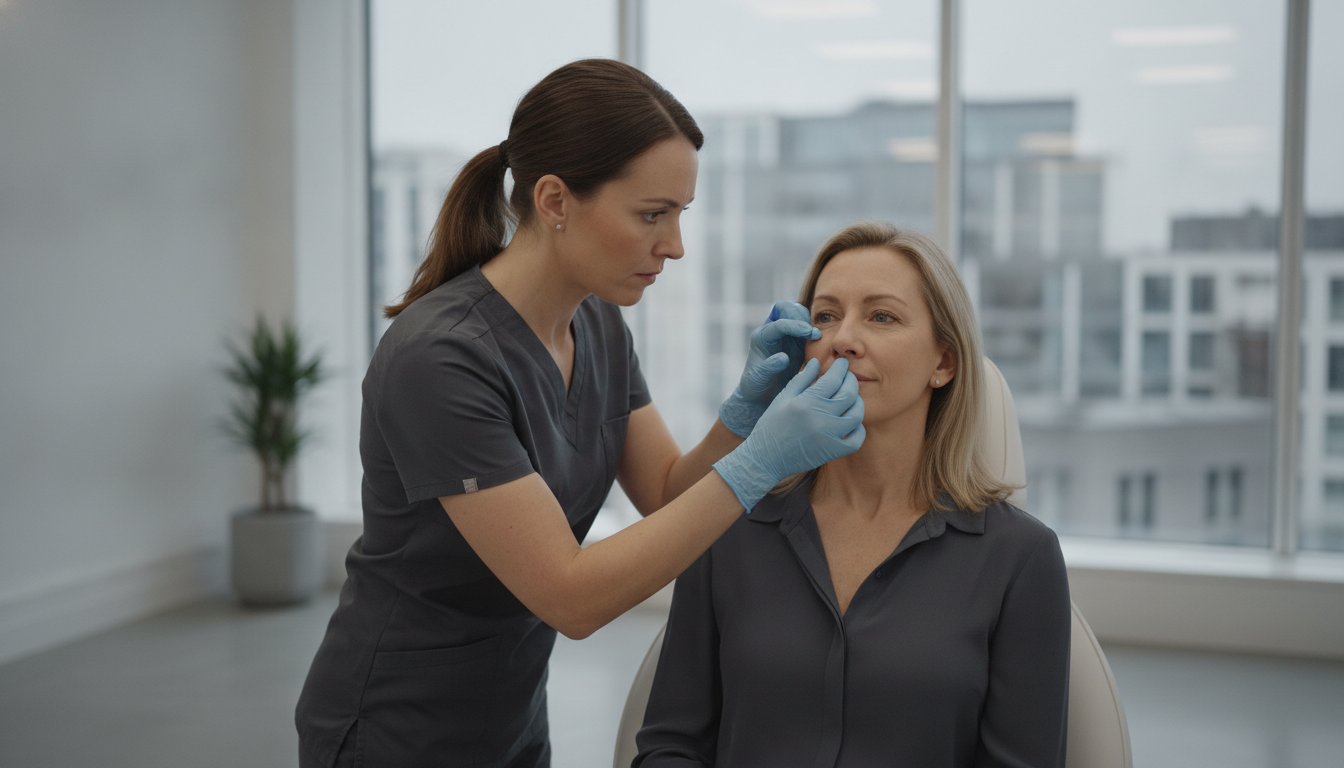
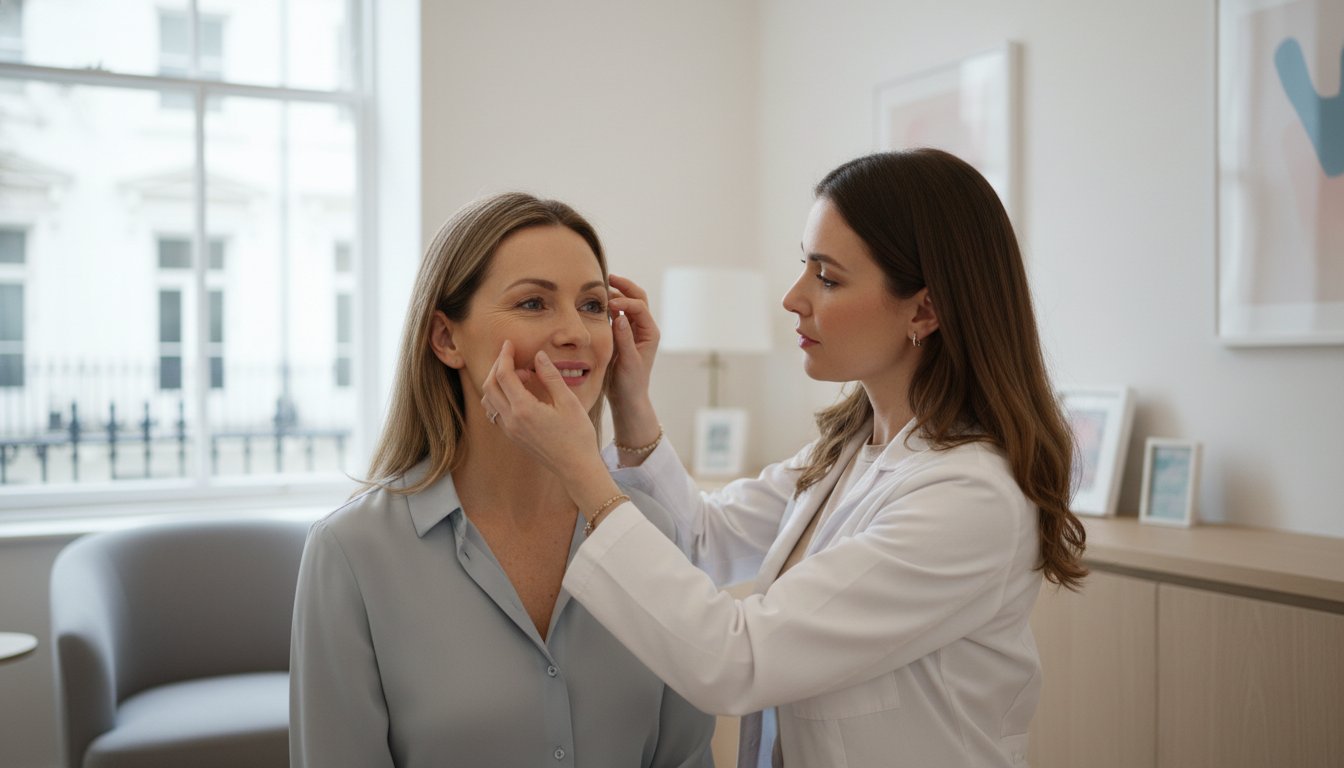
Imagine looking in the mirror a week after your aesthetic appointment, expecting a refreshed gaze, only to find one eyelid resting lower than the other. It’s a distressing moment that can instantly cloud your self-confidence, leaving you to wonder if this subtle asymmetry is a permanent change. You aren’t alone in this concern; ptosis after botox treatment is a recognized clinical occurrence that affects between 1% and 5% of patients, often causing confusion between a heavy brow and a true lid drop.
We understand that your journey toward refined beauty should feel safe and predictable. This guide provides the clinical clarity you need, offering a sophisticated look at why this migration happens and how it can be managed. You’ll learn about the typical timeline for resolution, which usually spans three to four weeks, and discover professional interventions like specialized eye drops that can gently lift the lid. By understanding the artistry and precision required for these treatments, you can move forward with the quiet confidence that your aesthetic goals remain within reach, supported by expert care and meticulous prevention strategies.
Key Takeaways
- Learn why ptosis after botox treatment is a temporary anatomical misalignment rather than a permanent concern, typically resolving as the product naturally metabolizes.
- Discover how to distinguish between a true eyelid drop and a heavy brow by identifying the specific muscle groups involved in your facial expression.
- Explore effective management strategies, including the use of specialized eye drops that can gently lift the lid while you wait for full resolution.
- Understand the importance of bespoke facial mapping and why choosing a practitioner with a Level 7 Diploma from Beauty Worx Aesthetics is essential for minimizing risks.
Understanding Eyelid Ptosis: When Science Meets Subtle Aesthetics
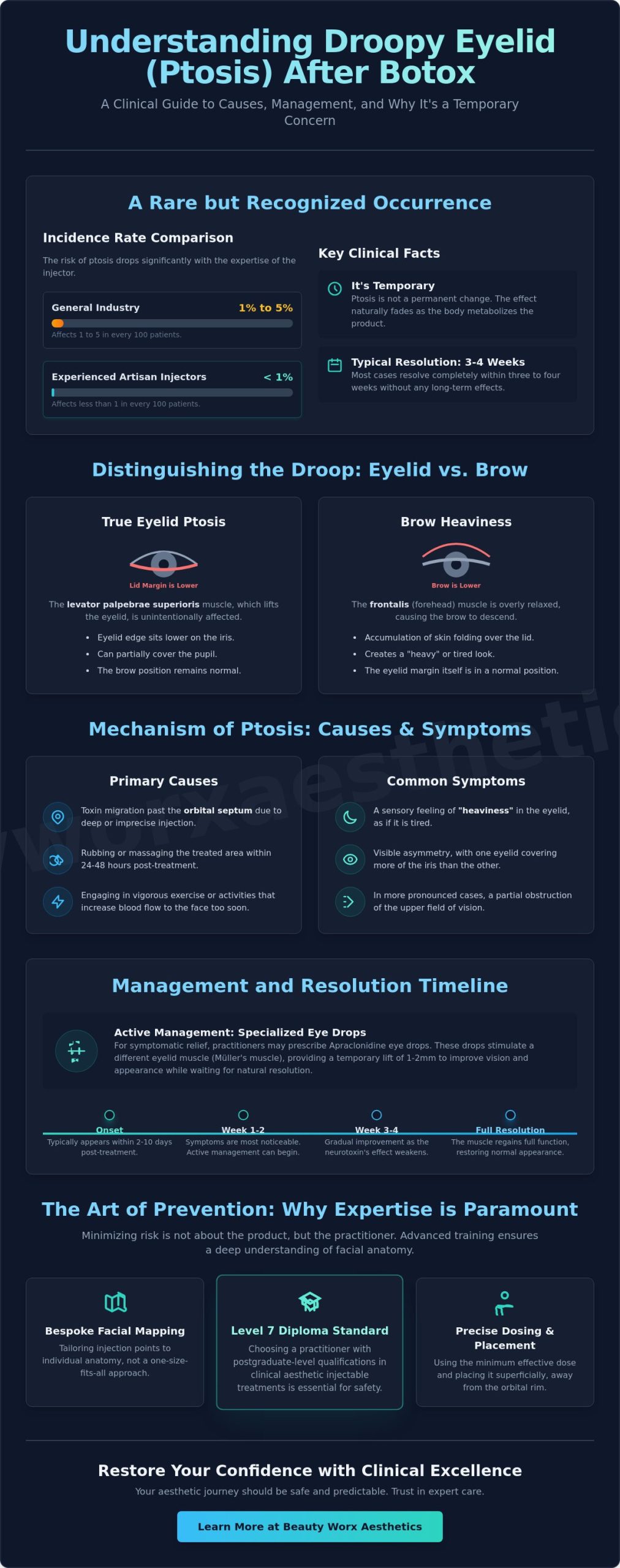
True eyelid ptosis is more than just a cosmetic frustration; it’s a specific clinical event where the levator palpebrae superioris muscle, responsible for lifting the upper lid, receives an unintended dose of neurotoxin. While the aesthetics industry is built on the pursuit of absolute precision, ptosis after botox treatment remains a rare occurrence. Research indicates an incidence rate between 1% and 5% across the general industry, though this frequency drops significantly to less than 1% when the procedure is handled by highly experienced, artisan injectors. You don’t need to fear that this change is permanent, as the nature of the treatment ensures that any effect is inherently transient.
Our clinical perspective frames this occurrence not as a permanent flaw, but as a temporary anatomical misalignment that demands a calm, expert response. The emotional weight of facial asymmetry can feel significant, often impacting your sense of self-confidence during social interactions. However, the promise of restoration is a biological certainty. As the neurotoxin naturally metabolizes over the coming weeks, the muscle regains its strength, returning the gaze to its original, vibrant state. We treat this journey with the same meticulous care as the initial injection, guiding you through the recovery process with empathy and professional discernment.
The Mechanism of Toxin Migration
Botulinum toxin is meticulously designed to remain localized, yet it can occasionally migrate beyond the intended injection site. This movement often involves the toxin traversing the orbital septum, a thin fibrous membrane that serves as a barrier between the eyelid and the deeper orbital structures. A deep understanding of Botulinum toxin therapy and its side effects reveals how this diffusion can occur if the product is placed too close to this delicate boundary. Post-treatment habits also play a role. Actions like rubbing the eyes or engaging in vigorous exercise too soon can inadvertently encourage the product to shift toward the levator muscle, bypassing the natural anatomical defenses of the eye area.
Symptoms: What a Droopy Eyelid Actually Feels Like
For many, the first sign of a lid drop isn’t visual but sensory. You may experience a persistent feeling of “heaviness” or a sensation that the eye is perpetually tired, even after a full night’s rest. Visually, the eyelid begins to cover more of the iris than usual, which disrupts the natural balance of the face. Distinguishing between a purely aesthetic concern and a physical obstruction is vital. While most cases only affect the appearance of the eye, a more pronounced drop can occasionally interfere with the upper field of vision. Recognizing these cues early is the first step toward a proactive, professional management plan that restores both your sight and your confidence.
Distinguishing Between Lid Ptosis and Brow Heaviness
When you notice a change in your reflection after a procedure, it’s natural to feel a sense of urgency. However, identifying the precise cause of a “droop” is a nuanced process that requires clinical expertise. Patients often mistake a heavy, lowered brow for a dropped eyelid, yet these two issues stem from entirely different muscle groups. A sophisticated practitioner begins by assessing the resting position of both the brow and the lid margin relative to the pupil to determine the exact nature of the concern.
A professional diagnosis involves the manual lift test. By gently supporting the brow in its ideal aesthetic position, your practitioner can observe the behavior of the eyelid margin. If the lid remains low despite the brow being lifted, we are dealing with true ptosis after botox treatment. This distinction is vital because the management for a relaxed brow is fundamentally different from treating a weakened eyelid muscle. Understanding these nuances is a hallmark of clinical excellence, which is why we emphasize the importance of advanced training through the Level 7 Diploma in Clinical Aesthetic Injectable Treatments.
To help you understand your own anatomy during this time, consider these three key identifiers:
- Lid Margin Position: True ptosis is defined by the eyelid edge sitting lower on the iris than usual, sometimes obscuring the pupil.
- Skin Laxity: Brow ptosis often presents as an accumulation of skin folding over the lid, rather than the lid itself being low.
- Symmetry: While both can be unilateral, lid ptosis often has a more distinct “sleepy” look compared to the “heavy” look of a dropped brow.
Lid Ptosis: The Levator Muscle Issue
The levator palpebrae superioris is the delicate engine that powers the opening of your eye. When neurotoxin inadvertently reaches this muscle, typically during the treatment of frown lines between the brows, the lid loses its full range of motion. This creates the characteristic “sleepy” appearance where the eyelid margin sits lower on the iris than its counterpart. It’s a localized anatomical event that requires targeted, professional care to manage effectively while the toxin naturally wears off.
Brow Ptosis: The Frontalis Muscle Issue
In contrast, brow ptosis involves the frontalis muscle, which is the only muscle responsible for lifting your eyebrows. If this muscle is treated too heavily or too low during a forehead rejuvenation, the brow can descend. This creates a hooded effect, or pseudoptosis, where the skin of the brow rests upon the lashes. While the eyelid itself is functioning perfectly, the overall look is one of heaviness. Achieving a balanced, natural result requires an artisan’s touch to ensure the brow remains elegantly arched without compromising forehead smoothness.
Management Strategies for Resolving a Droopy Eyelid
The first step in managing ptosis after botox treatment is a gentle shift in perspective. While the facial asymmetry feels permanent in the moment, the biological reality is far more forgiving. Every instance of toxin-induced ptosis is fundamentally temporary. Your body is a resilient, self-regulating system; as the neurotoxin naturally metabolizes, the affected muscle will regain its full range of motion. We prioritize a rhythmic, calm approach to this healing phase, ensuring you feel supported rather than rushed during the restoration of your natural features.
You might feel tempted to seek immediate “corrective” injections to balance the face. However, re-treating with more toxin is rarely the correct first step. Adding further product to a complex anatomical situation can lead to secondary issues, such as brow heaviness or increased muscle weakness. Instead, our focus remains on supportive measures that encourage the eyelid to lift while the initial treatment gradually wears off. True clinical excellence lies in knowing when to intervene and when to let the body’s natural processes take the lead.
Medical Interventions: Apraclonidine and Oxymetazoline
For patients seeking a more active solution, certain prescription eye drops offer a sophisticated way to manage the droop. Apraclonidine 0.5% drops, often known by the brand name Iopidine, can provide a temporary lift of approximately 1 to 2 millimeters. These drops work by stimulating the alpha-adrenergic receptors of Muller’s muscle, a secondary muscle in the eyelid that helps maintain an open gaze. By causing this muscle to contract, the eye appears more alert and symmetrical. It’s essential that these are prescribed by a medical professional who can assess your suitability, as they are a targeted intervention rather than a general remedy.
The Natural Timeline for Resolution
One of the most reassuring aspects of this condition is its timeline. While the full aesthetic effect of an anti-wrinkle treatment typically lasts three to four months, the symptoms of ptosis often resolve much sooner. This is because the levator muscle only needs a partial return of nerve signaling to effectively lift the lid margin back to its ideal position. As muscle metabolism continues and the concentration of the toxin diminishes, you will notice a gradual, daily improvement in your eyelid’s height. On average, ptosis from Botox is temporary and typically resolves on its own within 3 to 4 weeks, although in some cases it can last up to 3 to 4 months.
The Art of Prevention: Why Precise Anatomy is Paramount
Prevention is the ultimate expression of clinical mastery. While we have explored how to manage complications, the most sophisticated approach is to ensure they never occur through an artisan’s understanding of facial architecture. Avoiding ptosis after botox treatment requires more than a standard injection pattern; it demands bespoke facial mapping that respects the unique muscular interplay of every individual. A one-size-fits-all methodology often ignores the subtle variations in muscle strength and placement that can lead to unintended product migration.
Expert practitioners identify high-risk anatomy long before the needle touches the skin. Clients with naturally low-seated brows or significant forehead laxity require a more conservative, strategic approach to neurotoxin placement. We maintain a strict 1cm safety zone above the supraorbital ridge, ensuring that the toxin remains within the intended muscle groups and away from the delicate levator palpebrae superioris. By meticulously managing product dilution and injection volume, we prevent the “spread” that often characterizes less precise applications.
Advanced Injection Techniques
Safety and artistry are inextricably linked in high-end aesthetics. To achieve the most refined results, practitioners must be fluent in Mastering Aesthetic Safety: The Definitive Guide to a Complications Management Course. During the procedure, we utilize digital palpation to physically protect the orbital rim, creating a manual barrier that guides the product. This is especially critical during deep injections into the corrugator muscles, where precision is paramount to avoid the toxin seeping through the orbital septum. These advanced maneuvers ensure the results are as safe as they are beautiful.
The Pre-Treatment Consultation
A transformative experience begins with a thorough clinical assessment. We start by evaluating your baseline eyelid function and brow position, identifying any pre-existing asymmetries that could influence the final outcome. This transparency is the foundation of a long-term partnership in self-care. We educate every client on the delicate balance between achieving a refreshed look and maintaining natural facial vitality. By setting clear expectations and performing a detailed anatomical review, we ensure you feel empowered and informed throughout your aesthetic journey. If you are ready to experience this level of meticulous care, we invite you to explore our Advanced Anti-Wrinkle Injections Course to see how we define clinical excellence.
Restoring Confidence through Clinical Excellence and Advanced Training
Restoring your reflection is as much about emotional support as it is about clinical intervention. When you encounter a complication like ptosis after botox treatment, the expertise of your practitioner becomes your greatest asset. A truly professional injector doesn’t just deliver results; they manage the entire journey with grace, empathy, and a deep reservoir of anatomical knowledge. While the experience can be unsettling, it serves as a vital reminder that aesthetic medicine is a delicate fusion of science and artistry that requires a commitment to ongoing excellence.
Choosing an OFQUAL regulated practitioner is the most effective way to safeguard your results and your peace of mind. These professionals operate under a framework of rigorous standards that significantly reduce the risk of complications. A single experience with ptosis after botox treatment shouldn’t discourage you from pursuing the subtle, natural enhancements you desire. Instead, it should empower you to seek out those who view safety as the foundation of beauty. We believe that every client deserves an environment where clinical safety and high-end luxury coexist, ensuring you feel both protected and pampered.
The Value of an OFQUAL Regulated Education
The difference between a brief “weekend course” and a comprehensive clinical diploma is found in the depth of anatomical study. A Level 7 Diploma in Clinical Aesthetic Injectable Treatments represents the pinnacle of non-surgical training. This structured pathway requires students to master the complexities of facial nerves, vascular maps, and muscular interactions. By adhering to these national safety standards, practitioners develop the precision needed to avoid the orbital septum and protect the levator muscle. This level of education transforms an injector into a trusted artisan who can navigate even the most high-risk facial structures with confidence.
Your Pathway to Safe, Subtle Enhancement
We invite you to experience an aesthetic journey defined by meticulous care and professional discernment. At Beauty Worx Aesthetics, our commitment to your self-confidence is reflected in our dedication to advanced training and transparent communication. We don’t just aim for a refreshed look; we strive for a long-term partnership in your self-care. By prioritizing individualized treatment plans and utilizing the latest evidence-based techniques, we ensure your results are as safe as they are authentic. If you’re ready to move forward with a team that values clinical excellence above all else, we’re here to guide you. Explore our advanced aesthetic treatments and training pathways to discover how Beauty Worx Aesthetics preserves your inherent features with sophisticated precision.
Embracing a Future of Refined and Secure Aesthetics
Your journey toward a more youthful, vibrant version of yourself shouldn’t be overshadowed by a temporary setback. We have explored how ptosis after botox treatment is a manageable anatomical event, one that demands clinical precision and a patient, empathetic approach. By distinguishing between true lid drop and brow heaviness, you can navigate your recovery with the calm assurance that your natural symmetry will return as the toxin naturally fades.
True confidence is built on the foundation of expert care. Choosing a practitioner who operates within a sophisticated, national-standard clinical environment ensures that every injection is an act of both science and art. We invite you to Discover clinical excellence and bespoke aesthetic care at Beauty Worx Aesthetics. As an OFQUAL Regulated Level 7 Training Academy and CPD Accredited Complications Management Specialists, we prioritize your safety and your long-term aesthetic goals. You deserve a partner in self-care who views your unique features as a masterpiece to be preserved. Let us help you move forward with a renewed sense of security and a gaze that reflects your inner vitality.
Frequently Asked Questions
How long does ptosis after Botox typically last?
Ptosis after botox treatment typically resolves within three to four weeks as the neurotoxin’s intensity begins to diminish. While the full aesthetic effect of your anti-wrinkle treatment may last longer, the specific muscle weakness causing the lid to drop often recovers much sooner. In some instances, it can take up to three or four months for a complete return to baseline, but daily gradual improvement is the standard clinical expectation.
Can I use eye drops to fix a droopy eyelid from Botox?
Prescription eye drops like Apraclonidine 0.5% can provide a temporary lift of one to two millimeters by stimulating Müller’s muscle, a secondary muscle in the eyelid. These drops act as a sophisticated supportive measure rather than a permanent fix, helping to restore facial symmetry while the toxin naturally metabolizes. It’s essential to consult with a medical professional to ensure these are appropriate for your specific ocular health before use.
Is a droopy eyelid after Botox a sign of a bad injector?
While even the most skilled artisans encounter rare anatomical variations, the incidence of ptosis is significantly lower among highly experienced injectors. Research suggests that inexperienced practitioners may see complication rates as high as 5.4%, whereas specialists with advanced training often maintain rates below 1%. Choosing a practitioner with a Level 7 Diploma ensures they have the deep anatomical knowledge required to minimize these risks.
Will my eyelid go back to normal once the Botox wears off?
Your eyelid will absolutely return to its original position once the effects of the neurotoxin have fully dissipated. The bond between the toxin and the nerve receptors is inherently temporary, and your body naturally restores signaling to the levator muscle over time. You can feel confident that this is a transient phase and not a permanent alteration to your beautiful, inherent features.
What is the difference between a heavy brow and eyelid ptosis?
Eyelid ptosis involves a weakness in the levator muscle that lifts the lid itself, while a heavy brow is caused by over-relaxation of the frontalis muscle in the forehead. If your eyelid margin is sitting lower on the iris or covering your pupil, it’s likely true ptosis. If you feel excess skin resting on your lashes but the lid margin remains in its normal place, you’re experiencing a brow drop.
Can I prevent ptosis by lying down or standing up after treatment?
Most practitioners recommend remaining upright for at least four hours following your appointment to minimize the risk of unintended product migration. While the science on posture is evolving, avoiding vigorous exercise and not rubbing the injection sites are equally crucial steps in the first 24 hours. These simple precautions help keep the product localized within the targeted muscle groups for a safe, predictable result.
What should I do if I notice my eyelid drooping 5 days after Botox?
If you notice a change in your eyelid position five days after your appointment, your first step should be to contact your practitioner for a professional assessment. They can perform a manual lift test to confirm the cause and discuss management options like specialized eye drops if necessary. It’s a time for calm, transparent communication rather than worry, as your practitioner is trained to guide you through this recovery period.
Are certain people more prone to ptosis after anti-wrinkle injections?
Individuals with naturally low-seated brows, significant forehead skin laxity, or pre-existing eyelid asymmetry may be more susceptible to changes in lid position. A thorough pre-treatment consultation is vital for identifying these unique anatomical features before the needle touches the skin. By customizing the dose and placement for your specific structure, a specialist can achieve a refreshed look while maintaining the integrity of your natural gaze.












 Reviews