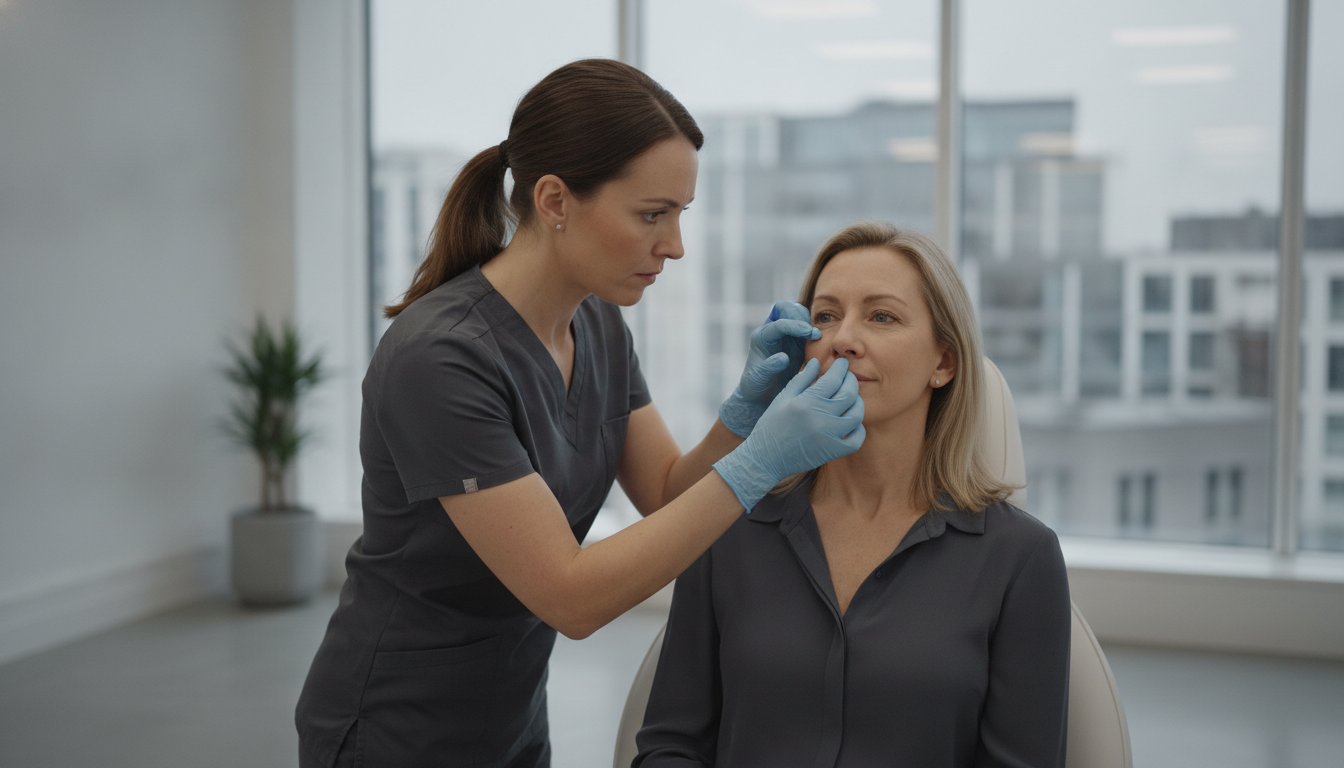
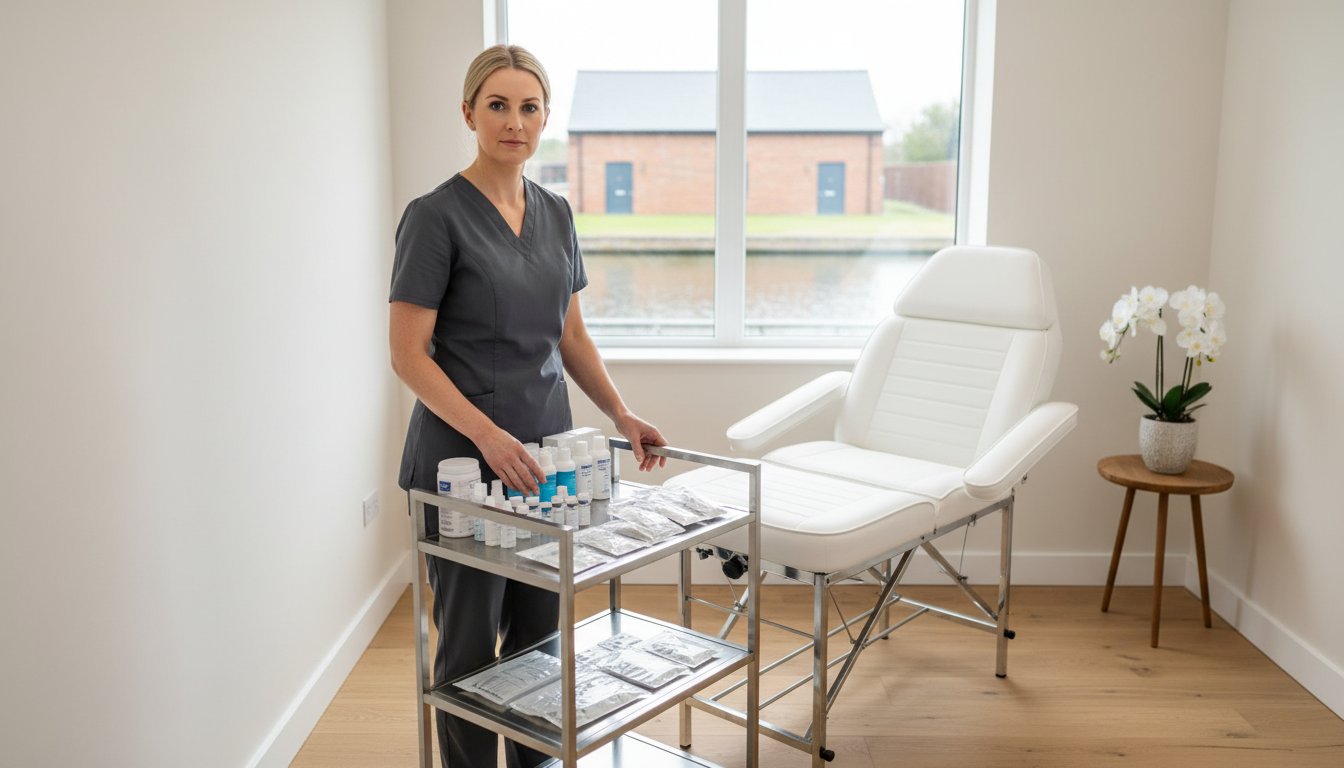
By 2026, the traditional high-street clinic is no longer the sole benchmark for excellence in the UK beauty industry. You likely recognize that your clients are seeking more than just a procedure; they’re looking for a sanctuary where clinical precision meets boutique comfort. It’s natural to feel a sense of trepidation regarding the Department of Health and Social Care’s mandatory licensing scheme, which now demands rigorous safety standards for every practitioner. You want to ensure your domestic space reflects your professional integrity without losing that warm, restorative atmosphere that defines your brand.
This article serves as your definitive roadmap for setting up an aesthetics clinic from home uk, guiding you through the transition from a dedicated practitioner to a fully compliant business owner. You’ll learn how to master the 2026 legal framework, curate a bespoke client journey, and create a sterile yet luminous environment that justifies premium pricing. We’ll examine the specific insurance requirements, the necessary clinical modifications for your property, and the pathways to gaining recognition as a high-level expert in advanced injectables.
Key Takeaways
- Navigate the evolving 2026 regulatory landscape by mastering the specific licensing requirements for both your personal clinical expertise and your home-based premises.
- Learn why a Level 7 Diploma is the definitive pathway to establishing clinical authority and ensuring your practice meets the highest professional standards in the UK.
- Discover the secrets to setting up an aesthetics clinic from home uk that seamlessly blends a boutique luxury experience with rigorous, medical-grade safety.
- Ensure complete operational compliance by securing specialist insurance and establishing the necessary partnerships for managing pharmacy accounts and prescription-only medications.
- Position your practice as an exclusive, high-end destination by crafting a bespoke brand identity that prioritizes natural-looking enhancements and a sophisticated client journey.
Understanding the UK Legal Requirements for Home-Based Aesthetics
Creating a sanctuary for self-enhancement within your own residence requires a meticulous approach to the UK’s 2026 regulatory framework. The industry has transitioned into a strictly governed landscape where practitioner expertise and environmental safety are paramount. When you’re considering setting up an aesthetics clinic from home uk, you must align your vision with the mandatory licensing standards enforced by local authorities. This ensures your clients feel the same confidence in your clinical space as they would in a high-end boutique. The Aesthetic Medicine Overview provides a foundation for the breadth of this field; however, the UK specifically relies on the Joint Council for Cosmetic Practitioners (JCCP) to define the high-level competencies required for home-based practitioners.
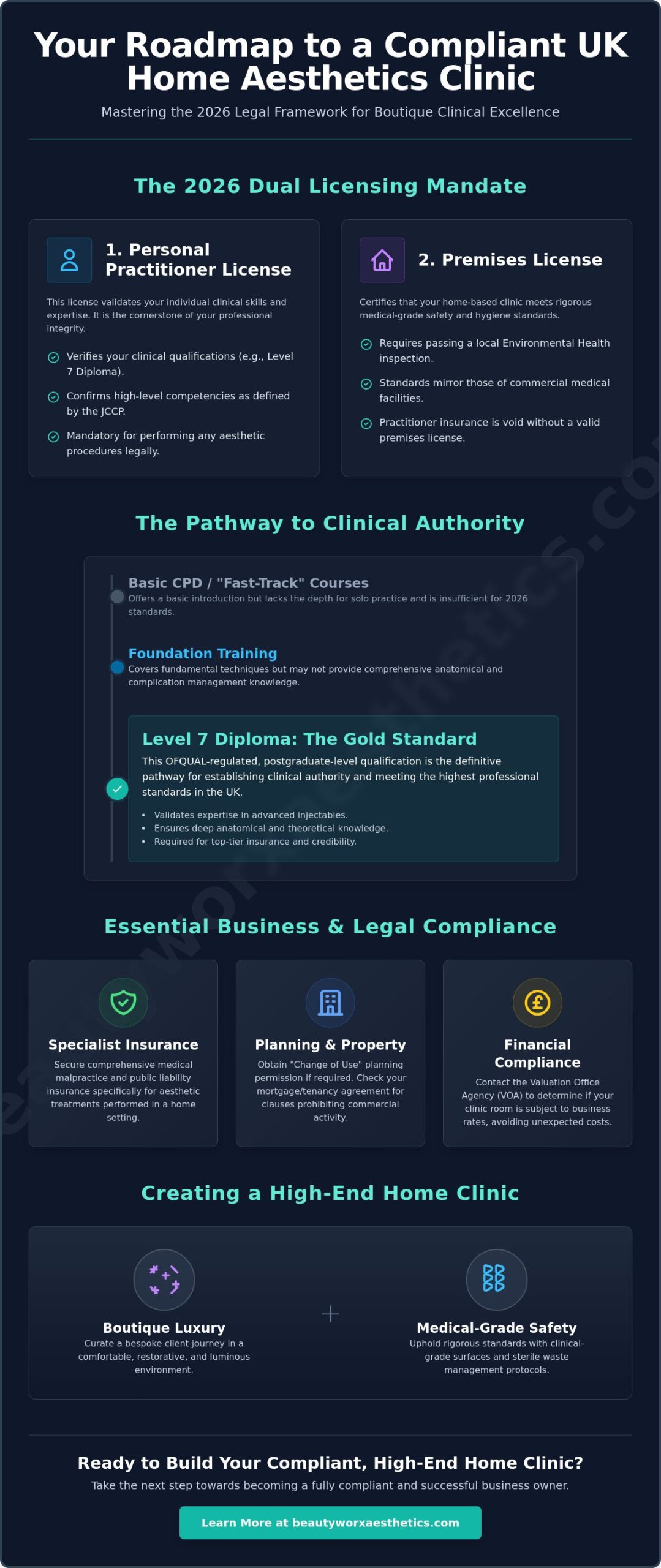
The 2026 legal status mandates two distinct authorizations. You’ll need a personal practitioner license to verify your clinical skills and a separate premises license for your domestic property. The JCCP works closely with the government to ensure home-based standards mirror those of commercial medical facilities. This means your home clinic isn’t just a room in a house; it’s a regulated medical environment. Failing to secure these licenses before treating your first client can lead to significant fines and a permanent ban from the practitioner register.
The 2026 Aesthetics Licensing Scheme Explained
The UK government now utilizes a tiered licensing system to categorize procedures by risk. Green tier treatments include basic facials, while the Amber tier covers popular injectables like botulinum toxin and dermal fillers. If you plan to offer these, your home clinic must pass a rigorous inspection focusing on clinical-grade surfaces and sterile waste management. Your practitioner insurance is now legally tethered to your licensed premises. If you perform a bespoke treatment in an unlicensed room, your policy is void. This system protects the client’s journey toward self-confidence by ensuring every environment is safe, clean, and professional.
Council Regulations and Planning Permission
Your local Environmental Health department is your primary point of contact for an initial clinical inspection. They’ll evaluate your setup to ensure it meets the necessary hygiene standards for non-surgical procedures. Beyond clinical safety, you must address the legalities of your property use. Most local councils require “Change of Use” planning permission if a significant portion of your home is dedicated to business. It’s also vital to review your mortgage or tenancy agreement; many standard contracts prohibit commercial activity without written consent.
Financial clarity is equally important when setting up an aesthetics clinic from home uk. While you’ll continue to pay council tax on your living quarters, the specific room used for your clinic may be subject to business rates. Contacting the Valuation Office Agency (VOA) early helps you avoid unexpected costs. This professional transparency ensures your business stands on a firm legal foundation, allowing you to focus on delivering luminous, natural-looking results for your clients.
Selecting the Right Training Pathway: From Foundation to Level 7
Your journey toward clinical excellence begins with a commitment to education that transcends basic technical skill. When setting up an aesthetics clinic from home uk, the distinction between a weekend “fast-track” CPD certificate and a regulated qualification is the difference between a fleeting hobby and a resilient career. While short courses offer a glimpse into the industry, they often lack the anatomical depth and supervised practice required to ensure client safety in a solo environment. By 2026, the UK’s licensing landscape has shifted toward rigorous oversight, making OFQUAL-regulated training the only viable route for long-term success.
A Level 7 Diploma represents the gold standard for practitioners who prioritize clinical authority. This postgraduate-level qualification validates your expertise in injectables, providing the theoretical background and practical hours necessary to achieve harmonious, natural-looking results. It transforms your home-based space from a simple room into a professional sanctuary where clients feel genuinely protected. Every practitioner must also integrate a complications management course into their repertoire. This is not optional for home-based clinicians; it is the safety net that allows you to act with precision and calm if a vascular emergency or adverse reaction occurs.
The Hierarchy of Aesthetic Qualifications
Understanding the progression of your education helps you build a bespoke business plan. The hierarchy typically begins with Level 4 treatments, such as skin needling and chemical peels, which focus on the epidermis and upper dermis. Progression to Level 5 and eventually the Level 7 Diploma in Clinical Aesthetic Injectable Therapies allows you to master neurotoxins and dermal fillers. Adhering to JCCP Standards and Guidance ensures your training meets the highest benchmarks for patient safety. This alignment protects your business against legislative shifts, as the UK government increasingly mandates formal qualifications for practitioner licensing.
Choosing a Training Academy for Career Longevity
The academy you select acts as your professional cradle. Look for institutions that prioritize a benefit-first educational approach, where the focus remains on the client’s emotional and physical transformation. When you work alone at home, the isolation can be a challenge; therefore, long-term mentorship is vital. Seek out academies that offer:
- Live Model Practice: Hands-on experience with diverse facial structures under expert supervision.
- Clinical Oversight: Guidance on prescribing and medical emergency protocols.
- Ongoing Mentorship: A direct line to experts for advice on complex cases or business growth.
For a deeper exploration of your options, consult our definitive guide to aesthetic courses to find a pathway that mirrors your professional aspirations. Choosing the right partner in your education ensures that setting up an aesthetics clinic from home uk leads to a flourishing, reputable practice. If you are ready to elevate your skills, consider how our bespoke training modules can refine your artistic eye and clinical technique.
Creating a Clinical Environment: Design and Safety Standards
Designing your space is a delicate exercise in functional elegance. When setting up an aesthetics clinic from home uk, you must bridge the gap between a high-end boutique and a sterile medical facility. Your clients seek a transformation that leaves them feeling luminous and refreshed; this journey begins the moment they step into a room that feels both safe and sophisticated. Achieving this balance requires a meticulous approach to interior choices. Replace domestic carpets with non-porous, medical-grade flooring like luxury vinyl tile or sealed laminate. These surfaces withstand rigorous chemical cleaning while maintaining a polished, professional appearance.
Lighting plays a dual role in your clinical sanctuary. While soft, warm bulbs create a sense of calm during the initial consultation, you need high-intensity LED task lighting for the procedures themselves. This ensures every detail is visible when performing delicate injectable treatments. A hands-free handwashing station is another non-negotiable feature. It reduces cross-contamination risks and signals to your client that their safety is your primary concern. Cleanliness is your brand’s silent ambassador.
Divide your treatment room into distinct zones to manage the client’s emotional experience. A “consultation zone” featuring comfortable, plush seating allows for a relaxed dialogue about their aesthetic goals. Conversely, the “clean zone” houses your medical equipment and treatment chair. This physical separation helps transition the client from a state of relaxation to a state of clinical readiness, ensuring they feel supported throughout their bespoke journey.
Infection Control and Sanitisation Protocols
Maintaining an impeccable environment requires strict standard operating procedures. You should allow at least 15 minutes between appointments to perform a deep sanitisation of all contact surfaces. Invest in high-quality clinical furniture, such as a multi-section hydraulic chair that allows for precise positioning while being easy to wipe down. Your storage units should be enclosed and medical-grade to keep your workspace uncluttered. A tidy environment reduces client anxiety and reinforces your image as a trusted, expert artisan who views aesthetic medicine as a disciplined science.
Clinical Waste and Sharps Management
Safety extends beyond the treatment table to the way you handle hazardous materials. Compliance with UK regulations for non-surgical cosmetic procedures is essential to ensure your home-based practice meets the evolving licensing standards introduced under the Health and Care Act 2022. You’re legally required to contract a registered clinical waste collection service. They’ll provide you with yellow sharps bins and orange waste bags specifically for hazardous materials.
Keep a meticulous log of your “Duty of Care” notes. These documents prove that you’re disposing of clinical waste responsibly and are vital for your insurance and local authority inspections. Store all hazardous materials in a secure, locked cupboard away from your domestic living areas. This disciplined approach protects your household and ensures your home clinic operates with the same professional integrity as a Harley Street suite.
Navigating Business Logistics: Insurance, Prescriptions, and Compliance
Setting up an aesthetics clinic from home uk demands more than artistic talent; it requires a rigorous commitment to clinical safety and regulatory precision. Transitioning a residential space into a professional sanctuary involves a meticulous fusion of medical-grade standards and boutique luxury. By 2026, the UK government’s licensing scheme for non-surgical cosmetic procedures will be fully operational, making it essential to establish these foundational pillars early to ensure your practice remains both legal and prestigious.
Insurance and Medical Malpractice Cover
Securing the correct protection is the first step in safeguarding your professional reputation. Professional indemnity insurance covers your clinical judgment and the technical execution of treatments, while public liability protects against accidental injury within your home environment. Most specialist insurers, such as Hamilton Fraser or Cosmetic Insure, now require detailed photographic evidence or a virtual inspection of your clinical room before granting a policy. You must confirm that your provider explicitly approves home-based practice to avoid claim denials. Managing risk is an ongoing process that begins with a robust consent protocol, ensuring every client understands the subtle, refined outcomes of facial aesthetics before any intervention occurs.
Sourcing Products and Managing Prescriptions
The integrity of your results depends entirely on the quality of your products. If you aren’t a qualified prescriber, you must partner with a GMC-registered doctor or a Nurse Independent Prescriber (NIP). They are legally required to conduct a face-to-face consultation with each patient before any prescription-only medication (POM), such as Botulinum Toxin, is ordered. For medical devices and supplies, your pharmacy accounts should be limited to reputable UK distributors like Church Pharmacy or Med-fx. This ensures all dermal fillers and skin boosters are CE-marked and authentic. In a home setting, you must also implement strict cold-chain storage solutions. Medical-grade refrigerators must maintain a consistent temperature between 2°C and 8°C, with digital logs kept to prove product stability.
Compliance and bespoke care are the hallmarks of a successful home clinic. To maintain a professional standard, you should implement the following:
- GDPR-Compliant Records: Use encrypted, cloud-based software like Pabau or Jane App to store sensitive medical histories and high-resolution imagery.
- Bespoke Consultations: Dedicate 30 minutes to a thorough skin analysis, allowing for a harmonious, tailored treatment plan that high-street clinics often rush.
- Emergency Protocols: Keep a fully stocked anaphylaxis and hyaluronidase kit on-site, with clear evidence of up-to-date complications training.
The journey toward self-confidence is a partnership between the practitioner and the client. By prioritizing these logistical details, you create a foundation of trust that allows your artistry to shine. If you are ready to begin your transformation with a team that values safety as much as beauty, book your bespoke consultation today.
Launching Your Bespoke Home Clinic: Client Acquisition and Brand Identity
Digital Presence and Luxury Branding
Your website acts as your digital flagship. It has to bridge the gap between clinical authority and artisanal beauty. Use high-resolution imagery that highlights the sterile, professional environment of your home clinic to reassure visitors of your commitment to safety. On platforms like Instagram and TikTok, showcase “before and after” portfolios that demonstrate your signature style. Aim for subtle, harmonious results that prioritize facial balance. Encourage reviews that highlight the personal, empathetic nature of your service. A 2025 consumer survey showed that 82% of clients choose practitioners based on the perceived safety and “naturalness” of their previous work.
The Client Consultation Journey
The first 15 minutes of any interaction are critical for establishing clinical authority. Use this time to conduct a thorough skin analysis and medical history check to build immediate trust. Frame every appointment as a “journey” of self-care rather than a one-off transaction. You aren’t just selling a product; you’re curating a long-term plan for luminous, healthy skin. This approach fosters deep loyalty and high-value returns, which are essential when setting up an aesthetics clinic from home uk.
Transitioning from training to professional practice requires a reputation for artistic discernment. Clients want to know you prioritize their safety as much as their aesthetic outcome. By developing a signature “natural-looking” result style, you attract a demographic that values subtle enhancement over drastic change. This commitment to excellence starts with the right foundation. To ensure your clinical skills meet the highest industry standards and your reputation remains impeccable, start your journey with a Level 7 Aesthetics Diploma.
Empower Your Vision of Clinical Excellence
Transitioning from a practitioner to a boutique clinic owner requires a meticulous blend of medical precision and entrepreneurial grace. As the industry moves toward tighter regulations in 2026, your success depends on a foundation of legal compliance and a clinical environment that mirrors the safety of a high-end medical facility. By prioritizing bespoke care and natural-looking results, you’ll create a sanctuary where clients feel both pampered and secure. Setting up an aesthetics clinic from home uk is an empowering journey that transforms your professional expertise into a thriving, luminous business.
Your evolution into a trusted artisan begins with the highest standards of education. We offer a sophisticated pathway through our OFQUAL-regulated Level 4, 5, and 7 qualifications, ensuring you possess the quiet confidence of a specialist. With expert mentorship from lead clinical practitioners and access to over 25 CPD accredited specialized masterclasses, you’ll have every tool needed to refine your craft. Begin your professional journey with our OFQUAL-regulated aesthetics courses and start shaping the best version of your career today. It’s time to bring your artistic discernment to life in a space that’s uniquely yours.
Frequently Asked Questions
Is it legal to perform Botox and fillers from home in the UK in 2026?
Yes, it’s legal provided you comply with the mandatory 2026 licensing scheme. The Health and Care Act 2022 empowers local authorities to inspect home environments to ensure they meet strict clinical standards. You’ll need a premises license to prove your space is suitable for medical procedures. This ensures your clients feel safe while they enjoy their journey toward a more refreshed, luminous appearance.
Do I need special planning permission to run an aesthetics clinic from my house?
You’ll likely need ‘Change of Use’ planning permission from your local council to operate legally. Most home-based clinics fall under ‘Sui Generis’ use if the clinical activity is the primary function of the room. Since 2024, councils have tightened rules on residential business operations to manage local traffic. Securing this permission protects your investment and ensures your professional sanctuary remains a permanent, lawful fixture in your community.
Can non-medics set up a home-based aesthetics clinic?
Non-medics can still operate, but they must meet the 2026 JCCP education requirements to gain a practitioner license. You’ll need a Level 5 or Level 7 qualification to perform most injectable treatments safely under the new framework. While the industry is more regulated, it allows dedicated artisans from various backgrounds to provide harmonious results. Professional oversight from a prescriber remains a legal necessity for all prescription-only medications.
What insurance do I need for a home aesthetics business?
You must secure specialist medical malpractice and public liability insurance before treating your first client. A standard home insurance policy won’t protect you against clinical claims or business-related accidents. Most practitioners opt for a minimum of £2 million in indemnity cover to safeguard their professional reputation. This specific protection provides peace of mind as you begin the process of setting up an aesthetics clinic from home uk.
How do I handle clinical waste when working from a domestic property?
Domestic waste systems aren’t suitable for clinical materials like used needles or blood-stained gauze. You must hire a licensed waste contractor under the Controlled Waste Regulations 2012. They’ll provide yellow sharps bins and orange bags for contaminated materials. You’re required to keep waste transfer notes for at least 2 years to prove your home clinic operates with the meticulous clinical discipline your clients deserve.
Will the new 2026 licensing laws affect my home clinic setup?
The 2026 licensing laws introduce a mandatory dual-licensing system that directly impacts your physical workspace. This means both you and your home treatment room must pass a rigorous inspection by local environmental health officers. These standards ensure every client receives a bespoke experience in a setting that’s as safe as a hospital but as comfortable as a boutique hotel. It’s a vital step for maintaining industry prestige.
How much does it cost to set up a professional aesthetics room at home?
A professional conversion typically costs between £5,000 and £15,000 depending on the initial state of your room. High-end hydraulic chairs cost roughly £1,200, while medical-grade lighting adds another £400 to your budget. When setting up an aesthetics clinic from home uk, investing in quality equipment ensures your clinic reflects the sophisticated, high-end luxury your clients expect. These figures help you plan a path toward a successful, sustainable practice.
Do I need a sink in my aesthetics treatment room?
A dedicated clinical sink is a non-negotiable requirement for any licensed treatment room. It must feature elbow-operated or sensor-driven taps to prevent cross-contamination during your procedures. This follows HTM 64 guidelines, ensuring your workspace remains a sterile and safe environment for every guest. Having a sink within the room demonstrates your commitment to the meticulous standards required for achieving subtle, natural-looking aesthetic results.











 Reviews