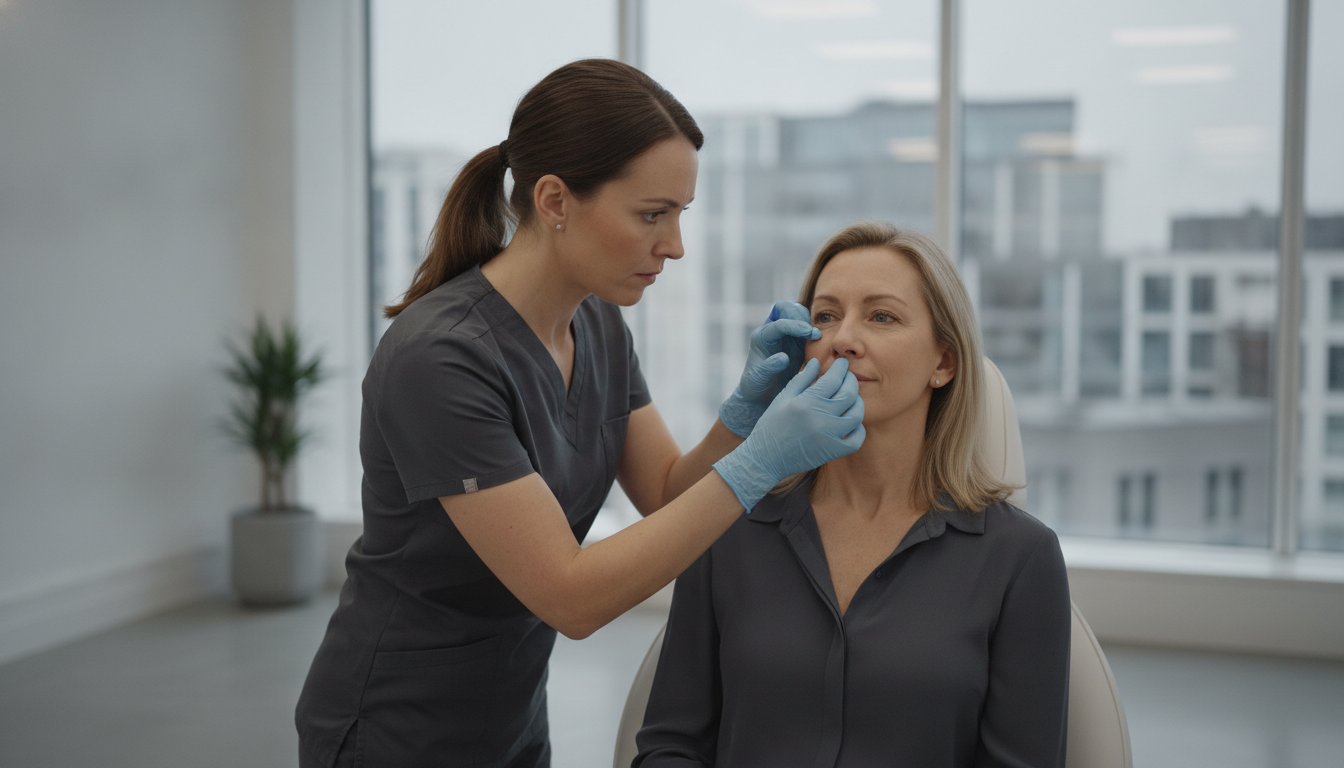

The UK government’s commitment to a mandatory national licensing scheme by 2026 means that the path to becoming a practitioner is no longer a matter of choice, but one of rigorous compliance. It’s natural to feel overwhelmed by the conflicting noise surrounding medic versus non-medic pathways or the long-term validity of quick-fix certificates. You want to ensure your investment leads to a career that is as legally secure as it is professionally rewarding.
Determining exactly what qualifications do you need for aesthetics requires a clear understanding of the new OFQUAL-regulated standards that prioritize patient safety and clinical excellence. This guide provides a meticulous, step-by-step breakdown of the educational requirements needed to transition from an aspiring artist to a trusted specialist. We will explore the essential Level 5 and Level 7 pathways, clarify the upcoming licensing updates, and show you how to select a training environment that mirrors the luxury and precision of a high-end boutique clinic. By the end of this journey, you will have a future-proof roadmap to building a practice defined by safety, sophistication, and luminous results.
Key Takeaways
- Navigate the 2026 transition to mandatory UK licensing and understand how OFQUAL standards ensure your practice embodies both clinical safety and professional excellence.
- Explore the hierarchical framework from Level 4 to Level 7 to identify exactly what qualifications do you need for aesthetics to master the delicate science of skin health and anatomy.
- Clarify the evolving pathways for healthcare professionals and dedicated practitioners, ensuring your career transition is as seamless and sophisticated as the results you aim to provide.
- Identify the hallmarks of a prestigious training academy, where hands-on experience with live models transforms technical knowledge into the refined skill of a trusted artisan.
The Landscape of UK Aesthetics Qualifications in 2026
The UK aesthetic sector is experiencing a profound transformation. By 2026, the transition from voluntary registration to a mandatory national licensing scheme will be fully realized. This change ensures that every client’s journey toward self-confidence is paved with clinical excellence and meticulous care. Understanding what qualifications do you need for aesthetics is the first step in establishing yourself as a trusted, expert artisan in this flourishing field. The focus has shifted away from quick certifications toward a structured, academic approach that mirrors the sophistication of the treatments themselves.
The Shift Towards Mandatory Licensing
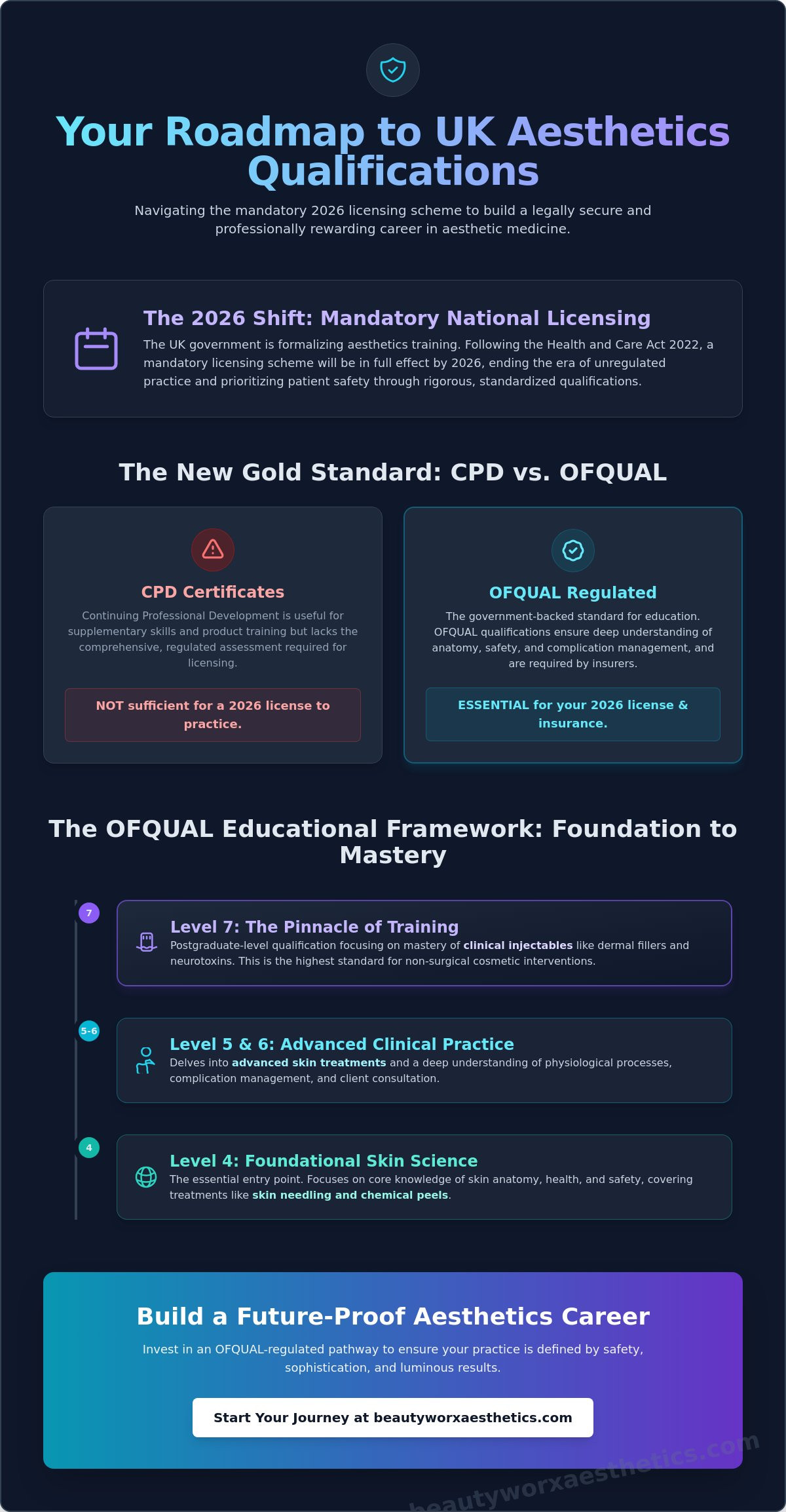
The UK government’s 2026 stance marks a definitive end to the era of unregulated cosmetic injectables. Following the Health and Care Act 2022, the Department of Health and Social Care has moved to implement a licensing scheme that mandates specific training standards for all practitioners. The Joint Council for Cosmetic Practitioners (JCCP) acts as a pivotal influence here, working alongside the government to define the competencies required to perform procedures like dermal fillers and neurotoxins safely. Clinical Aesthetics is the specialized practice of non-surgical cosmetic interventions where medical-grade safety and artistic discernment converge to enhance a patient’s natural beauty. This regulatory shift is a reassuring step for clients who seek a boutique experience without compromising on their physical well-being.
CPD vs. OFQUAL Regulated Qualifications
The distinction between a brief workshop and a regulated diploma is now a critical factor for professional survival. While Continuing Professional Development (CPD) is excellent for refining a specific skill or learning a new product line, it lacks the rigorous assessment framework that insurers and local authorities now demand. OFQUAL, the Office of Qualifications and Examinations Regulation, provides the gold standard for educational integrity in England. Aesthetic medicine requires a deep understanding of facial anatomy and complication management that only structured levels can provide. Practitioners are now expected to progress through specific tiers to maintain their professional standing:
- Level 4: Focuses on skin rejuvenation and foundational skin science.
- Level 5 and 6: Delves deeper into physiological processes and advanced clinical skin treatments.
- Level 7: Represents the pinnacle of training, equivalent to a postgraduate certificate specifically in clinical injectables.
Choosing an OFQUAL-regulated path protects you during clinical audits and ensures your professional indemnity insurance remains valid. It’s about more than just compliance; it’s about providing a bespoke service that feels both safe and sophisticated. By 2026, a simple CPD certificate won’t be enough to secure a license to practice. Investing in regulated education is the only way to guarantee your place in the future of the industry while offering your clients the refreshed, harmonious results they desire.
The Educational Framework: Level 4 to Level 7 Explained
Understanding the hierarchical structure of training is vital when determining what qualifications do you need for aesthetics. The UK framework is designed as a progressive journey, moving from the foundational science of the skin to the intricate mastery of facial anatomy. This ladder ensures that practitioners don’t just learn how to perform a treatment; they understand the biological “why” behind every needle placement. By grounding education in anatomy, physiology, and infection control, these standards protect both the practitioner’s professional integrity and the client’s safety. It’s a path that transforms a technician into a trusted, expert artisan.
Each level represents a significant step up in responsibility and clinical depth. While early stages focus on the surface, higher levels delve into the complex structures beneath the skin. This tiered approach ensures that by the time a practitioner reaches for a syringe, they possess a deep, intuitive understanding of the vascular and muscular systems. This knowledge is what allows for the creation of natural-looking results that enhance your unique beauty without compromising health.
Entry Level: Level 4 and Level 5 Certificates
The journey often begins at Level 4, which focuses on the foundational elements of skin rejuvenation. At this stage, practitioners master techniques such as skin needling and chemical peels, which are essential for creating a luminous, healthy canvas. Many students also choose to pursue an Aesthetics BA (Hons) degree to gain a broader academic perspective on the industry’s evolving landscape. Level 5 builds on this by introducing advanced aesthetic practice within clinical environments. This level prepares you for more complex cellular interventions, such as polynucleotide treatment, which acts as a bridge between traditional skincare and medical aesthetics.
The Gold Standard: Level 7 Diploma in Clinical Injectables
The Level 7 Diploma is widely regarded as the “Master’s level” of aesthetic medicine. It aligns with the high standards set by the Joint Council for Cosmetic Practitioners (JCCP) and represents the pinnacle of clinical artistry. The curriculum is rigorous, covering the precise application of botulinum toxins and dermal fillers. A significant portion of the study is dedicated to complications management, ensuring a practitioner can act with calm authority if an adverse event occurs. To achieve this status, students must complete 40 hours of supervised clinical practice and treat 20 live models. This ensures hands-on skills match theoretical knowledge. Choosing a practitioner with these credentials ensures your results are subtle, harmonious, and safe. If you’re ready to begin your own aesthetic journey, you can book a bespoke consultation to see how expert training translates into beautiful, refreshed results.
Pathways for Medics and Non-Medical Practitioners
By 2026, the UK aesthetics landscape has matured into a regulated ecosystem where safety and artistry coexist. The distinction between medical and non-medical routes is no longer a matter of preference but a clearly defined framework of competency. When exploring what qualifications do you need for aesthetics in the current climate, you’ll find that the industry prioritizes a “patient-first” philosophy over quick entry. This shift ensures that every practitioner, regardless of their background, possesses the clinical depth to deliver results that are both luminous and safe.
The Medical Professional’s Transition
Doctors, nurses, and dentists bring an invaluable clinical foundation to the treatment room. However, translating surgical or ward-based skills into the delicate art of facial rejuvenation requires specialized training. The Professional Standards for Cosmetic Practice highlight that medical professionals must demonstrate specific proficiency in aesthetic medicine beyond their primary degree. Most healthcare staff now pursue a Level 7 Diploma in Injectables to master the nuances of facial aesthetics. This transition isn’t just about technical skill; it’s about adopting the ethical responsibility of a medical aesthetician who views every face as a unique, bespoke canvas.
The Non-Medical Route to Excellence
For beauty therapists, the “fast-track” myths of previous years have been replaced by a respected, progressive pathway. Entering the injectables space as a non-medic requires a disciplined climb from a Level 3 foundation through to Levels 4, 5, and 6. This structure ensures you develop a profound understanding of skin physiology and complication management before ever picking up a needle. To satisfy insurers in 2026, practitioners must build a robust portfolio of evidence, which typically includes 40 supervised clinical cases. This meticulous approach builds the quiet confidence of a specialist who values precision and subtle restoration.
A critical component of modern practice is the distinction between prescribing and administering. Since the 2024 reclassification of dermal fillers as prescription-only devices, the partnership model has become the industry standard. Non-prescribing practitioners must work in tandem with a qualified prescriber who conducts a face-to-face consultation with every client. This collaborative rhythm ensures that the client’s journey toward self-confidence is always guided by expert oversight. Ultimately, the answer to what qualifications do you need for aesthetics lies in your commitment to this high-level, continuous education that places the client’s safety at the heart of the experience.
Choosing the Right Aesthetics Training Academy
Selecting an educational provider is the most critical decision you’ll make after determining what qualifications do you need for aesthetics. The UK market is saturated with fast-track options, yet 82% of practitioners surveyed in recent industry reports felt underprepared after attending courses that lacked clinical depth. You must look for academies that prioritize safety and artistry over simple certificate mill operations. A legitimate provider should offer a curriculum that integrates complications management into every module, ensuring you can identify and treat adverse reactions with clinical precision.
Hands-on training with live models is non-negotiable. Practicing on silicone skins doesn’t replicate the subtle resistance of human tissue or the unique anatomical variations of a real client. Your chosen academy should provide multiple live cases under direct supervision to build the muscle memory required for delicate injectable work. It’s the difference between understanding a procedure and mastering the art of facial rejuvenation.
Clinical Environment and Tutor Expertise
Training in a luxury boutique setting mirrors the high-end experience your future clients expect. It’s about more than aesthetics; it’s about understanding the workflow of a safe, sterile, yet welcoming clinic. Investigate the credentials of your lead educators. They should have at least five years of active clinical history and a portfolio that demonstrates a commitment to harmonious, natural results. Small class sizes, ideally no more than four students per tutor, ensure you receive the personalized feedback necessary to refine your technique and build confidence.
Post-Qualification Support and Insurance
Your journey doesn’t end when the course finishes. The most valuable aesthetic courses offer lifelong mentorship and access to online theory portals for continuous review. A reputable academy will also facilitate introductions to specialist insurance providers, helping you secure the professional indemnity insurance required to practice safely in the UK. Many top-tier academies now include business start-up guidance, covering everything from clinical waste contracts to patient management software. This support bridges the gap between being a student and becoming a successful, independent practitioner.
Your Bespoke Career Journey in Aesthetic Medicine
The path to becoming a respected aesthetic practitioner is a meticulous process of refining both your clinical precision and your artistic vision. In the context of the 2026 UK landscape, simply knowing the mechanics of an injection isn’t enough. You’re evolving into a trusted artisan who understands the delicate harmony of the human face. Holding higher-level qualifications, such as an OFQUAL-regulated Level 7 Diploma, offers more than just compliance. It builds a foundation for sustainable clinic growth by instilling deep-seated trust in your patients, ensuring they feel safe and pampered in your care.
Diversifying your skills is another hallmark of a successful practice. While dermal fillers and neurotoxins are staples of the industry, incorporating wellness treatments like vitamin b12 injection training allows you to offer a more holistic experience. This specific certification enables you to support your clients’ internal vitality alongside their external radiance. By broadening your service menu, you create a comprehensive wellness journey that encourages long-term patient loyalty and distinguishes your clinic from those offering only basic procedures.
Building Your Professional Identity
The transition from a technician to a practitioner requires a profound mindset shift. A technician follows a map; a practitioner understands the terrain. You’ll move beyond the simple act of treating a single area to developing a signature style that prioritizes natural-looking, harmonious results. This professional identity is forged through a commitment to clinical excellence. The aesthetics industry moves quickly, and staying at the forefront of new techniques ensures you remain a leader in the field. Clients seek out specialists who view their work as both a science and an art form, looking for that subtle, refreshed glow that only an expert can provide.
Next Steps: Enrolling in Your First Qualification
Deciding what qualifications do you need for aesthetics can feel overwhelming, but the path becomes clear with professional guidance. Your first step is to book a bespoke career consultation. We’ll discuss your specific goals, from your artistic aspirations to your business targets, and help you map out a training schedule that fits your professional lifestyle. Preparing your documentation early ensures a smooth transition into your studies.
To begin your OFQUAL registration, ensure you have the following ready:
- Valid proof of prior medical or beauty qualifications at Level 3 or higher
- An updated CV detailing your professional background and experience
- Current government-issued identification for verification
The 2026 standards are designed to elevate the entire industry. By enrolling today, you join an elite group of qualified practitioners dedicated to the highest levels of safety and beauty. Your journey toward becoming a specialist in aesthetic medicine starts with this single, confident step toward professional mastery.
Elevate Your Practice with Clinical Distinction
Navigating the UK’s evolving regulatory landscape requires a clear vision and a commitment to the highest educational standards. By 2026, the industry’s shift toward the Level 7 framework ensures that every practitioner delivers results that are as safe as they are beautiful. Understanding precisely what qualifications do you need for aesthetics allows you to build a foundation of trust with your future clients. It’s about more than just a certificate; it’s about mastering the delicate art of enhancement through rigorous, evidence-based training.
At BeautyWorx Aesthetics, we bridge the gap between clinical precision and artistic discernment. As an OFQUAL Regulated Academy, we offer over 25 CPD Accredited Courses designed to refine your skills and boost your professional confidence. Our expert-led sessions prioritize hands-on experience with live models, ensuring you’re prepared to create subtle, harmonious transformations from your very first day in clinic. Your journey toward becoming a trusted specialist starts with a bespoke education tailored to your unique goals.
Begin your journey toward clinical excellence with our OFQUAL regulated diplomas and step into a future where your expertise creates the best version of every client you treat. We’re here to guide you through every milestone of this rewarding career.
Frequently Asked Questions
Do I need a medical degree to do aesthetics in the UK in 2026?
You don’t need a medical degree to practice aesthetics in the UK in 2026, but you must understand exactly what qualifications do you need for aesthetics to comply with the latest licensing laws. Practitioners must hold a regulated qualification that aligns with the Department of Health and Social Care (DHSC) standards. This ensures every treatment is delivered with the clinical expertise and artistic discernment our clients expect.
What is the difference between Level 5 and Level 7 aesthetics?
Level 5 aesthetics focuses on primary skin health and mid-level treatments such as chemical peels or microneedling. In contrast, Level 7 is equivalent to a master’s degree and specifically covers injectable clinical skills. If you’re asking what qualifications do you need for aesthetics to perform complex facial contouring, Level 7 is the gold standard for mastery and artistic precision.
How long does it take to become a qualified aesthetic practitioner?
Becoming a fully qualified practitioner usually requires 6 to 18 months of dedicated study and clinical practice. This timeline allows you to master the delicate balance of facial anatomy and refined injection techniques. Shorter courses often fail to meet the rigorous 2026 standards required for government licensing, which prioritizes sustained education over weekend workshops.
Can I get insurance for aesthetics without an OFQUAL qualification?
Obtaining insurance without an OFQUAL-regulated qualification is difficult in 2026, as 90% of specialist insurers now mandate formal certification for professional indemnity. While some legacy providers might offer cover, the premiums are often significantly higher. Securing a regulated diploma ensures your practice remains protected while you focus on delivering harmonious, age-defying results for your clients.
What treatments can I perform with a Level 4 qualification?
A Level 4 qualification empowers you to perform foundational skin health treatments including superficial chemical peels, microneedling, and non-ablative laser therapies. These procedures act as the first step in a client’s journey toward a refreshed complexion. It provides the essential anatomical knowledge needed before progressing to more complex injectable interventions.
Is a Level 7 Diploma mandatory for injecting Botox and fillers?
Level 7 is the anticipated mandatory standard for all practitioners performing Botox and dermal fillers under the UK’s 2026 licensing regulations. The government’s move toward stricter oversight means that simple certificates no longer suffice for high-risk procedures. This ensures that every “best version of you” is achieved through clinical excellence and meticulous safety protocols.
How much does it cost to get fully qualified in aesthetics?
Qualifying in aesthetics involves a financial investment that reflects the high-end nature of the industry, with JCCP-approved Level 7 programs typically costing between £6,000 and £10,000. These fees cover your clinical supervision, aesthetic theory, and the high-quality materials used during training. Investing in a regulated path ensures your career is built on a foundation of luxury and professional security.
What happens if I have a CPD certificate but no regulated diploma?
CPD certificates are excellent for refreshing specific skills, but they don’t meet the 2026 regulatory requirements for a practice license on their own. If you only hold CPD points without a regulated diploma, you’ll likely face challenges with local authority licensing and insurance approvals. Transitioning to a regulated framework is essential for any practitioner who views aesthetic medicine as a lifelong, professional partnership.











 Reviews