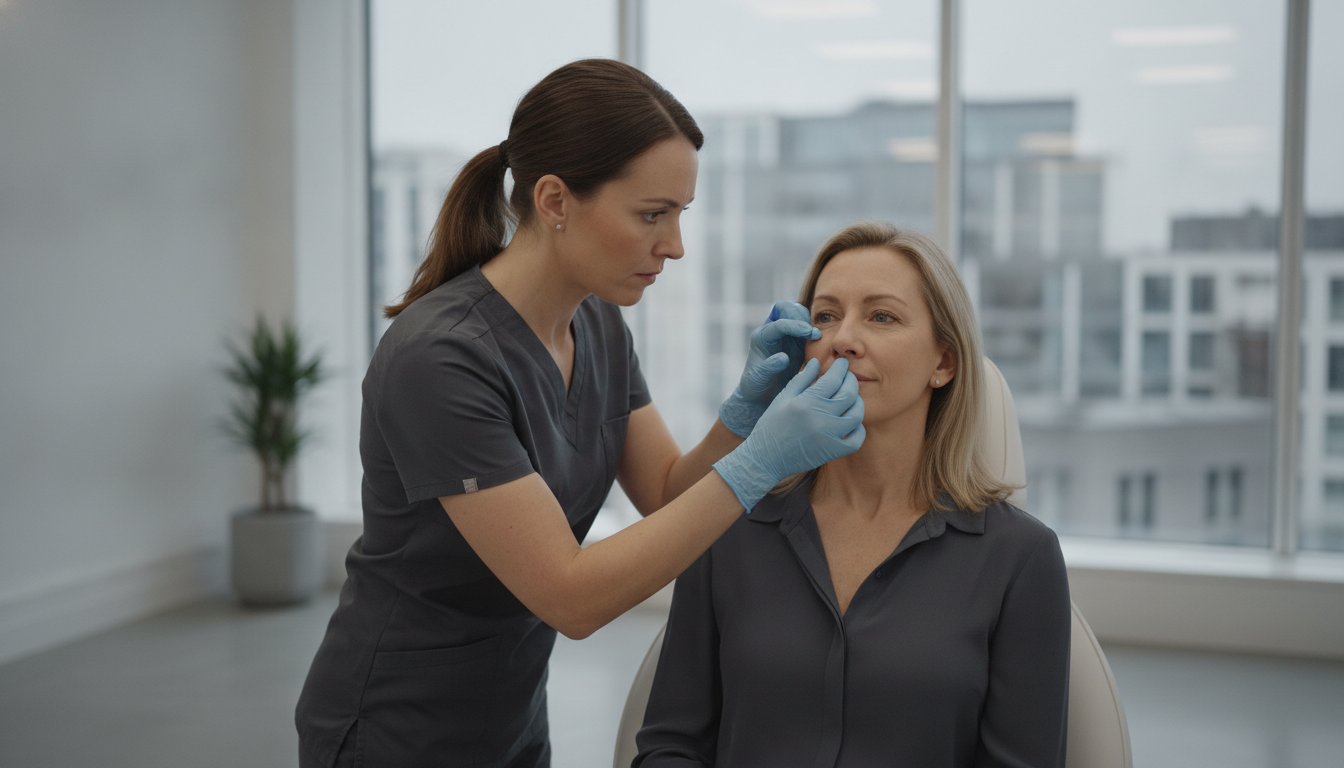

The most critical moment of a treatment doesn’t happen when the needle breaks the skin; it happens during the quiet, meticulous dialogue that precedes it. Mastering how to conduct an aesthetic consultation is the bridge between being a technician and becoming a trusted artisan who prioritizes patient safety as much as facial harmony. Precision is paramount. In an era where the global aesthetic market is projected to reach $110.32 billion by 2026, the ability to balance clinical expertise with a luxury experience is what sets the elite practitioner apart.
You’ve likely felt that flicker of anxiety when a patient presents with unrealistic expectations or a complex medical history that feels just out of reach. We understand that the pressure to deliver subtle, natural results while navigating evolving UK licensing and MoCRA regulations can be significant. This guide promises to transform that uncertainty into a repeatable, professional framework that protects your practice and builds deep patient trust. Safety creates confidence. We’ll explore the essential clinical protocols, psychological assessment techniques, and legal documentation needed to ensure every client leaves feeling safe, pampered, and confident that their inherent features have been gracefully preserved.
Key Takeaways
- Define the consultation as a formal clinical diagnostic phase that prioritizes psychological safety and patient well-being above all else.
- Learn a structured approach for how to conduct an aesthetic consultation, ensuring no medical contraindication or previous aesthetic history is overlooked.
- Elevate your aesthetic eye by applying the principles of facial harmony and the Golden Ratio to create bespoke, natural-looking treatment plans.
- Implement rigorous documentation and clinical photography standards to provide robust legal protection and professional transparency for your practice.
- Understand how specialized mentorship and advanced qualifications can help you master the nuanced art of patient communication and chair-side manner.
The Pivotal Role of the Aesthetic Consultation in Modern Practice
An aesthetic consultation is far more than an informal chat about beauty goals. It is a rigorous, formal clinical diagnostic and psychological assessment phase that serves as the bedrock of patient safety. Understanding how to conduct an aesthetic consultation requires a shift in perspective; it’s the moment where the practitioner transitions from a provider of services to a guardian of the patient’s well-being. While a comprehensive overview of plastic surgery illustrates the complexity of invasive changes, non-surgical practitioners must be equally meticulous in their pre-treatment evaluations to ensure clinical excellence.
The UK aesthetics industry is currently undergoing a vital transformation. We’re moving away from a “treatment-led” model, where procedures are viewed as commodities, toward a “patient-led” framework. This evolution prioritizes the emotional journey and long-term health of the individual. By investing time in this initial ritual, you drastically reduce the likelihood of patient dissatisfaction and potential legal disputes. It’s about creating a shared vision of beauty that is both safe and achievable. Masterful practitioners know that trust is built in the consultation room, not just on the treatment couch.
Moving Beyond the ‘Price-Per-ML’ Conversation
Expertise shouldn’t be reduced to the volume of a product. You must reframe the dialogue from the cost of a syringe to the value of a clinical outcome. When a patient requests a “quick top-up” without a proper assessment, it’s your responsibility to maintain professional firmness. Explain that their safety depends on a fresh evaluation of their facial anatomy and current health status. Establishing your authority as a specialist artisan from the first minute builds a foundation of respect. You’re offering a bespoke solution, not a retail transaction. This clarity ensures the patient feels both safe and prioritized.
The Ethical Duty of Care
The hallmark of a professional practitioner is the courage to say “no.” If a treatment isn’t clinically indicated or if patient expectations don’t align with safe outcomes, declining the procedure is an ethical necessity. Aligning your practice with the latest JCCP standards isn’t just about compliance; it’s about a commitment to excellence. This holistic approach to facial aesthetics ensures that every intervention respects the natural balance of the face. It’s a partnership in graceful aging, where the preservation of the client’s inherent features is the ultimate goal. Mastering how to conduct an aesthetic consultation is the first step toward a more sustainable and respected practice.
The Clinical Protocol: A Step-by-Step Assessment Framework
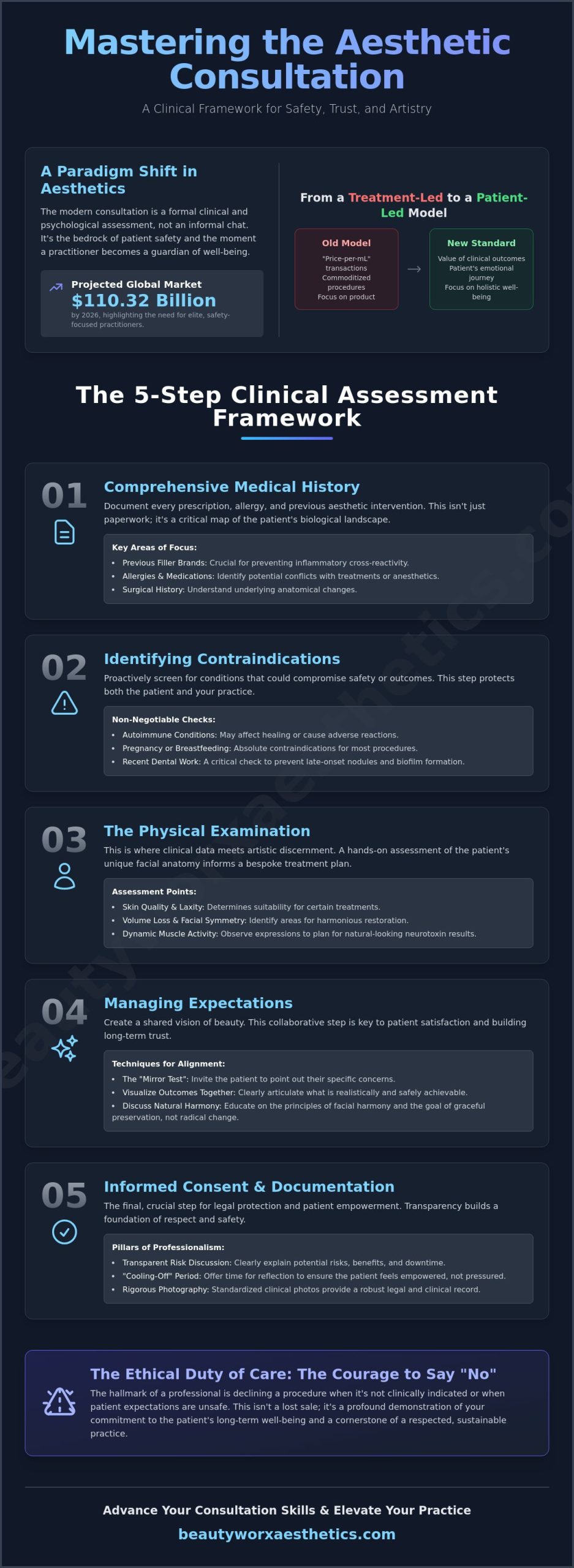
A structured clinical protocol is the difference between a transactional treatment and a transformative partnership. When you are refining how to conduct an aesthetic consultation, your primary objective is to build a comprehensive safety profile before any product is selected. This ritual begins with a five-step framework designed to uncover hidden risks while aligning your artistic vision with the patient’s biological reality. It’s a meticulous process that ensures every decision is rooted in clinical evidence and aesthetic harmony.
- Step 1: Comprehensive Medical History. Document every prescription, allergy, and previous aesthetic intervention. Knowing which filler brands were used previously is vital for preventing inflammatory cross-reactivity.
- Step 2: Identifying Contraindications. Screen for autoimmune conditions, pregnancy, or recent dental work. Dental procedures can increase the risk of late-onset nodules and biofilm formation, making this a non-negotiable check.
- Step 3: The Physical Examination. Analyze skin quality, volume loss, and dynamic muscle activity. This is where clinical data meets artistic discernment.
- Step 4: Managing Expectations. Use the “mirror test.” Invite the patient to point out their concerns while you visualize realistic, subtle outcomes together.
- Step 5: Informed Consent. Transparently discuss risks and downtime. Respecting a “cooling-off” period ensures the patient feels empowered and safe, rather than pressured into a decision.
Gathering a Robust Medical History
Your inquiry must go deeper than a standard intake form. You need to understand the patient’s “Aesthetic Journey” to date. Ask specifically about the dates and locations of previous injections; certain filler types don’t always interact well with newer technologies. Social history is equally telling. Smoking or high-impact exercise can significantly impact filler longevity and skin vitality. Documenting these lifestyle factors allows you to tailor your aftercare advice with precision. For those looking to deepen their clinical expertise, our Level 7 Diploma provides the rigorous training needed to master these complex patient histories and ensure total safety.
The Physical Skin and Tissue Assessment
The hands of a trusted artisan are as important as their eyes. Palpating the tissue allows you to detect underlying scar tissue or residual filler that may not be visible to the naked eye. Assessing the Glogau scale or Fitzpatrick type is essential, especially when considering advanced skin health options like polynucleotide treatment. Identifying facial asymmetries before the treatment begins is a critical safety step. Pointing these out to the patient ensures they understand the natural baseline of their features, preventing post-treatment dissatisfaction and ensuring the result feels authentic to their unique anatomy. This level of detail projects a professional image of safety and artistic discernment.
Artistry and Psychology: Assessing the Whole Patient
Beyond the clinical checklist, the consultation room is where the science of medicine meets the intuition of the artisan. When considering how to conduct an aesthetic consultation, you must look past individual lines and wrinkles to see the face as a cohesive, living canvas. The goal isn’t drastic alteration but rather the restoration of vitality and the preservation of the patient’s unique character. By adopting this “Expert Artisan” perspective, you guide the patient toward subtle enhancements that feel authentic to their identity. It’s a journey of self-confidence that starts with a shared vision of balance.
Utilizing the Golden Ratio (Phi) during your assessment provides a mathematical foundation for your artistic recommendations. It allows you to explain the “why” behind your suggestions, transforming a subjective opinion into a professional, data-driven plan for facial harmony. This level of detail reassures the patient that their face is in the hands of a specialist who understands the nuances of beauty. It’s not about following a trend; it’s about honoring the timeless principles of proportion.
Understanding the emotional trigger for seeking treatment is just as vital as the physical assessment. Asking “why now?” helps reveal the patient’s true motivations and ensures you aren’t treating a temporary emotional state with a permanent or long-term physical change. Whether it’s a milestone birthday or a desire to feel more refreshed, this empathetic inquiry builds a partnership that transcends a simple transaction. It creates a space where the patient feels heard, understood, and safe.
Facial Harmony and the Art of Balance
Evaluating the face in vertical fifths and horizontal thirds ensures that every intervention maintains a sense of proportion. For instance, you must explain how lip augmentation filler doesn’t just change the lips; it subtly shifts the perceived projection of the chin and the overall balance of the profile. Facial Harmony is the art of balancing facial features through subtle restoration while strictly preserving the patient’s inherent and unique characteristics. This holistic view ensures that results are never “done” or artificial, but always elegantly refined.
Psychological Screening and BDD Tools
Addressing the psychological state is a non-negotiable ethical duty that sets the elite practitioner apart. While many guides focus solely on the physical, mastering how to conduct an aesthetic consultation involves identifying red flags for Body Dysmorphic Disorder (BDD). Using a formal screening questionnaire doesn’t have to feel clinical or cold. Instead, it can be integrated into the conversation as a supportive tool for ensuring the patient’s emotional safety. Watch for signs of “Aesthetic Blindness,” where a patient loses the ability to see their features objectively and requests excessive volume. If these signs appear, the most professional and empathetic path is to decline treatment and provide a gentle referral to mental health support. This isn’t just about legal protection; it’s about genuine care for the whole person.
Documentation, Photography, and Safety Standards
Meticulous record-keeping is the final, vital ritual in mastering how to conduct an aesthetic consultation. It transforms a fleeting conversation into a durable clinical record, ensuring that every artistic decision is backed by forensic evidence. In an increasingly regulated landscape, your documentation serves as both a shield for your practice and a roadmap for your patient’s long-term journey. It’s about creating a narrative of care that prioritizes safety at every turn. Beyond legal compliance, robust records build a sense of reliability and transparency that’s crucial for fostering long-term patient trust.
Every consultation must culminate in a documented “Treatment Plan.” This isn’t a one-off transaction but a multi-session roadmap that aligns with the patient’s goals for graceful aging. By outlining future steps, you move away from the pressure of “fixing” everything in one appointment. This patient-centered approach respects the skin’s natural healing cycles and ensures results remain subtle and authentic. Under GDPR and data protection laws, securing these records is paramount. Patients need to know that their personal data and intimate “Before and After” images are handled with the same level of care as the treatment itself.
Mastering Clinical Photography
High-quality clinical photography is the cornerstone of professional accountability. You must capture five standard angles: full face, both 45-degree profiles, and both 90-degree profiles. Consistency in lighting and background isn’t just about aesthetics; it’s about clinical accuracy. These photos allow you to show the patient the difference between “static” wrinkles, which are present at rest, and “dynamic” wrinkles that appear during movement. This visual education helps manage expectations and justifies your chosen injection points. It’s a powerful tool for demonstrating the subtle, restorative changes you achieve over time.
The Safety Net: Complications Management
The consultation is your first line of defense in complications management. It’s the moment to integrate safety protocols by identifying potential risks before they manifest. You must explain the difference between common side effects, like minor bruising, and rare but serious risks, such as vascular occlusion. This conversation should be handled with professional calm, providing clarity without causing unnecessary panic. Every practitioner has an ethical duty to be prepared, which is why completing a complications management course is an essential investment in your clinical authority. Always provide the patient with clear aftercare instructions and emergency contact details before they leave your chair.
Ready to elevate your clinical standards? Secure your practice and your patients’ peace of mind by enrolling in our Complications Management Course today.
Advancing Your Consultation Skills with Beauty Worx Aesthetics
Mastering the nuances of patient dialogue isn’t a secondary skill; it’s the core of professional excellence. At Beauty Worx Aesthetics, we believe that learning how to conduct an aesthetic consultation is just as vital as mastering the injection technique itself. Our curriculum is designed to bridge the gap between clinical theory and the lived experience of the patient. By integrating consultation mastery into every one of our OFQUAL regulated courses, we ensure that our graduates possess the confidence to lead with authority and empathy. It’s about moving beyond the technical and embracing the role of the trusted specialist.
High-level aesthetic courses must prioritize the psychological and diagnostic theory of the consultation. We provide 1-to-1 mentorship that focuses specifically on refining your “chair-side manner,” helping you navigate complex patient expectations with professional firmness and warmth. This personalized guidance allows you to develop a unique professional voice that resonates with your target clientele. Practical training with live models provides the opportunity to practice the artisan assessment in real-time, ensuring you can identify subtle anatomical variations and communicate treatment plans with absolute clarity.
OFQUAL Regulated Pathways for Professionalism
The path to mastery is built on a foundation of accreditation. Our Level 7 Diploma in Clinical Aesthetic Injectable Treatments sets the gold standard for clinical consultations, requiring a deep dive into patient assessment and ethical decision-making. For those earlier in their journey, the Level 5 Certificate in Aesthetic Practice establishes a robust clinical foundation, ensuring that safety protocols are second nature from day one. In a landscape of evolving UK regulations, choosing an accredited training provider is vital for your long-term career credibility. It’s a commitment to the highest standards of the industry.
Mentorship and the Artisan Approach
The Beauty Worx Aesthetics philosophy is simple: science-led, artisan-finished. We don’t just teach procedures; we cultivate the artistic discernment needed to achieve subtle, natural-looking results that honor the patient’s inherent features. This partnership doesn’t end when you receive your certificate. Our graduates have access to ongoing support and expert complications management advice, ensuring you’re never alone as you grow your practice. We invite you to explore our range of accredited aesthetics training courses and discover how to conduct an aesthetic consultation that truly transforms the patient experience.
Elevate Your Clinical Practice to an Art Form
Mastering how to conduct an aesthetic consultation is the ultimate bridge between technical proficiency and artistic excellence. By weaving together rigorous clinical safety, deep psychological insight, and a refined eye for facial harmony, you transform a standard appointment into a sophisticated ritual of care. This approach doesn’t just mitigate risk; it builds a foundation of profound trust that empowers your patients to age with grace and confidence. You’re no longer just a practitioner; you’re a trusted artisan and a guardian of their well-being.
As an OFQUAL Regulated training provider offering over 25 CPD accredited courses, Beauty Worx Aesthetics is dedicated to your professional evolution. Our expert artisan mentorship provides the hands-on guidance and theoretical depth required to excel in a competitive, regulated landscape. We’ll help you refine your chair-side manner and clinical assessment skills until they’re second nature. We invite you to take the next step in your career and join a community committed to the highest standards of safety and subtle, natural-looking results.
Refine your clinical skills with our OFQUAL regulated aesthetics training courses. Your journey toward mastery starts here, and we’re honored to be your guide.
Frequently Asked Questions
How long should an aesthetic consultation take?
A professional consultation typically requires 30 to 45 minutes to ensure a comprehensive assessment. This timeframe allows you to move beyond a simple chat and perform a thorough medical history review, a physical tissue examination, and a psychological screening. Rushing this process compromises patient safety and prevents the development of the deep, artisan-led trust that defines a high-end practice.
Should I charge a fee for an aesthetic consultation?
Charging a consultation fee is a common professional standard that reflects the significant value of your clinical expertise and diagnostic time. Many practitioners choose to apply this fee toward the cost of a future treatment if the patient proceeds. This practice ensures that your specialist knowledge is respected and helps to attract patients who are genuinely committed to a long-term partnership in self-care.
What are the biggest red flags during a patient consultation?
The most significant red flags include signs of Body Dysmorphic Disorder, such as an obsession with minute flaws, or “aesthetic blindness” where a patient requests excessive volume. If a patient is vague about their medical history or expresses extreme dissatisfaction with every previous practitioner, it’s vital to proceed with caution. Identifying these psychological markers is a critical part of how to conduct an aesthetic consultation with ethical integrity.
Do I need to repeat the consultation for returning patients?
You must perform a brief review consultation before every treatment to capture any recent changes in the patient’s health or lifestyle. Medical histories aren’t static; new prescriptions, recent dental work, or changes in autoimmune status can all impact the safety of a procedure. A quick but meticulous assessment ensures that the planned intervention remains the safest and most effective choice for the patient’s current condition.
How do I handle a patient with unrealistic expectations?
Handle unrealistic expectations with professional firmness and empathetic honesty by using the “mirror test” to ground the conversation in reality. Explain the biological limitations of non-surgical treatments and focus the dialogue on subtle restoration rather than drastic change. If a patient’s desired outcome cannot be safely or authentically achieved, the most responsible and artisan-led choice is to decline the treatment entirely.
Is a remote or virtual consultation acceptable in aesthetics?
Virtual consultations are excellent for initial lifestyle screening, but a face-to-face assessment remains the gold standard for clinical safety. Physical palpation of the tissue and a detailed skin quality analysis are essential steps that cannot be accurately performed through a screen. Additionally, UK regulations often require a face-to-face consultation with a prescriber for certain treatments to ensure a high level of medical oversight.
What legal documents must be signed during the consultation?
Every consultation must culminate in the signing of a comprehensive medical intake form, a bespoke treatment plan, and a detailed informed consent document. You also need to secure GDPR-compliant consent for clinical photography and the secure storage of patient data. Mastering how to conduct an aesthetic consultation involves ensuring these records are meticulously maintained to provide robust legal protection for your growing practice.









 Reviews