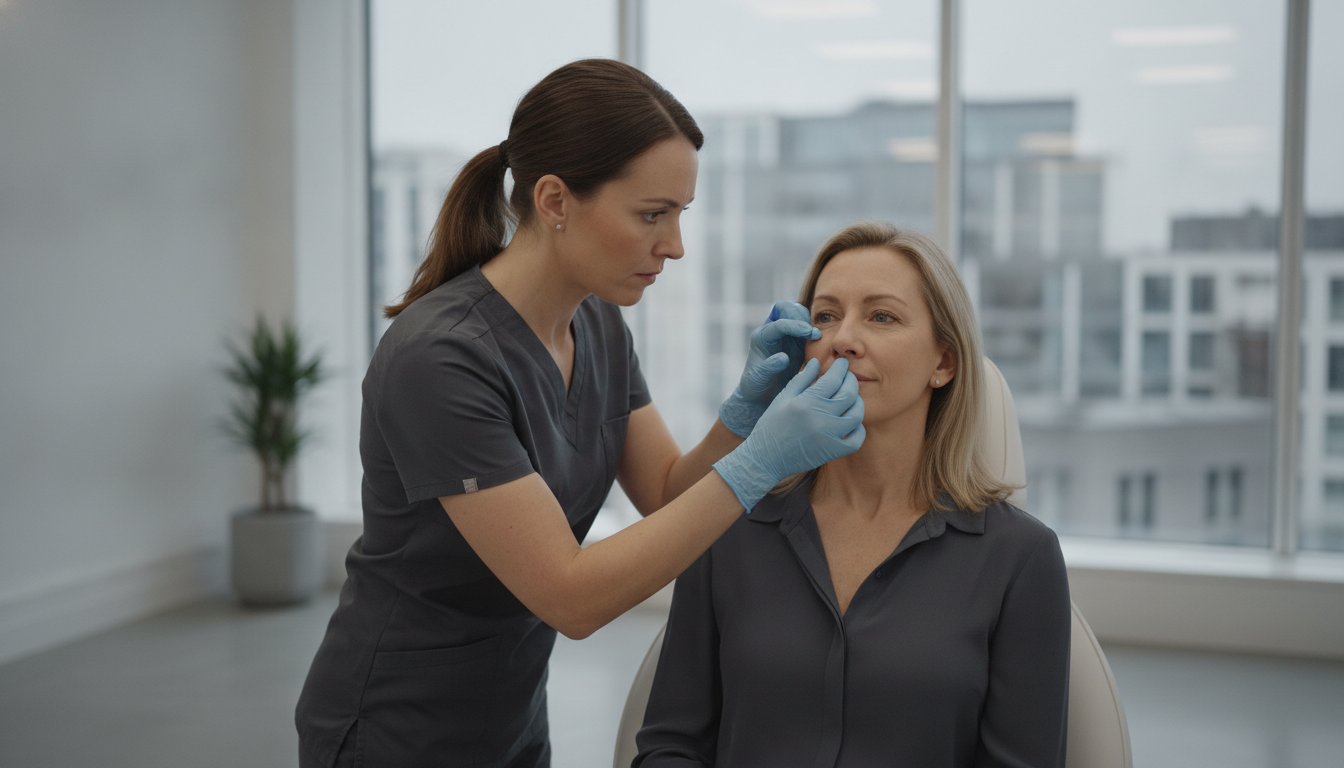

Between June 4 and August 6, 2025, 41 confirmed cases of botulism in England linked to unlicensed toxins sent a clear message: the safety of your clients is the only true currency in modern aesthetics. You likely started your business to help people feel refreshed and harmonious, yet the constant evolution of prescribing for non-medical aestheticians uk can feel like a shadow over your professional aspirations. It’s understandable to feel overwhelmed by the June 1, 2025, mandate that officially ended remote prescribing, but these regulations are designed to elevate your craft rather than restrict it.
This definitive guide provides the clarity you need to navigate the mandatory licensing scheme arriving in 2026 and the nuances of the Human Medicines Regulations 2012. You’ll learn how to build a secure prescriber partnership, understand the financial landscape of Level 7 qualifications, and ensure every treatment you perform is both luminous and legally sound. We’ll walk through a step-by-step compliance framework that turns clinical safety into your brand’s most sophisticated hallmark, ensuring your journey toward expertise is as seamless as the results you provide.
Key Takeaways
- Master the distinction between prescription-only medications and dermal fillers to protect your professional integrity and ensure every treatment is performed within the UK legal framework.
- Navigate the mandatory shift toward face-to-face consultations following the 2025 regulatory changes, moving away from remote prescribing to a more robust, patient-centered clinical model.
- Learn how to cultivate a sophisticated clinical partnership, securing a reliable pathway for prescribing for non-medical aestheticians uk through registered GMC, NMC, or GPhC professionals.
- Understand the essential requirements for managing aesthetic complications, including the legal necessity of holding a prescription-ready emergency kit containing Hyaluronidase.
- Explore the educational journey toward a Level 7 qualification, positioning yourself as a highly qualified practitioner who prioritizes both artistic discernment and medical-grade safety.
Understanding the Legal Framework: POMs and the UK Aesthetics Industry
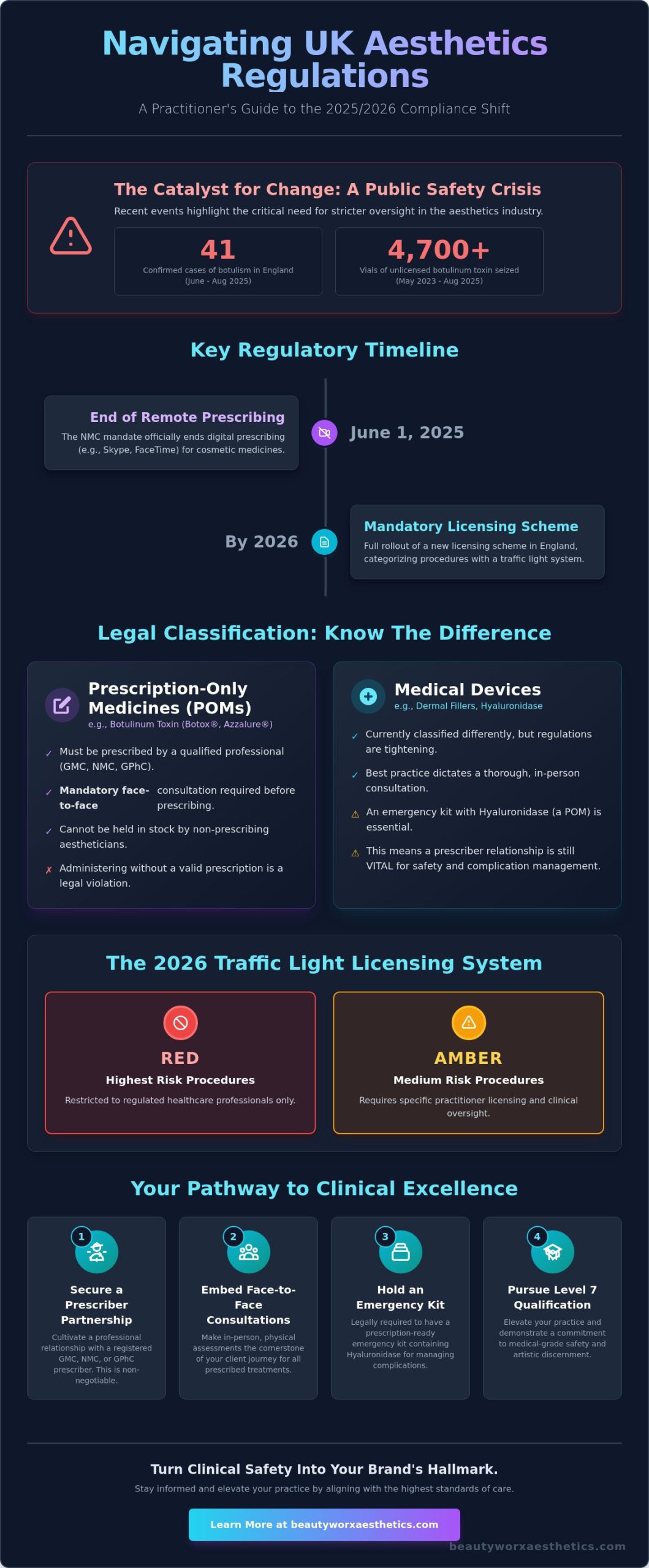
Establishing a secure foundation for your practice begins with a clear understanding of the Human Medicines Regulations 2012. These laws define how substances are classified, ensuring every client journey remains safe and elegant. At the heart of this structure are Prescription-Only Medicines (POMs), which require a formal clinical assessment before they can be administered. For those looking into prescribing for non-medical aestheticians uk, it’s vital to recognize that you cannot legally self-prescribe or hold stock of these substances without a valid, patient-specific prescription. The Medicines and Healthcare products Regulatory Agency (MHRA) acts as the guardian of clinical safety. Between May 2023 and August 2025, the MHRA seized over 4,700 vials of unlicensed botulinum toxin to protect the public. This vigilance is a response to rising risks, including 41 confirmed cases of botulism recorded in England between June and August 2025. Compliance is your hallmark of quality.
Prescription Only Medications vs. Medical Devices
Botulinum toxin, whether branded as Botox or Azzalure, is a neurotoxin categorized as a POM. It must be prescribed by a qualified professional after a face-to-face consultation. In contrast, dermal fillers are currently classified as medical devices in the UK. This distinction is narrowing as regulations tighten, but the legal implications remain distinct. Administering a POM without a prescription isn’t just a breach of best practice; it’s a legal violation that risks your professional future. Using unlicensed products, such as Botulax or reNTox, can lead to severe complications and immediate regulatory action. True artistry requires the safety of genuine, MHRA-approved products.
The 2026 Regulatory Landscape
The introduction of a mandatory licensing scheme in England, expected to fully roll out by 2026, will implement a traffic light system to categorize procedures. This framework is being introduced under the powers of the Health and Care Act 2022. Red category treatments will remain restricted to regulated healthcare professionals, while Amber procedures will require specific oversight and clinical partnerships. This licensing evolution makes the process of prescribing for non-medical aestheticians uk more transparent, rewarding practitioners who invest in clinical excellence. Organizations like the JCCP and the CPSFA are instrumental in shaping these standards, ensuring that insurance-approved prescribing routes become the industry gold standard. By aligning with these bodies, you transform your boutique setting into a beacon of professional integrity and luminous results.
The Face-to-Face Consultation Rule: Navigating the 2025 Regulatory Shift
On June 1, 2025, the landscape of aesthetic medicine in the UK underwent a profound transformation. The Nursing and Midwifery Council (NMC) implemented a strict mandate requiring all nurse and midwife prescribers to conduct physical, in-person assessments before issuing prescriptions for non-surgical cosmetic medicines. This shift effectively ended the era of digital convenience, where Skype or FaceTime calls were often used to bridge the gap between practitioner and prescriber. For those navigating the complexities of prescribing for non-medical aestheticians uk, this change isn’t merely a hurdle. It’s an invitation to deepen the clinical integrity of your practice.
The requirement for a physical presence ensures that every nuance of a client’s anatomy is observed with the precision of an artisan. Photos and video streams simply cannot capture the subtle skin textures or muscle dynamics necessary for a harmonious, natural-looking result. By prioritizing this face-to-face interaction, you’re aligning with the government’s new licensing scheme, which seeks to protect the public from the risks of detached clinical oversight. This in-person assessment offers several key benefits for your boutique practice:
- Precise Anatomical Mapping: Allowing the prescriber to feel the tissue density and observe muscle movement in real-time.
- Risk Mitigation: Identifying subtle contraindications or previous filler complications that might be missed through a digital screen.
- Enhanced Trust: Creating a reassuring, professional environment where the client feels heard and understood.
The End of Remote Prescribing
Remote prescribing once offered a swift path to treatment, but it often left practitioners vulnerable to “ghost prescribing.” This occurs when a prescriber issues a script without ever meeting the patient, a practice that is now strictly non-compliant and carries significant legal risk. The prescriber must now take full clinical responsibility for the patient’s well-being. This ensures that every drop of neurotoxin is administered with a clear understanding of the client’s medical history and unique aesthetic goals. It’s about creating a safe, medical-grade environment where the client feels pampered and protected throughout their journey.
Adapting Your Clinic Workflow
Integrating a prescriber into your boutique setting requires a thoughtful approach to scheduling. Many successful practitioners now organize dedicated “Prescriber Days,” where the clinical partner is present to assess multiple clients in a single, fluid session. This maintains efficiency without compromising the meticulous standards your brand represents. Meticulous documentation of these consultations is essential. It serves as a permanent record of the bespoke journey you’re embarking on with your client. If you’re looking to elevate your understanding of these standards, exploring professional aesthetic courses can help you build the clinical confidence required for this new era. Framing this process as a “Premium Safety Assessment” helps clients appreciate the extra care taken to ensure their results are both luminous and safe. It’s a hallmark of a truly professional partnership.
Prescriber Partnerships: The Essential Model for Non-Medical Practitioners
Forging a successful path in aesthetics requires more than technical skill; it demands a collaborative alliance that prioritizes patient safety. For those exploring prescribing for non-medical aestheticians uk, the prescriber-practitioner model is the gold standard. This sophisticated clinical partnership allows you to focus on the artistry of enhancement while a registered professional, be they from the GMC, NMC, or GPhC, provides the medical oversight necessary for prescription-only medicines. It’s a relationship built on mutual respect and a shared commitment to delivering subtle, harmonious results.
Finding a reliable partner involves vetting their qualifications and their specific experience within the aesthetics industry. A prescriber should be more than just a signature on a script. They should be a knowledgeable guide who understands the nuances of facial anatomy. Commercial arrangements for these services are well-established. For non-prescribing practitioners, the cost of a prescriber issuing a prescription is typically around £30 per patient. This collaborative approach aligns perfectly with the UK government’s new licensing framework, which emphasizes the need for qualified oversight in Amber category procedures. It ensures your practice remains a safe, boutique environment for every client.
Building a Bespoke Partnership
In this model, roles are clearly defined to ensure a seamless experience. The prescriber conducts the mandatory face-to-face assessment and takes clinical responsibility for the prescription. You, the practitioner, then use your artistic discernment to administer the treatment. It’s essential to work with someone who understands the complexities of facial aesthetics to ensure the prescribed product matches the desired outcome. Clear communication channels must remain open for patient follow-up and any post-treatment care, creating an ongoing partnership in self-care.
The V300 Pathway: Why it is restricted to Medical Professionals
The Non-Medical Prescribing (V300) qualification is a rigorous postgraduate course that grants prescribing rights. However, entry requirements are strict. Most universities require applicants to be a registered healthcare professional with at least three years of post-registration experience. The course costs between £2,000 and £4,000, with additional mentorship fees ranging from £1,800 to £2,250. Because of these medical prerequisites, non-medical aestheticians focus on the partnership model instead. This allows you to maintain a meticulously professional practice without the years of clinical nursing or medical training required for independent prescribing. It’s about playing to your strengths as an expert artisan.
Safety and Ethics: Managing Complications and Prescriber Accountability
True sophistication in aesthetics is defined by how you handle the unexpected. While we always strive for luminous, natural-looking results, the clinical reality of administering prescription-only medicines involves a shared weight of responsibility. In the context of prescribing for non-medical aestheticians uk, accountability is a dual-layered protection for the client. The prescriber takes responsibility for the clinical suitability of the medication, while you, the practitioner, are accountable for the precision of the administration. This partnership ensures every client feels safe in a medical environment that prioritizes their emotional and physical well-being. It’s essential to verify that your insurance policy explicitly covers this specific prescriber-injector dynamic to avoid any gaps in professional protection.
Managing complications effectively requires immediate access to specific medications. Hyaluronidase, often known by the brand name Hyalase, is a prescription-only medicine used to dissolve hyaluronic acid fillers. Even though fillers are currently medical devices, the agent used to reverse them is a drug that legally requires a prescription. You can’t simply stock this “just in case” without a valid procurement route established through your prescriber. This legal requirement highlights why a robust relationship with your clinical partner is non-negotiable. They provide the emergency oversight that allows you to act with quiet confidence if a vascular emergency or allergic reaction occurs.
The Emergency Kit Mandate
Every professional clinic must be equipped with a prescriber-backed emergency kit. This kit isn’t merely a collection of supplies; it’s a lifeline. It should include Adrenaline for anaphylaxis and Hyalase for filler reversals. Procuring these through legal channels ensures you aren’t using unlicensed or unsafe products, a risk the MHRA highlighted after seizing 4,700 vials of illicit toxins between 2023 and 2025. To truly master these protocols, completing a dedicated complications management course is vital. Your prescriber also has a professional duty to be contactable during your treatment hours, providing a safety net that mirrors the standards of a high-end clinical facility. If you’re ready to elevate your safety protocols, explore our professional partnership resources to ensure your practice meets every 2026 standard.
Informed Consent and Clinical Records
The journey toward “the best version of you” begins with a seamless consent process. This documentation must bridge the gap between the prescriber’s initial assessment and your final treatment plan. Storing these clinical records is a legal necessity under GDPR, requiring meticulous attention to detail and data security. These files act as a narrative of the client’s experience, proving that safety was prioritized over profit at every stage. By maintaining these high standards, you project an image of artistic discernment and medical-grade discipline that clients find deeply reassuring.
Elevating Your Practice: The Pathway to Level 7 and Clinical Excellence
Refining your expertise is a continuous journey that transforms a simple procedure into a bespoke experience. As the industry moves toward the mandatory licensing scheme arriving in 2026, the value of higher-level qualifications has never been more apparent. For those navigating the complexities of prescribing for non-medical aestheticians uk, pursuing an OFQUAL-regulated Level 7 Diploma is the most effective way to signal your commitment to clinical excellence. This postgraduate-level qualification, which typically ranges in cost from £4,500 to £9,000, provides a thorough grounding in facial anatomy and skin physiology. It bridges the gap between being a capable injector and becoming a trusted clinical partner.
A structured progression through aesthetic courses, moving from Level 4 through to Level 7, creates a narrative of professional growth that prescribers find deeply reassuring. When a prescriber sees that you’ve invested in rigorous, regulated training, the partnership becomes more harmonious. They aren’t just signing off on a treatment; they’re collaborating with an artisan who understands the weight of clinical responsibility. This mutual respect is the foundation of a safe, successful boutique practice that prioritizes natural-looking results over high-volume turnover.
The Level 7 Diploma for Non-Medics
Mastering the art of injectable treatments requires more than just theory; it demands dedicated mentorship. The Level 7 pathway emphasizes clinical practice under expert supervision, ensuring your technique is as refined as your aesthetic vision. This level of training allows you to position your clinic as a luxury destination where safety is a quiet, confident promise. By focusing on harmonious results and subtle enhancements, you distance your practice from the artificial looks often associated with less regulated environments. It’s about ensuring your clients feel refreshed and luminous after every visit.
Next Steps for Your Aesthetics Career
Preparing for 2026 requires a proactive audit of your current compliance standards. Ensure your prescriber partnerships are robust, your insurance is comprehensive, and your emergency protocols are sharp. Diversifying your menu with wellness services, such as vitamin b12 injection training, can further enhance the holistic care you provide to your clients. At Beauty Worx Aesthetics, we believe that the future of prescribing for non-medical aestheticians uk lies in this blend of clinical discipline and artistic discernment. We’re here to support your journey, helping you navigate the evolving landscape to become the most professional version of yourself.
Embracing a New Era of Clinical Excellence
The transition toward the 2026 mandatory licensing scheme represents a significant opportunity to elevate your practice into a realm of professional distinction. By integrating the June 1, 2025, face-to-face consultation mandate and fostering sophisticated prescriber partnerships, you ensure that every procedure is both legally sound and clinically safe. Navigating the requirements for prescribing for non-medical aestheticians uk isn’t a hurdle; it’s the hallmark of a practitioner who views aesthetic medicine as a delicate blend of science and art.
Your commitment to high standards defines your boutique brand in an increasingly regulated market. We’re here to act as your knowledgeable guide, providing the tools and expertise needed to thrive with quiet confidence. Please Explore our OFQUAL Regulated Aesthetics Pathways to discover our OFQUAL Regulated Level 7 Diplomas and expert mentorship for non-medical students. Our safety-first clinical training standards help you deliver the luminous, natural-looking results your clients deserve. The journey toward becoming a trusted specialist is an ongoing partnership in excellence, and it’s a privilege to support your professional evolution.
Frequently Asked Questions
Can a non-medical aesthetician legally prescribe Botox in the UK?
No, non-medical aestheticians cannot legally prescribe botulinum toxin. Under the Human Medicines Regulations 2012, this substance is a prescription-only medicine that must be authorized by a qualified professional, such as a doctor, dentist, or nurse prescriber. You act as the expert practitioner who administers the treatment only after your clinical partner has completed a formal assessment and issued a patient-specific prescription.
What happened to remote prescribing in 2025?
On June 1, 2025, the Nursing and Midwifery Council (NMC) implemented a strict ban on remote prescribing for aesthetic treatments. This means that digital consultations via Skype, FaceTime, or photo-based apps are no longer legally compliant for issuing prescriptions. Every client must now undergo a physical, in-person assessment with the prescriber to ensure their anatomical suitability and overall safety before any medication is dispensed.
How do I find a prescriber to work with my aesthetics business?
You can find a registered partner by searching the professional registers of the GMC, NMC, or GPhC. Many successful practitioners build these alliances through professional networking or specialized training academies that offer mentorship. When establishing a route for prescribing for non-medical aestheticians uk, prioritize partners who possess specific expertise in facial aesthetics and complications management to ensure a harmonious and safe clinical environment.
Do I need a prescriber for dermal fillers?
Currently, dermal fillers are classified as medical devices rather than medications, so they don’t require a prescription for purchase or administration. However, the 2026 licensing scheme is expected to tighten oversight for these procedures. Crucially, you still require a prescriber to procure Hyaluronidase, the emergency reversal agent for fillers, which remains a prescription-only medicine that must be present in your clinic during every treatment.
Can I buy Botox from a pharmacy if my prescriber has seen the patient?
Yes, you can order botulinum toxin from a specialist aesthetics pharmacy once your prescriber has issued a patient-specific prescription. The pharmacy will dispense the medication for that specific individual and deliver it to your clinic. It’s important to remember that holding “stock” of toxins for multiple patients is illegal; every vial must be assigned to a named client who has undergone a face-to-face assessment.
What is a “Prescriber Partnership” and how does it work?
A prescriber partnership is a sophisticated clinical model where a medical professional and a non-medical practitioner collaborate to deliver safe treatments. The prescriber takes responsibility for the clinical assessment and the prescription, while the practitioner focuses on the artistic administration of the product. This model ensures that prescribing for non-medical aestheticians uk meets the highest safety standards while allowing you to focus on achieving luminous, natural-looking results.
What should I do if my prescriber refuses to do face-to-face consultations?
You should immediately seek a new prescribing partner who adheres to the June 1, 2025, regulatory updates. Continuing to work with a prescriber who avoids physical assessments places your practice at severe legal and professional risk. A dedicated partner will understand that a face-to-face consultation is a non-negotiable hallmark of a boutique, safety-first clinic and will be happy to support your commitment to excellence.
Is it illegal to use a prescriber who only does video calls?
Yes, utilizing a prescriber who relies solely on video calls is now a breach of professional and legal standards following the 2025 mandate. This practice fails to meet the requirement for a physical clinical assessment, which is essential for identifying anatomical risks. To protect your professional integrity and the well-being of your clients, you must ensure all prescribing activities involve a physical presence in accordance with current UK law.










 Reviews